 Back
BackBones and Bone Tissue: Structure, Function, Growth, and Repair
Study Guide - Smart Notes
 Tailored notes based on your materials, expanded with key definitions, examples, and context.
Bones and Bone Tissue
Introduction to Bones as Organs
The skeletal system is a complex organ system composed of bones, joints, and associated supporting tissues. Bones are the primary organs and consist of more than just osseous tissue; they also include dense regular and irregular collagenous connective tissue and bone marrow.
Protection: Bones such as the skull, sternum, ribs, and pelvis protect vital organs.
Mineral Storage and Acid–Base Homeostasis: Bones store calcium, phosphorus, and magnesium salts, which are critical for electrolyte and acid–base balance.
Blood Cell Formation: Red bone marrow within bones is responsible for hematopoiesis, the formation of blood cells.
Fat Storage: Yellow bone marrow stores triglycerides, which can be used as cellular fuel.
Movement: Bones serve as attachment sites for muscles, enabling movement at joints.
Support: The skeleton provides structural support and framework for the body.
Classification and Structure of Bones
Bones are classified into five categories based on shape:
Long Bones: Longer than wide; found in arms and legs.
Short Bones: Cube-shaped; found in wrists (carpals) and ankles (tarsals).
Flat Bones: Thin and broad; include ribs, pelvis, sternum, and most skull bones.
Irregular Bones: Complex shapes; include vertebrae and certain skull bones.
Sesamoid Bones: Small, oval-shaped bones within tendons; e.g., patella.
Structure of a Long Bone
Periosteum: Dense irregular collagenous connective tissue membrane surrounding bone; rich in blood vessels and nerves.
Diaphysis: Shaft of the bone; contains the medullary cavity filled with red or yellow bone marrow.
Epiphysis: Ends of the bone; covered with articular cartilage.
Compact Bone: Dense outer region; resists compression and twisting.
Spongy Bone: Inner honeycomb-like structure; provides space for bone marrow.
Epiphyseal Line: Remnant of growth plate; separates epiphysis from diaphysis.
Structure of Short, Flat, Irregular, and Sesamoid Bones
Do not have diaphyses or epiphyses.
Consist of two outer layers of compact bone with a middle layer of spongy bone (diploë).
Some skull bones contain sinuses to reduce weight.
Bone Marrow
Red Bone Marrow: Site of hematopoiesis; decreases with age and is mainly found in axial skeleton and proximal limb bones in adults.
Yellow Bone Marrow: Contains adipocytes and stores triglycerides.
Microscopic Structure of Bone Tissue
Bone tissue consists of an extracellular matrix and three main cell types.
Extracellular Matrix
Inorganic Matrix: Makes up 65% of bone weight; mainly calcium and phosphorus salts in the form of hydroxyapatite crystals.
Organic Matrix (Osteoid): Makes up 35%; includes collagen fibers, proteoglycans, glycosaminoglycans, glycoproteins, and bone-specific proteins.
Bone Cells
Osteoblasts: Bone-building cells; secrete organic matrix and assist in formation of inorganic matrix.
Osteocytes: Mature bone cells; maintain bone matrix and can recruit osteoblasts.
Osteoclasts: Bone-resorbing cells; secrete acids and enzymes to break down bone matrix.
Histology of Bone
Compact Bone
Composed of osteons (Haversian systems) with concentric lamellae.
Central canal contains blood vessels and nerves.
Osteocytes reside in lacunae and communicate via canaliculi.
Interstitial and circumferential lamellae add strength.
Perforating canals connect blood supply between osteons.
Spongy Bone
Consists of trabeculae; not arranged into osteons.
Provides protective structure for bone marrow.
Blood supply comes from vessels in bone marrow.
Bone Formation: Ossification
Ossification is the process of bone formation, beginning in the embryonic period and continuing through childhood.
Intramembranous Ossification: Forms flat bones (skull, clavicles) from a mesenchymal membrane.
Endochondral Ossification: Forms most bones below the head from a hyaline cartilage model.
Bone Growth in Length and Width
Longitudinal Growth
Occurs at the epiphyseal plate via chondrocyte division.
Epiphyseal plate has five zones: reserve cartilage, proliferation, hypertrophy/maturation, calcification, ossification.
Growth ceases when the plate is fully ossified, forming the epiphyseal line.
Appositional Growth
Bone grows in width as osteoblasts lay down new bone under the periosteum.
New circumferential lamellae are formed; older lamellae are restructured into osteons.
Role of Hormones in Bone Growth
Growth Hormone: Stimulates chondrocyte division and osteoblast activity.
Testosterone: Increases appositional growth and calcium deposition; accelerates epiphyseal plate closure.
Estrogen: Increases longitudinal growth; inhibits osteoclasts; accelerates plate closure faster than testosterone.
Bone Remodeling and Repair
Bone Remodeling
Continuous process of bone formation (deposition) and loss (resorption).
Maintains calcium ion homeostasis, replaces old bone, adapts to stress, and repairs damage.
Deposition is carried out by osteoblasts; resorption by osteoclasts.
Calcium Ion Homeostasis
Regulated by a negative feedback loop involving parathyroid hormone (PTH) and calcitonin.
PTH increases blood calcium by stimulating osteoclasts, increasing gut absorption, and reducing urinary loss.
Calcitonin promotes bone deposition and lowers blood calcium.
Vitamin D is essential for calcium absorption.
Bone Repair
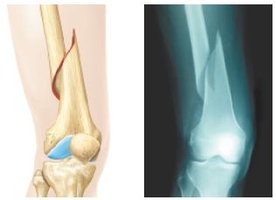
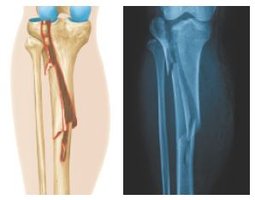
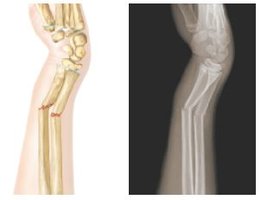
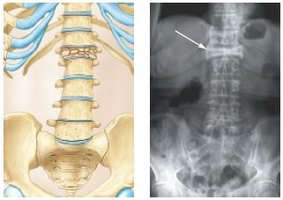
Fractures are classified as simple (skin intact) or compound (skin damaged).
Healing involves hematoma formation, soft callus formation, hard callus formation, and remodeling.
Types of Fractures
Fractures are classified based on their characteristics. The following table summarizes common types:
Type | Description |
|---|---|
Simple | Bone breaks but skin remains intact |
Compound | Bone breaks and skin is damaged |
Comminuted | Bone is shattered into multiple fragments |
Greenstick | Bone bends and partially breaks (common in children) |
Compression | Bone is crushed (often vertebrae) |
Spiral | Bone is twisted apart |
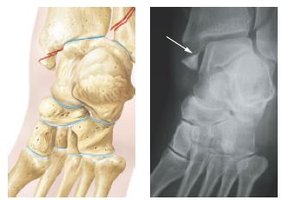
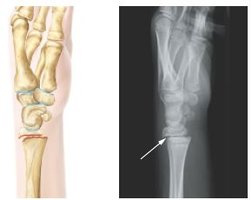
Epiphyseal | Break occurs at the growth plate |
Additional info: | Descriptions inferred from standard fracture classifications |
Bone Diseases
Osteopetrosis: Defective osteoclasts cause increased bone mass, leading to brittle bones.
Osteoporosis: Most common bone disease; weak, brittle bones due to inadequate inorganic matrix.
Achondroplasia: Most common cause of dwarfism; defective growth factor receptor affects endochondral ossification.
Key Equations
Hydroxyapatite formation:
Negative feedback loop for calcium homeostasis:
Summary Table: Factors Influencing Bone Remodeling
Factor | Effect |
|---|---|
Hormones | Testosterone promotes deposition; estrogen inhibits resorption |
Age | Hormone levels decline, decreasing protein synthesis |
Diet | Calcium, vitamin D, C, K, and protein intake are essential |
Mechanical Stress | Compression and tension stimulate deposition; pressure stimulates resorption |
Additional info: Table entries inferred from academic context and standard physiology.
