 Back
Carbohydrates: Structure, Types, and Biological Importance
Study Guide - Smart Notes
 Tailored notes based on your materials, expanded with key definitions, examples, and context.
Carbohydrates
Elemental Composition of Biological Molecules
Carbohydrates are one of the four major classes of biological macromolecules, alongside lipids, proteins, and nucleic acids. Each class is defined by its elemental composition:
Carbohydrates: C, H, O
Lipids: C, H, O
Proteins: C, H, O, N, S
Nucleic acids: C, H, O, N, P
Although carbohydrates and lipids are both composed of carbon, hydrogen, and oxygen, their structural differences lead to distinct properties and functions.
Structural Differences: Carbohydrates vs. Lipids
Carbohydrates: Typically have the same number of oxygen and carbon atoms (e.g., C6H12O6).
Lipids: Contain many more carbon atoms than oxygen atoms (e.g., C18H36O2).
This difference in atomic ratio affects their solubility and biological roles.
Identifying Carbohydrates
Carbohydrates can be identified by their chemical formula, which often follows the pattern (CH2O)n. For example, glucose is C6H12O6.
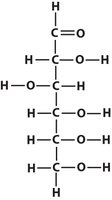
Monosaccharides
Definition and Properties
Monosaccharides are the simplest form of carbohydrates and serve as the basic building blocks (monomers) for more complex carbohydrates. They are also known as simple sugars and typically contain 3 to 7 carbon atoms.
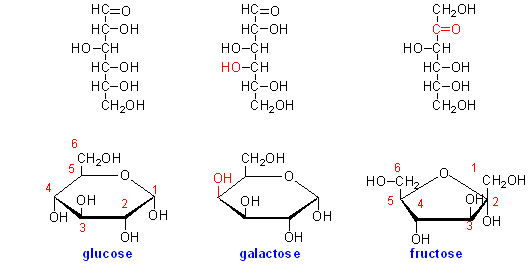
Common monosaccharides: Glucose, Fructose, Galactose
All have the formula C6H12O6 and are isomers (same formula, different structure).
Glucose
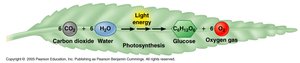
Glucose is produced during photosynthesis in plants from water and carbon dioxide using energy from sunlight. It is the immediate and key source of energy for most organisms and is commonly known as blood sugar or dextrose.
Formula: C6H12O6
Location: Blood and cells
Function: Energy
Fructose and Galactose
Fructose is a fruit sugar found in many plants, honey, berries, and root vegetables. Commercial fructose is derived from sugar cane, sugar beets, and corn (e.g., high fructose corn syrup).
Formula: C6H12O6
Location: Fruit, honey
Function: Energy (not as immediate as glucose)

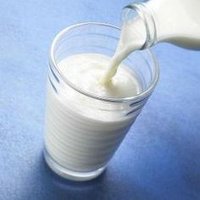
Galactose is found in milk and is hydrolyzed from the disaccharide lactose. It is the least sweet of the three common monosaccharides.
Formula: C6H12O6
Location: Milk
Function: Energy
Other Monosaccharides: Ribose and Deoxyribose
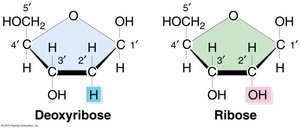
Ribose and deoxyribose are five-carbon sugars (pentoses) that are essential components of nucleic acids:
Ribose (C5H10O5): Found in RNA
Deoxyribose (C5H10O4): Found in DNA (lacks one oxygen atom compared to ribose)
Monosaccharide Classification
Monosaccharides can be classified by the number of carbon atoms:
Pentoses: 5 carbons (e.g., ribose, deoxyribose)
Hexoses: 6 carbons (e.g., glucose, fructose, galactose)
Hydrophilic Nature of Monosaccharides
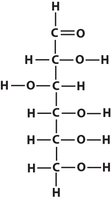
The presence of multiple hydroxyl (OH) groups makes monosaccharides hydrophilic, allowing them to form hydrogen bonds with water and dissolve easily.
Disaccharides
Formation and Examples
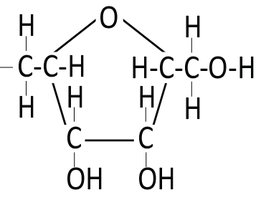
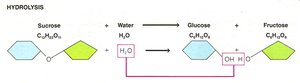
Two monosaccharides can join together via dehydration synthesis (removal of water) to form a disaccharide (dimer). The reverse reaction, hydrolysis, splits disaccharides into monosaccharides by adding water.
Sucrose: Glucose + Fructose
Lactose: Glucose + Galactose
Maltose: Glucose + Glucose
Hydrolysis of Disaccharides
The process of hydrolysis breaks down disaccharides into their monosaccharide components using water.
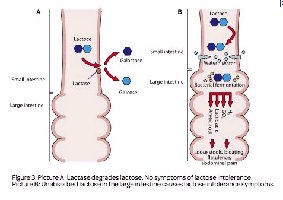
Lactose Intolerance
Lactose is the sugar found in milk (glucose + galactose). The enzyme lactase is required to digest lactose. Individuals who lack lactase are lactose intolerant and experience symptoms such as gas, bloating, and diarrhea.
Honey and Enzymatic Activity
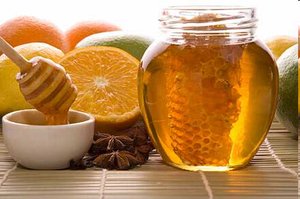
Honey is produced by bees from plant nectar. Bees add an enzyme that splits sucrose into glucose and fructose, resulting in a mixture of monosaccharides and disaccharides.
Polysaccharides
Definition and Types
Polysaccharides are large polymers composed of many monosaccharide units, primarily glucose. They serve as energy storage or structural components in organisms.
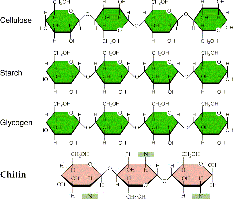
Starch: Storage form of glucose in plants; includes amylose (unbranched) and amylopectin (branched).
Glycogen: Storage form of glucose in animals (highly branched).
Cellulose: Structural component in plant cell walls; indigestible by humans.
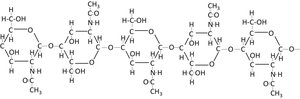
Chitin: Structural component in the exoskeleton of arthropods and cell walls of fungi; contains N-acetyl glucosamine.
Cellulose vs. Starch
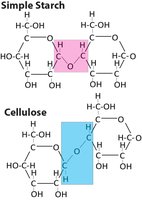
Although both are polymers of glucose, cellulose and starch differ in the type of glycosidic bonds linking the glucose units. Human enzymes can digest starch but not cellulose.
Chitin
Chitin is a polysaccharide with an attached amino group, making it a tough, flexible material found in the exoskeletons of crabs, lobsters, and insects. It is also used in dietary supplements.
Summary Table: Monosaccharides in Biological Systems
Molecule | Formula | Location | Function |
|---|---|---|---|
Glucose | C6H12O6 | Blood and cells | Energy |
Fructose | C6H12O6 | Fruit | Energy |
Galactose | C6H12O6 | Milk | Energy |
Ribose | C5H10O5 | RNA | Heredity |
Deoxyribose | C5H10O4 | DNA | Heredity |
Practice Questions
Which of the following carbohydrates is a monosaccharide? Glycogen, Starch, Sucrose, Galactose
Sucrose is a disaccharide comprised of which of the following monosaccharide pairs? Glucose – Glucose, Glucose – Fructose, Glucose – Galactose, Fructose – Galactose
Cellulose is a polysaccharide comprised of many of which of the following monosaccharides joined together? Glucose, Fructose, Sucrose, Galactose
