 Back
BackCell Metabolism: Principles, Pathways, and Regulation
Study Guide - Smart Notes
 Tailored notes based on your materials, expanded with key definitions, examples, and context.
Cell Metabolism
Introduction to Metabolism
Cell metabolism encompasses the sum total of all chemical reactions occurring within cells, enabling energy storage, utilization, and the maintenance of life. These reactions are fundamental to physiological processes and are tightly regulated to meet cellular demands.
Metabolism: The entirety of chemical reactions in cells.
Energy Metabolism: Reactions involved in energy storage and use.
Example: Muscle contraction, cellular repair, and neurotransmitter release are all driven by metabolic reactions.

Chemical Reactions in Metabolism
Basic Chemical Reaction Principles
Chemical reactions involve the transformation of reactants into products, with the formation or breaking of chemical bonds. The mass of reactants equals the mass of products, adhering to the law of conservation of mass.
Reactants: Substances that undergo change.
Products: Substances formed from reactants.
Equation:

Types of Metabolic Reactions
Metabolic reactions are classified as anabolic or catabolic, depending on whether they build up or break down molecules.
Anabolic Reactions: Synthesize larger molecules from smaller ones (e.g., amino acids to proteins, glucose to glycogen).
Catabolic Reactions: Break down larger molecules into smaller products (e.g., glycogen to glucose, protein to amino acids).

Metabolic Pathways
Most metabolic reactions occur in a series, forming metabolic pathways. Each step is catalyzed by a specific enzyme, and intermediates are formed before reaching the final product.
Initial Reactants: Starting molecules of the pathway.
Intermediates: Molecules formed at each step.
End Products: Final molecules produced.

Hydrolysis and Condensation Reactions
Hydrolysis and condensation are key reactions in metabolism, involving water as a reactant or product.
Hydrolysis: Splitting of molecules with water (e.g., sucrose + H2O → glucose + fructose).
Condensation: Formation of water during the synthesis of larger molecules (e.g., glucose + fructose → sucrose + H2O).

Phosphorylation and Dephosphorylation
Phosphorylation is the addition of a phosphate group, while dephosphorylation is its removal. These reactions are central to energy transfer in cells.
Phosphorylation:
Dephosphorylation:
ATP Synthesis: (condensation)
ATP Breakdown: (hydrolysis)

Oxidation-Reduction (Redox) Reactions
Redox reactions involve the transfer of electrons. Oxidation is the loss of electrons, while reduction is the gain of electrons. These reactions are vital for energy production.
Oxidation: Removal of electrons (e.g., ).
Reduction: Acceptance of electrons (e.g., ).
Reducing Equivalents: Hydrogen atoms often carry electrons and are referred to as reducing equivalents.


Energy and Work in Biological Systems
Work and Energy
Energy is the capacity to perform work, which includes movement, cellular repair, and other physiological processes. All work in the body is driven by metabolic reactions.
Kinetic Energy: Energy of motion (e.g., molecules vibrating).
Potential Energy: Energy stored in chemical bonds.



First and Second Laws of Thermodynamics
The first law states that energy cannot be created or destroyed, only converted. The second law states that natural processes tend to spread energy, increasing entropy.
First Law: Conservation of energy.
Second Law: Energy disperses, often as heat.


Energy Change in Reactions (ΔE)
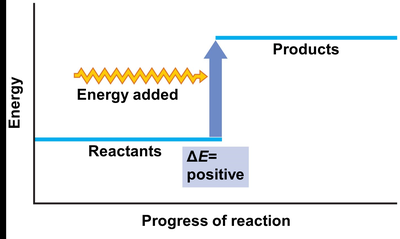
All chemical reactions involve energy exchange. The direction of a reaction is determined by the change in energy ().
Exergonic Reactions: Release energy; proceed spontaneously ( is negative).
Endergonic Reactions: Require energy input; do not proceed spontaneously ( is positive).



Exergonic-Endergonic Coupling
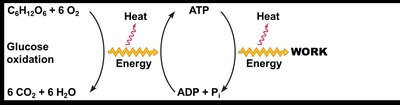
Energy released from catabolic (exergonic) reactions is used to drive anabolic (endergonic) reactions, ensuring efficient energy utilization in cells.
Example: ATP synthesis uses energy from glucose oxidation.

Units of Energy
Energy is measured in calories (cal), kilocalories (kcal), joules (J), or kilojoules (kJ). The calorie is defined as the amount of energy needed to raise 1 gram of water by 1°C.
Calorie: Energy/heat required for temperature change.
Common Units: kcal/mole, J, kJ.

Equilibrium and Reaction Direction
Chemical Equilibrium
At equilibrium, the rate of conversion of reactants to products equals the rate of conversion of products to reactants. The concentrations of reactants and products may differ, depending on their energy content.
Equilibrium Constant (K): Describes the ratio of product to reactant concentrations at equilibrium.
Law of Mass Action: Increasing reactant concentration pushes the reaction forward; increasing product concentration pushes it in reverse.
Equation:


Reaction Rates and Enzyme Catalysis
Reaction Rates
The rate at which reactants are consumed and products are formed is crucial for physiological function. Reaction rates must match cellular demands.
Factors Affecting Rate: Concentration of reactants/products, temperature, activation energy barrier.


Enzymes as Biological Catalysts
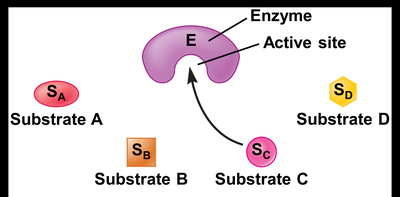
Enzymes are proteins that increase reaction rates by lowering activation energy. They are substrate-specific and are not consumed in the reaction.
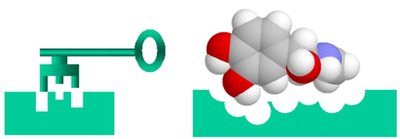
Substrate Specificity: The active site of the enzyme matches the substrate's shape (lock and key model).
Induced-Fit Model: The enzyme changes shape to accommodate the substrate.


Factors Affecting Enzyme Activity
Enzyme activity is influenced by temperature, pH, cofactors, coenzymes, enzyme and substrate concentration, and affinity.
Temperature: Body temperature is tightly regulated; extreme changes affect enzyme structure and function.
pH: Changes in acidity can decrease enzyme activity.
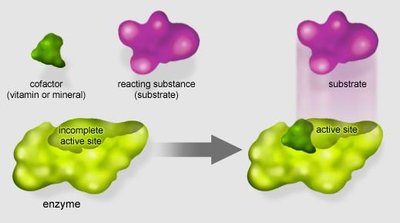
Cofactors and Coenzymes: Many enzymes require non-protein helpers (vitamins, minerals) for activity.
Affinity: The strength of substrate binding to the enzyme.


Saturation and Affinity
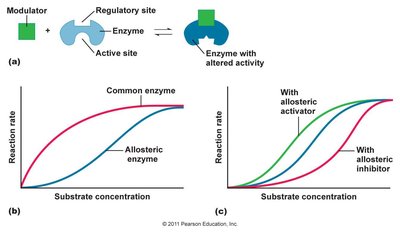
Enzyme-catalyzed reactions reach a maximum rate when all enzyme molecules are bound to substrate (saturation). Affinity affects reaction rate, especially at low substrate concentrations.
Saturation: Maximum reaction rate when enzyme is fully occupied.
Affinity: High-affinity enzymes bind substrate more readily, increasing reaction rate at low substrate concentrations.


Regulation of Enzyme Activity
Cells regulate enzyme activity through allosteric regulation, covalent modification, and feedback inhibition to adapt metabolism to changing demands.
Allosteric Regulation: Modulators bind to sites other than the active site, altering enzyme activity.
Covalent Regulation: Addition or removal of chemical groups (e.g., phosphorylation).
Feedback Inhibition: End product inhibits the rate-limiting enzyme in a pathway.
Glucose Oxidation and ATP Production
Central Reaction in Energy Metabolism
Glucose oxidation is the primary pathway for ATP production in cells. It involves glycolysis, the linking step, the Krebs cycle, and oxidative phosphorylation.
Overall Reaction:
ATP Synthesis: Energy from glucose oxidation is used to synthesize ATP.
Stages of Glucose Oxidation
Glycolysis: Occurs in the cytosol; splits glucose into pyruvate, producing ATP and NADH.
Linking Step: Converts pyruvate to Acetyl CoA in the mitochondrial matrix.
Krebs Cycle: Acetyl CoA enters the cycle, generating NADH, FADH2, ATP, and CO2.
Oxidative Phosphorylation: NADH and FADH2 donate electrons to the electron transport chain, producing ATP.
Process | Products | ATP Conversion | ATP Tally |
|---|---|---|---|
Glycolysis | 2 ATP, 2 NADH + H+, 2 pyruvate | 2.5 ATP per NADH + H+ (ETC) | 2 + 5 |
Linking Step | 2 NADH + H+, 2 CO2 | 2.5 ATP per NADH + H+ (ETC) | 5 |
Krebs Cycle | 6 NADH + H+, 2 FADH2, 2 GTP, 4 CO2 | 2.5 ATP per NADH + H+ (ETC), 1.5 ATP per FADH2 (ETC), 1 ATP per GTP (S-L Phos.) | 15 + 3 + 2 |
Total ATP from Aerobic Metabolism | 32 ATP |
Anaerobic Metabolism: Pyruvate to Lactic Acid
When oxygen is limited, pyruvate is converted to lactate to regenerate NAD+ and allow glycolysis to continue. This process is catalyzed by lactate dehydrogenase (LDH).
Importance: Maintains ATP production under anaerobic conditions.
Consequence: Accumulation of lactate can impair cellular function.
Additional Metabolic Pathways
Lipid and Protein Metabolism
Lipolysis, lipogenesis, proteolysis, and protein formation are additional metabolic pathways that contribute to energy production and cellular function.
Lipid Oxidation: Occurs in mitochondria and peroxisomes.
Glycogenolysis: Conversion of glycogen to glucose (liver-specific enzyme: glucose-6-phosphatase).
Additional info: These notes provide a comprehensive overview of cell metabolism, including the principles, pathways, and regulatory mechanisms essential for understanding energy production and utilization in physiology.
