 Back
BackCell Structure and Function Study Guide for ANP
Study Guide - Smart Notes
 Tailored notes based on your materials, expanded with key definitions, examples, and context.
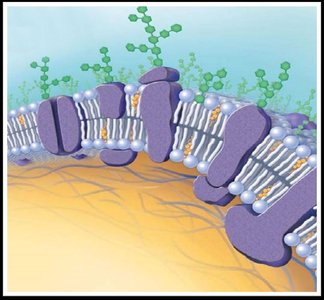
Q1. What are two functions of the structure labeled #1?
Background
Topic: Plasma Membrane Structure
This question tests your understanding of the plasma membrane, specifically the phospholipid bilayer, and its role in cellular function.
Key Terms:
Phospholipid bilayer: The fundamental structure of the plasma membrane.
Selective permeability: The ability of the membrane to regulate what enters and exits the cell.
Barrier: The membrane separates the internal environment from the external environment.
Step-by-Step Guidance
Recall the basic structure of the plasma membrane: it is primarily composed of a double layer of phospholipids.
Think about how the phospholipid bilayer acts as a barrier to most substances, maintaining the internal environment of the cell.
Consider how the membrane allows selective transport of molecules, contributing to homeostasis.
Identify two main functions based on these structural features.
Try solving on your own before revealing the answer!
Final Answer:
The structure labeled #1 (phospholipid bilayer) functions as a selective barrier and regulates transport of substances into and out of the cell.
It maintains cellular integrity and allows for selective permeability, which is essential for cell survival.
Q2. Will glucose be able to pass freely through the structures labeled #9? Explain your answer.
Background
Topic: Membrane Transport
This question tests your understanding of how molecules like glucose cross the plasma membrane, focusing on the role of membrane proteins and the phospholipid bilayer.
Key Terms:
Phospholipid bilayer: Hydrophobic interior prevents passage of polar molecules.
Glucose: A polar molecule, not lipid-soluble.
Transport proteins: Facilitate movement of specific molecules across the membrane.
Step-by-Step Guidance
Recall the properties of the phospholipid bilayer: it is hydrophobic in the center.
Consider the chemical nature of glucose: it is hydrophilic and polar.
Think about whether glucose can diffuse through the hydrophobic region of the membrane without assistance.
Identify the role of membrane proteins in facilitating glucose transport.
Try solving on your own before revealing the answer!
Final Answer:
Glucose cannot pass freely through the phospholipid bilayer (#9) because it is polar and requires a transport protein to cross the membrane.
Membrane proteins such as carrier proteins or channels are necessary for glucose transport.
Q3. Name three specific types of rods that make up the region labeled #4. What proteins are each type made of?
Background
Topic: Cytoskeleton Structure
This question tests your knowledge of the cytoskeleton, which provides structural support and facilitates movement within the cell.
Key Terms:
Cytoskeleton: Network of protein filaments and tubules.
Microtubules, microfilaments, intermediate filaments: The three main types of cytoskeletal rods.
Step-by-Step Guidance
Recall the three main components of the cytoskeleton: microtubules, microfilaments, and intermediate filaments.
Identify the protein composition of each: microtubules (tubulin), microfilaments (actin), intermediate filaments (various proteins, e.g., keratin).
Think about the structural and functional differences between these rods.
List the three types and their corresponding proteins.
Try solving on your own before revealing the answer!
Final Answer:
The three types of rods are microtubules (made of tubulin), microfilaments (made of actin), and intermediate filaments (made of proteins like keratin).
Each type contributes to cell structure and function in different ways.
Q4. What are some possible functions of the proteins similar to those labeled #6?
Background
Topic: Membrane Proteins
This question tests your understanding of the roles of membrane proteins, including transport, signaling, and structural support.
Key Terms:
Integral proteins: Embedded in the membrane, often span the bilayer.
Peripheral proteins: Attached to the membrane surface.
Functions: Transport, cell signaling, cell recognition, structural support.
Step-by-Step Guidance
Recall the types of membrane proteins and their locations.
Think about the various functions these proteins can perform, such as acting as channels, receptors, or enzymes.
Consider how these proteins contribute to cell communication and transport.
List several possible functions based on their structure and location.
Try solving on your own before revealing the answer!
Final Answer:
Proteins similar to those labeled #6 may function as transporters, receptors, enzymes, or provide structural support.
They are essential for communication, transport, and maintaining cell integrity.
Q5. What would be the purpose of the structure labeled #7 within the membranes?
Background
Topic: Membrane Components
This question tests your understanding of additional membrane components, such as cholesterol, and their role in membrane fluidity and stability.
Key Terms:
Cholesterol: A lipid molecule found within the membrane.
Membrane fluidity: The ability of the membrane to remain flexible.
Stability: Cholesterol helps stabilize the membrane structure.
Step-by-Step Guidance
Recall the role of cholesterol in the plasma membrane.
Think about how cholesterol affects membrane fluidity and prevents it from becoming too rigid or too fluid.
Consider the importance of membrane stability for cell function.
Describe the purpose of this structure based on its location and function.
Try solving on your own before revealing the answer!
Final Answer:
The structure labeled #7 (cholesterol) helps maintain membrane fluidity and stability.
It prevents the membrane from becoming too rigid or too permeable.
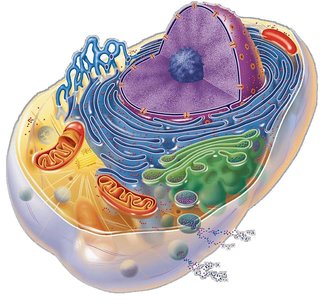
Q6. Label the diagram of the cell.
Background
Topic: Cell Organelles Identification
This question tests your ability to identify and label the major organelles in a typical eukaryotic cell.
Key Terms:
Organelles: Specialized structures within the cell, each with unique functions.
Nucleus, mitochondria, endoplasmic reticulum, Golgi apparatus, lysosomes, etc.
Step-by-Step Guidance
Review the diagram and identify the major organelles based on their shape and location.
Recall the functions and appearance of each organelle: nucleus (control center), mitochondria (energy production), ER (protein/lipid synthesis), Golgi (modification/packaging).
Match the numbered labels to the correct organelle names.
Use your textbook or lecture notes to confirm the identification of each structure.
Try solving on your own before revealing the answer!
Final Answer:
The diagram includes the nucleus, mitochondria, rough and smooth ER, Golgi apparatus, lysosomes, and other organelles.
Each label corresponds to a specific organelle based on its structure and function.
Q7. Fill in the following tables of the typical cellular organelles. Make sure to describe important structural and functional characteristics of each.
Background
Topic: Organelle Structure and Function
This question tests your knowledge of the structure and function of various cellular organelles.
Key Terms:
Cytoplasm: The fluid and organelles within the cell.
Mitochondria: Site of ATP production.
Endoplasmic reticulum: Rough (protein synthesis), smooth (lipid synthesis).
Ribosomes: Protein synthesis.
Golgi apparatus: Modifies and packages proteins.
Lysosomes, peroxisomes: Digestion and detoxification.
Cytoskeleton: Structural support.
Nucleus: Genetic control.
Step-by-Step Guidance
Review the list of organelles and recall their main structural features.
Identify the primary function of each organelle (e.g., mitochondria = energy production).
Describe any unique characteristics, such as the double membrane of mitochondria or the presence of ribosomes on rough ER.
Fill in the table with concise descriptions for each organelle.
Try solving on your own before revealing the answer!
Final Answer:
The table should include structural and functional details for each organelle, such as cytoplasm (fluid matrix), mitochondria (ATP production), ER (protein/lipid synthesis), ribosomes (protein synthesis), Golgi (modification/packaging), lysosomes (digestion), peroxisomes (detoxification), cytoskeleton (support), nucleus (genetic control), etc.
Each description highlights the unique role and structure of the organelle.
