 Back
BackCells and Tissues: Structure, Function, and Transport Mechanisms
Study Guide - Smart Notes
 Tailored notes based on your materials, expanded with key definitions, examples, and context.
Cells and Tissues
Introduction to Cells
Cells are the fundamental structural and functional units of all living organisms. Each cell is specialized to perform specific tasks that contribute to the overall function of the body. The study of cells and tissues is essential for understanding human anatomy and physiology.
Part One: Cells
Anatomy of a Generalized Cell
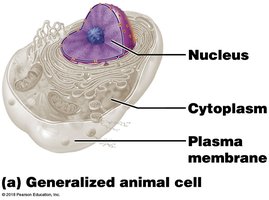
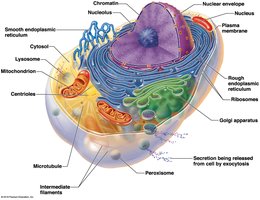
A typical animal cell consists of three main regions:
Plasma membrane: The outer boundary that separates the cell from its environment.
Nucleus: The control center containing genetic material (DNA).
Cytoplasm: The fluid-filled space between the nucleus and plasma membrane, containing organelles.
The Plasma Membrane
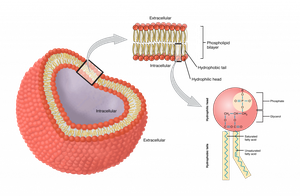
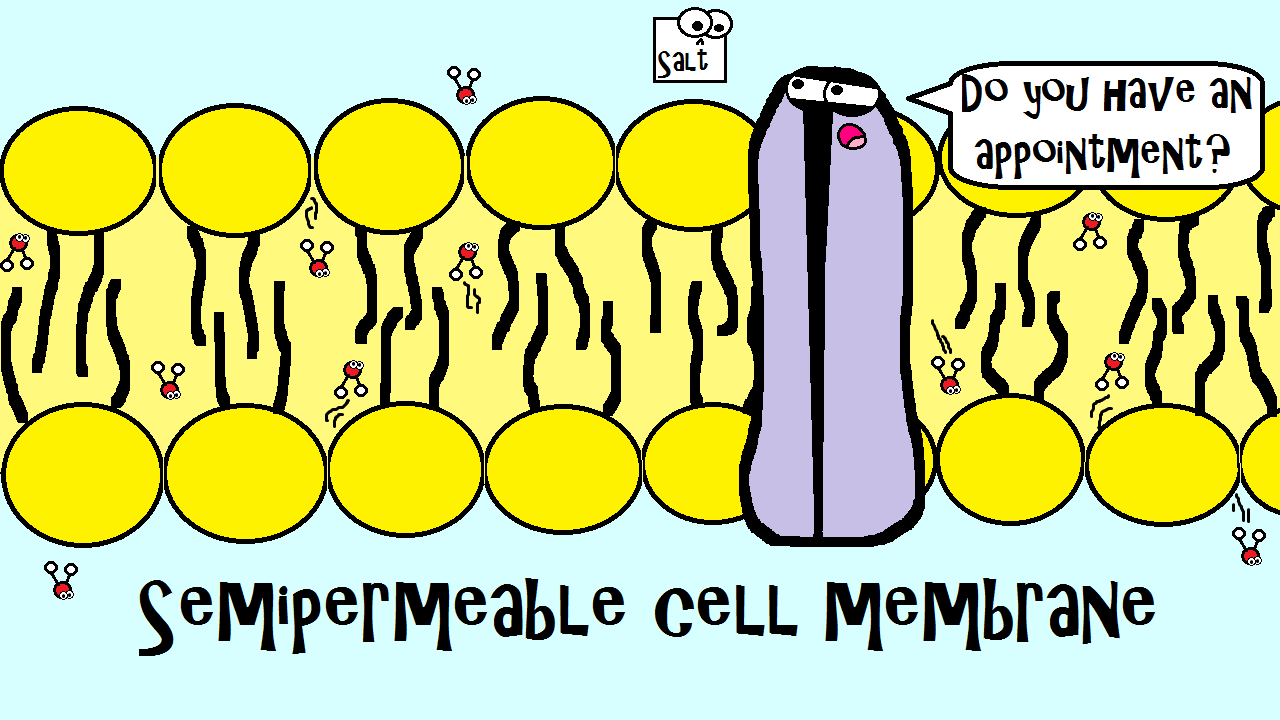
The plasma membrane is a selectively permeable barrier that regulates the movement of substances into and out of the cell. It is described by the fluid mosaic model, which highlights its dynamic and flexible nature.
Composed of a double layer of phospholipids arranged tail-to-tail, with embedded proteins and cholesterol.
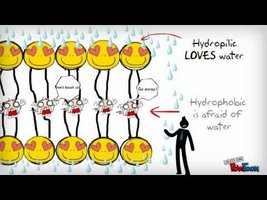
Phospholipid heads are hydrophilic (water-loving), while tails are hydrophobic (water-fearing), creating a semi-permeable barrier.
Proteins serve as receptors, channels, or carriers for transport and communication.
The Nucleus
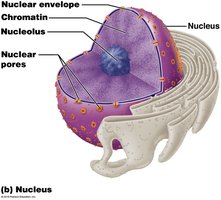
The nucleus is the cell's control center, containing DNA necessary for protein synthesis and cell reproduction. It consists of:
Nuclear envelope: Double membrane with pores for material exchange.
Nucleolus: Site of ribosome synthesis.
Chromatin: DNA and protein complex that condenses into chromosomes during cell division.
The Cytoplasm and Organelles
The cytoplasm is the site of most cellular activities and contains various organelles, each with specialized functions:
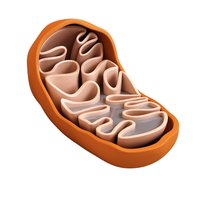
Mitochondria: "Powerhouses" of the cell, generating ATP through cellular respiration.
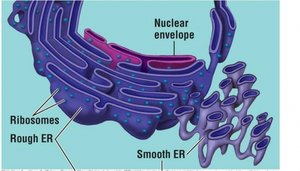
Endoplasmic Reticulum (ER):
Rough ER: Studded with ribosomes; synthesizes proteins.
Smooth ER: Lacks ribosomes; involved in lipid metabolism.
Golgi apparatus: Modifies, sorts, and packages proteins for secretion or delivery to other organelles.
Centrioles: Direct the formation of the mitotic spindle during cell division.
Cell Diversity
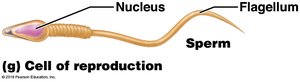
Cells vary greatly in size, shape, and function, reflecting their specialized roles in the body. Examples include nerve cells, muscle cells, and reproductive cells.
Membrane Transport
Selective Permeability of the Plasma Membrane
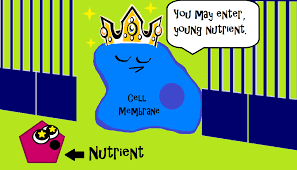
The plasma membrane is selectively permeable, allowing some substances to pass while excluding others. This property is essential for maintaining cellular homeostasis.
Methods of Membrane Transport
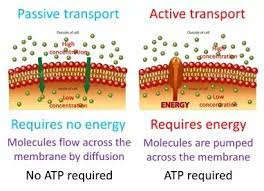
Passive processes: Do not require cellular energy (ATP). Include diffusion and filtration.
Active processes: Require ATP to move substances, often against their concentration gradients.
Passive Transport: Diffusion
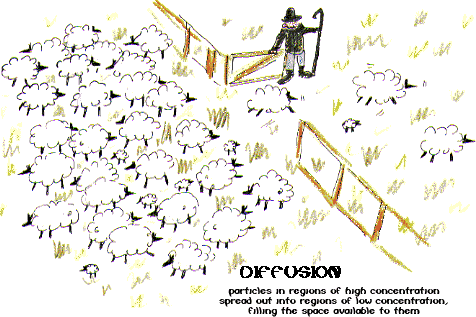
Diffusion is the movement of molecules from an area of high concentration to an area of low concentration, down a concentration gradient. Types include:
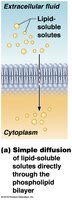
Simple diffusion: Unassisted movement of lipid-soluble or small molecules through the membrane.
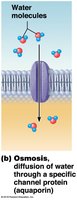
Osmosis: Diffusion of water across a selectively permeable membrane via aquaporins.
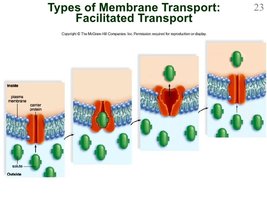
Facilitated diffusion: Movement of larger or charged molecules via protein channels or carriers.
Osmosis and Tonicity
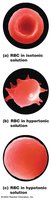
Osmosis affects cell volume depending on the tonicity of the surrounding solution:
Isotonic: Equal solute and water concentrations; no net water movement.
Hypertonic: Higher solute concentration outside; water leaves the cell, causing shrinkage.
Hypotonic: Lower solute concentration outside; water enters the cell, causing swelling.
Active Transport
Active transport uses ATP to move substances against their concentration gradients. The sodium-potassium pump is a classic example, essential for nerve impulse transmission.
Sodium-potassium pump: Moves sodium ions out and potassium ions into the cell.
Vesicular transport: Bulk movement of substances via vesicles (includes exocytosis and endocytosis).

Cell Division
Overview of the Cell Cycle
The cell cycle consists of interphase (growth and metabolic activities) and cell division (mitosis and cytokinesis). Mitosis ensures genetic continuity by producing two identical daughter cells.
Interphase: Cell grows and DNA replicates.
Mitosis: Division of the nucleus.
Cytokinesis: Division of the cytoplasm.
Part Two: Body Tissues
Introduction to Tissues
Tissues are groups of cells with similar structure and function. The four primary tissue types are:
Epithelial tissue: Covers surfaces and lines cavities.
Connective tissue: Supports, protects, and binds other tissues.
Muscle tissue: Contracts to produce movement.
Nervous tissue: Receives and transmits impulses.
Epithelial Tissue
Epithelial tissue forms body coverings, linings, and glands. It is classified by cell layers (simple or stratified) and cell shape (squamous, cuboidal, columnar).
Simple epithelia: Single layer; functions in absorption, secretion, and filtration.
Stratified epithelia: Multiple layers; primarily protective.
Glandular epithelia: Forms endocrine and exocrine glands.
Connective Tissue
Connective tissue is the most abundant tissue type, providing support, protection, and insulation. It is characterized by an extracellular matrix and varying degrees of vascularity.
Types: Bone, cartilage, dense connective tissue, loose connective tissue, blood.
Main elements: Cells (e.g., fibroblasts, chondrocytes, osteocytes) and fibers (collagen, elastic).
Muscle Tissue
Muscle tissue is specialized for contraction and movement. There are three types:
Skeletal muscle: Voluntary, striated, attached to bones.
Cardiac muscle: Involuntary, striated, found in the heart.
Smooth muscle: Involuntary, non-striated, found in walls of hollow organs.
Nervous Tissue
Nervous tissue is specialized for communication via electrical impulses. It consists of neurons and supporting cells (neuroglia).
Functions: Irritability (response to stimuli) and conductivity (transmission of impulses).
Table: Parts of the Cell—Structure and Function
Cell Part | Structure | Function |
|---|---|---|
Plasma Membrane | Double layer of lipids with proteins, cholesterol, and some sugars | Acts as a cell barrier, regulates entry/exit, maintains electrical condition, and supports cell communication |
Nucleus | Surrounded by nuclear envelope, contains chromatin and nucleolus | Stores genetic material, controls cell activities |
Mitochondria | Double-membraned, inner folds (cristae) | Site of ATP production |
Rough ER | Membranous network with ribosomes | Protein synthesis and transport |
Smooth ER | Membranous network without ribosomes | Lipid metabolism |
Golgi Apparatus | Stack of flattened membranes | Modifies, sorts, and packages proteins |
Centrioles | Paired cylindrical bodies | Organize mitotic spindle during cell division |
