 Back
BackCellular Energy, Chemical Reactions, and Cellular Respiration
Study Guide - Smart Notes
 Tailored notes based on your materials, expanded with key definitions, examples, and context.
Energy, Chemical Reactions, and Cellular Respiration
Introduction to Cellular Energy
All living organisms require energy to perform essential life processes such as muscle contraction, blood circulation, nutrient absorption, gas exchange, and the synthesis of new molecules. The breakdown of glucose through metabolic pathways forms ATP, the primary energy currency of cells.
Energy: The capacity to do work, existing in two states:
Potential energy: Stored energy (e.g., concentration gradients across membranes).
Kinetic energy: Energy of motion (e.g., movement of ions or molecules).
Energy can be converted from one state to another, such as water at the top of a dam (potential) falling and turning turbines (kinetic).
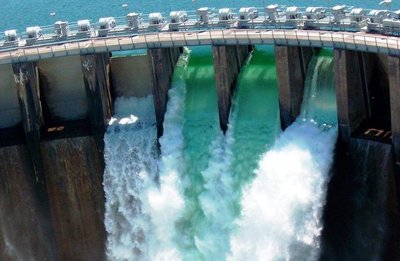
Forms of Energy in Biological Systems
Chemical energy: Energy stored in molecular bonds, crucial for movement, synthesis, and maintaining gradients.
Major storage molecules:
Triglycerides: Long-term energy storage in adipose tissue.
Glycogen: Stored in liver and muscle.
ATP: Produced continuously and used immediately in all cells.
Proteins: Can be used as fuel but primarily serve other functions.
Chemical Reactions and Metabolism
Overview of Chemical Reactions
Chemical reactions involve the breaking and forming of chemical bonds, summarized by chemical equations. Metabolism encompasses all chemical reactions in the body.
Reactants: Substances present before the reaction (left side of equation).
Products: Substances formed by the reaction (right side of equation).
Balanced equations have equal numbers of each element on both sides.
Classification of Chemical Reactions
Type of Reaction | Definition | Example |
|---|---|---|
Decomposition | Complex molecules broken into simpler structures | Sucrose → glucose + fructose |
Synthesis | Simple molecules bonded together to form complex molecules | Amino acids → dipeptide |
Exchange | Atoms, molecules, or ions exchanged between structures | Creatine phosphate + ADP → Creatine + ATP |
Oxidation-Reduction (Redox) | Electrons transferred from one molecule to another | NAD+ + 2H → NADH + H+ |
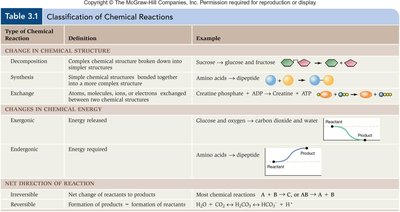
Changes in Chemical Energy
Exergonic reactions: Release energy (e.g., decomposition of glucose).
Endergonic reactions: Require energy input (e.g., synthesis of proteins).
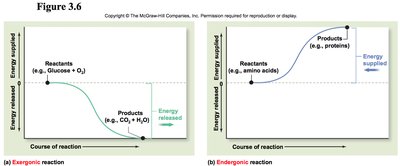
ATP Cycling
ATP is continuously formed and broken down in cells. Energy from exergonic reactions is used to form ATP, which is then used in endergonic processes.
Enzymes and Reaction Rates
Function and Structure of Enzymes
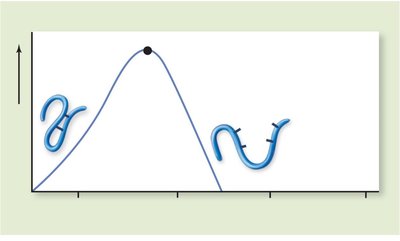
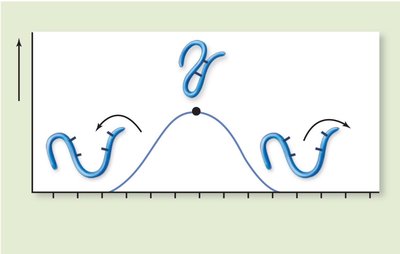
Enzymes are biological catalysts that accelerate chemical reactions by lowering activation energy. They are specific to substrates and are not consumed in the reaction.
Some enzymes remain within cells, some are embedded in membranes, and others are secreted.
Cofactors (e.g., vitamins, metal ions) are often required for enzyme function.
Factors Affecting Enzyme Activity
Enzyme and substrate concentration: Reaction rate increases with concentration until saturation is reached.
Temperature: Optimal activity at normal body temperature; high temperatures cause denaturation.
pH: Most enzymes function best between pH 6 and 8; deviations can denature the enzyme.
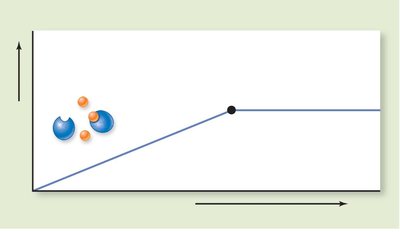
Cellular Respiration
Overview of Glucose Oxidation
Cellular respiration is a multistep process that oxidizes organic molecules to release energy for ATP synthesis. Oxygen is required for the complete breakdown of glucose.
General equation:
ATP is produced by substrate-level phosphorylation (direct) and oxidative phosphorylation (indirect, via electron transport chain).
Stages of Cellular Respiration
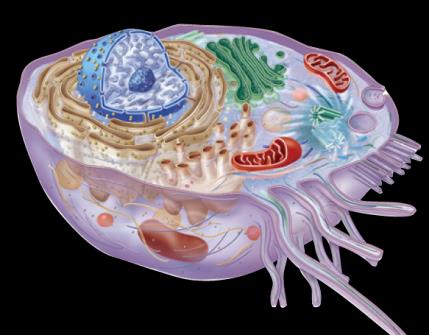
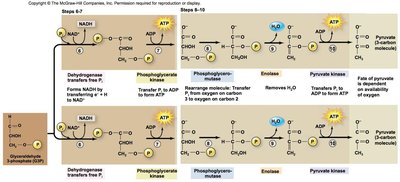
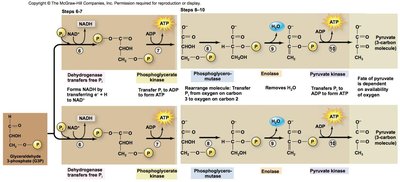
Glycolysis (cytosol, anaerobic): Glucose → 2 pyruvate, 2 ATP, 2 NADH
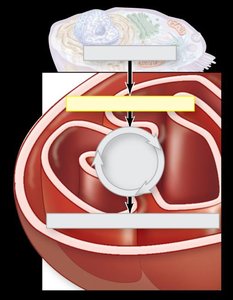
Intermediate stage (mitochondria): Pyruvate → Acetyl CoA, CO2, NADH
Citric Acid Cycle (mitochondria): Acetyl CoA → 2 CO2, 1 ATP, 3 NADH, 1 FADH2 (per cycle)
Electron Transport System (mitochondria): NADH and FADH2 donate electrons to generate ATP
Glycolysis
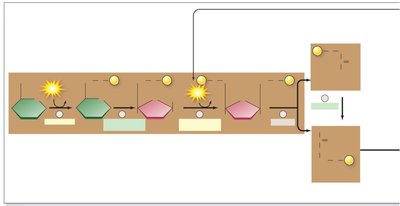
Occurs in the cytosol and does not require oxygen.
Glucose is split into two molecules of pyruvate.
Net gain: 2 ATP (2 used, 4 produced), 2 NADH.
Key regulatory enzyme: phosphofructokinase (PFK), inhibited by ATP (negative feedback).
Intermediate Stage
Links glycolysis to the citric acid cycle.
Pyruvate is converted to acetyl CoA by pyruvate dehydrogenase, releasing CO2 and forming NADH.
Occurs twice per glucose molecule.
Citric Acid Cycle (Krebs Cycle)
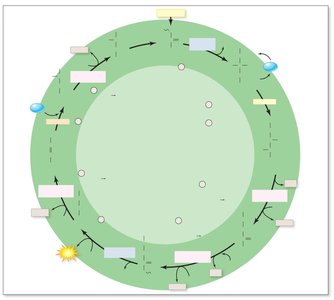
Occurs in the mitochondrial matrix and requires oxygen.
Acetyl CoA combines with oxaloacetic acid (OAA) to begin the cycle.
Each turn produces: 2 CO2, 1 ATP, 3 NADH, 1 FADH2.
Two turns per glucose molecule.
Electron Transport System (ETS)
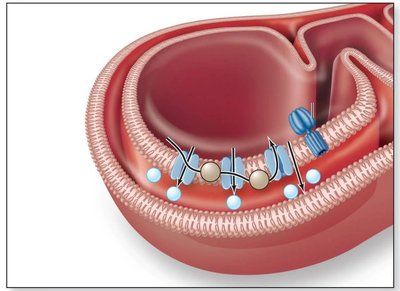
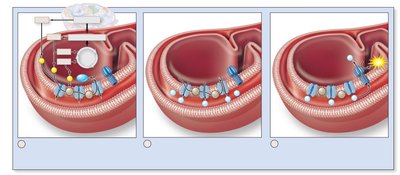
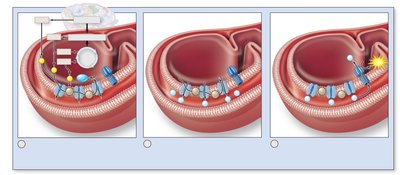
Located in the inner mitochondrial membrane (cristae).
NADH and FADH2 donate electrons to a series of protein complexes.
Energy from electrons pumps H+ ions, creating a gradient.
ATP synthetase uses the flow of H+ back into the matrix to synthesize ATP (chemiosmosis).
Oxygen is the final electron acceptor, forming water.
ATP Yield from Glucose
Stage | Substrate-level phosphorylation | Oxidative phosphorylation |
|---|---|---|
Glycolysis | 2 ATP | 2 NADH → 6 ATP |
Intermediate Stage | – | 2 NADH → 6 ATP |
Citric Acid Cycle | 2 ATP | 6 NADH → 18 ATP 2 FADH2 → 4 ATP |
Total | 4 ATP | 34 ATP |
Net ATP yield per glucose molecule: 36 ATP (after accounting for transport costs).
Fate of Pyruvate with Insufficient Oxygen
Without sufficient oxygen, the electron transport chain slows, and NADH accumulates.
Cells rely more on glycolysis, but NAD+ must be regenerated.
Pyruvate is converted to lactate (lactic acid), allowing glycolysis to continue but yielding only 2 ATP per glucose.
Other Fuel Molecules in Cellular Respiration
Fatty acids: Undergo beta-oxidation to form acetyl CoA, entering the citric acid cycle (aerobic only).
Proteins: Amino acids are deaminated; carbon skeletons enter glycolysis, intermediate stage, or citric acid cycle.
Interconversion of Nutrient Biomolecules
Biochemical pathways allow for the conversion of one nutrient type to another (e.g., glucose to fatty acids for storage, or amino acids to glucose during starvation).
Additional info: This flexibility is essential for metabolic adaptation during fasting, exercise, or dietary changes.
