 Back
BackCellular Immune Response and Immune System Disorders
Study Guide - Smart Notes
 Tailored notes based on your materials, expanded with key definitions, examples, and context.
Cellular Immune Response
Overview of T Cell Function
The cellular immune response is primarily mediated by T cells, which defend against intracellular antigens such as viruses, bacteria, cancerous cells, and transplanted cells. T cells are more complex than B cells in both classification and function, and are divided based on the glycoprotein receptors displayed on their surface: CD4 and CD8 cells.
CD4 cells usually become helper T cells (TH) that activate B cells, other T cells, and macrophages, and direct the adaptive immune response. Some CD4 cells become regulatory T cells or memory T cells.
CD8 cells become cytotoxic T cells (TC) capable of destroying cells harboring foreign antigens, and can also become memory T cells.
Naive T cells are simply termed CD4 or CD8 cells until activation.
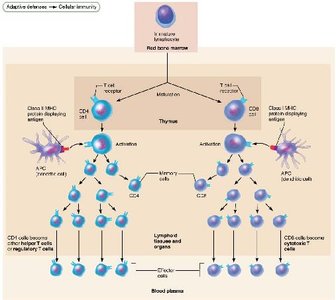
Major Types of T Cells
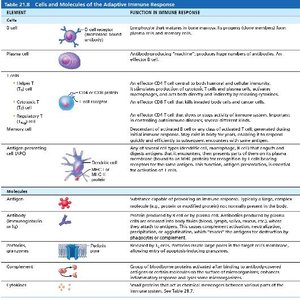
Helper T cells (TH): Central to adaptive immunity, activate both humoral and cellular arms.
Cytotoxic T cells (TC): Directly attack and kill infected or abnormal cells.
Regulatory T cells (TReg): Moderate immune response and prevent autoimmunity.
Memory T cells: Mediate secondary immune responses.
MHC Proteins and Antigen Presentation
Role of MHC Proteins
T cells respond only to processed fragments of antigens displayed on cell surfaces by major histocompatibility complex (MHC) proteins. Antigen presentation is vital for activation of naive T cells and normal functioning of effector T cells.
Class I MHC proteins: Displayed by all nucleated cells except RBCs; bind short fragments of endogenous antigens (self or nonself).
Class II MHC proteins: Displayed by antigen-presenting cells (APCs) such as dendritic cells, macrophages, and B cells; bind longer fragments of exogenous antigens.
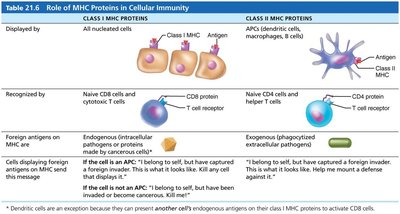
MHC Restriction
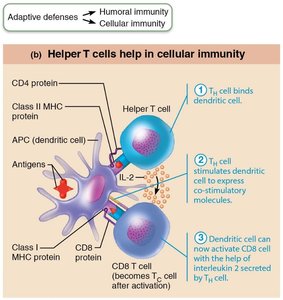
CD4 cells (helper T cells) are restricted to binding only class II MHC proteins, typically on APC surfaces.
CD8 cells (cytotoxic T cells) are restricted to binding only class I MHC proteins found on every cell surface, including APC surfaces.
Dendritic cells can present both endogenous and exogenous antigens on class I and II MHCs, enabling activation of CD8 cells by phagocytosed proteins.
Activation and Differentiation of T Cells
Two-Step Activation Process
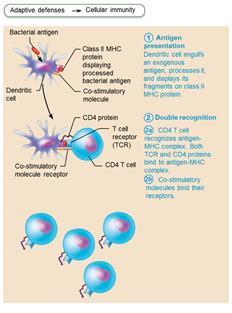
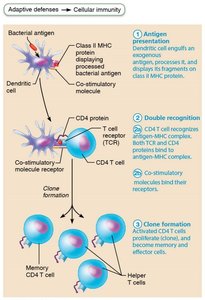
T cell activation requires antigen presentation and co-stimulation, both occurring on the surface of the same APC. This two-step process ensures clonal selection and prevents unwanted T cell activation.
Step 1: Antigen Binding – T cell receptors (TCRs) bind to antigen-MHC complex on APC surface, requiring double recognition of both MHC and foreign antigen.
Step 2: Co-stimulation – T cell must also bind to co-stimulatory signals on APC surface. Without co-stimulation, T cells become tolerant, unable to divide, and do not secrete cytokines (anergy).
Proliferation and Differentiation
Activated T cells enlarge and proliferate in response to cytokines, differentiating according to their class.
Primary T cell response peaks within a week; apoptosis occurs between days 7 and 30 to prevent hyperplasia or cancer.
Memory T cells remain to mediate secondary responses.
Cytokines
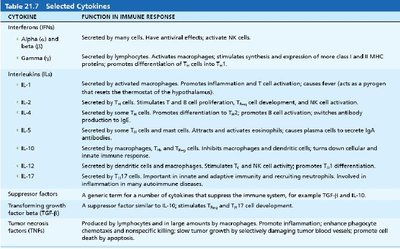
Cytokines are chemical messengers that mediate cell development, differentiation, and immune responses. They include interferons and interleukins, which amplify and regulate both innate and adaptive responses.
Roles of Specific Effector T Cells
Helper T Cells (TH)
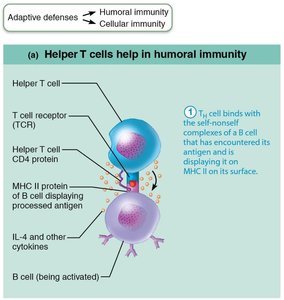
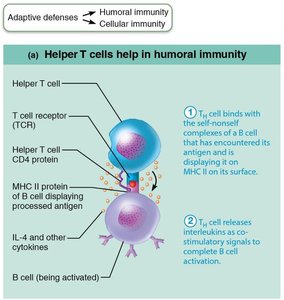
Helper T cells play a central role in adaptive immunity by activating both humoral and cellular arms. They help activate B cells, induce proliferation, and secrete cytokines to recruit other immune cells.
Without TH cells, there is no immune response.
Most antigens are T cell–dependent and require TH co-stimulation for B cell activation.
Activation of CD8 Cells
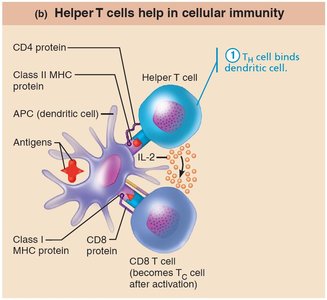
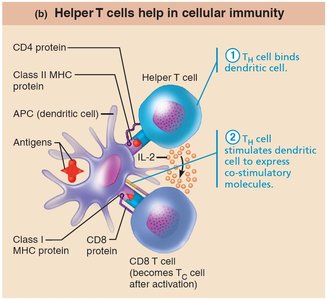
CD8 cells require helper T cells to become activated into cytotoxic T cells. Helper T cells stimulate dendritic cells to express co-stimulatory molecules required for CD8 cell activation.
Cytotoxic T Cells (TC)
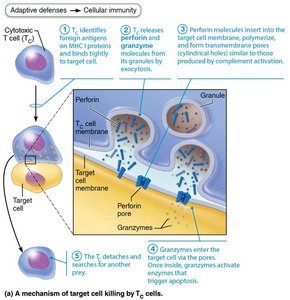
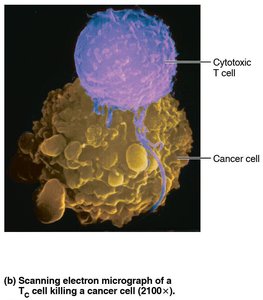
Cytotoxic T cells directly attack and kill infected or abnormal cells using two mechanisms:
Release of perforins and granzymes by exocytosis, creating pores and inducing apoptosis.
Binding to specific membrane receptors on target cells to stimulate apoptosis.
Regulatory T Cells (TReg)
Dampen immune response by direct contact or by secreting inhibitory cytokines such as IL-10 and TGF-β.
Prevent autoimmune reactions by suppressing self-reactive lymphocytes.
Summary Table: Cells and Molecules of Adaptive Immune Response
Immune System Disorders
Immunodeficiencies
Immunodeficiency refers to congenital or acquired conditions that impair immune cell function or production. Examples include:
Severe combined immunodeficiency (SCID): Genetic defect with marked deficit in B and T cells; treated with bone marrow transplants.
Hodgkin’s disease: Cancer of B cells leading to immunodeficiency.
Acquired immune deficiency syndrome (AIDS): Caused by HIV, which destroys helper T cells and depresses cellular immunity.
Autoimmune Diseases
Autoimmune diseases occur when the immune system loses the ability to distinguish self from foreign, resulting in destruction of body tissues by autoantibodies and sensitized TC cells.
Examples: rheumatoid arthritis, myasthenia gravis, multiple sclerosis, Graves’ disease, type 1 diabetes mellitus, systemic lupus erythematosus (SLE), glomerulonephritis.
Treatments include immunosuppressive drugs, blocking cytokine action, and research into regulatory T cell activation.
Hypersensitivities
Hypersensitivities are immune responses to perceived threats that cause tissue damage. Types are distinguished by time course and whether antibodies or T cells are involved.
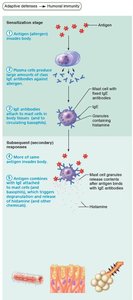
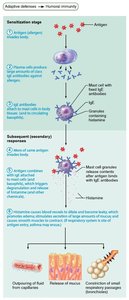
Immediate hypersensitivity (Type I): Allergies; IgE binds to mast cells and basophils, causing histamine release and inflammation.
Subacute hypersensitivity (Type II & III): IgM and IgG mediated; includes cytotoxic and immune complex reactions.
Delayed hypersensitivity (Type IV): T cell mediated; includes allergic contact dermatitis and TB skin test.
Developmental Aspects of the Immune System
Immune System Development
Stem cells develop in liver and spleen during early weeks; bone marrow becomes primary source later.
Lymphocyte development continues in bone marrow and thymus.
TH2 lymphocytes predominate in newborns; TH1 system matures with antigen exposure.
Influences and Aging
Nervous system, emotional stress, and diet (vitamin D) influence immune function.
With age, immune system wanes, increasing susceptibility to immunodeficiency, autoimmunity, and cancer.
