 Back
BackChapter 12: The Lymphatic System and Body Defenses – Study Notes
Study Guide - Smart Notes
 Tailored notes based on your materials, expanded with key definitions, examples, and context.
The Lymphatic System
Overview and Functions
The lymphatic system is a network of vessels, tissues, and organs that helps maintain fluid balance, protects the body from infection, and supports immune function. It consists of lymphatic vessels and lymphoid tissues/organs.
Transports excess tissue fluid (lymph) back to the bloodstream.
Plays essential roles in body defense and resistance to disease.
Lymphatic Vessels
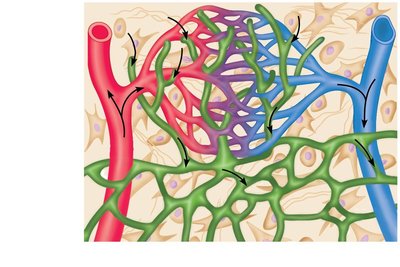
Lymphatic vessels form a one-way system that returns lymph toward the heart. If fluids are not picked up, edema (swelling) occurs as fluid accumulates in tissues.
Lymph: Excess tissue fluid and plasma proteins carried by lymphatic vessels.
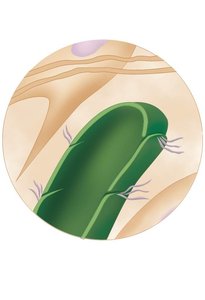
Lymphatic capillaries: Weave between tissue cells and blood capillaries, have overlapping walls forming flaplike minivalves, and are anchored by filaments to connective tissue.
Higher pressure inside closes minivalves, forcing fluid along the vessel.
Lymphatic Collecting Vessels and Ducts
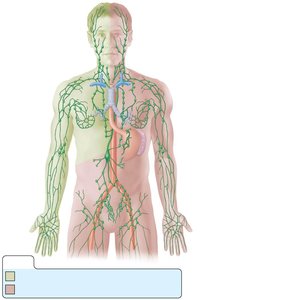
Lymphatic collecting vessels collect lymph from capillaries, carry it to and away from lymph nodes, and return fluid to veins near the heart.
Right lymphatic duct: Drains lymph from the right arm and right side of the head and thorax.
Thoracic duct: Drains lymph from the rest of the body.
Comparison to Veins
Lymphatic vessels are similar to veins: thin-walled, have valves, and are low-pressure, pumpless systems. Lymph transport is aided by skeletal muscle action, thoracic pressure changes during breathing, and smooth muscle in vessel walls.
Lymph Nodes
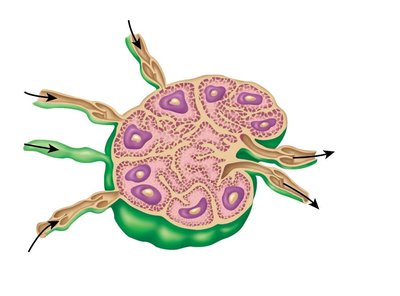
Lymph nodes filter lymph before it returns to the blood, removing harmful materials such as bacteria, viruses, cancer cells, and cell debris.
Macrophages: Engulf and destroy foreign substances.
Lymphocytes: Respond to foreign substances, part of the adaptive immune system.
Structure: Kidney-shaped, less than 1 inch long, with an outer cortex (lymphocyte follicles) and inner medulla (macrophages).
Lymph enters via afferent vessels, flows through sinuses, and exits via fewer efferent vessels, slowing flow for filtration.
Other Lymphoid Organs
Other organs contribute to lymphatic function:
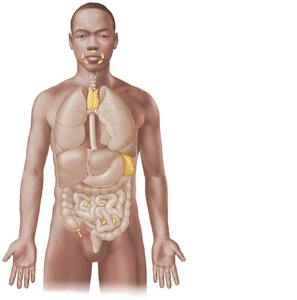
Spleen: Filters blood, destroys worn-out blood cells, forms blood cells in the fetus, and acts as a blood reservoir.
Thymus: Located over the heart, most active during childhood, produces hormones (e.g., thymosin) to program lymphocytes.
Tonsils: Masses of lymphoid tissue around the pharynx, trap and remove bacteria and foreign materials.
Peyer’s patches: Found in the wall of the small intestine and appendix, capture and destroy bacteria in the intestine.
MALT (Mucosa-Associated Lymphoid Tissue): Includes Peyer’s patches, tonsils, and other small accumulations, protecting respiratory and digestive tracts.
Body Defenses
Overview of Body Defenses
The body uses two defense systems against foreign materials:
Innate (nonspecific) defense system: Immediate, general protection against a variety of invaders.
Adaptive (specific) defense system: Targets specific invaders and provides immunity.
Innate (Nonspecific) Body Defenses
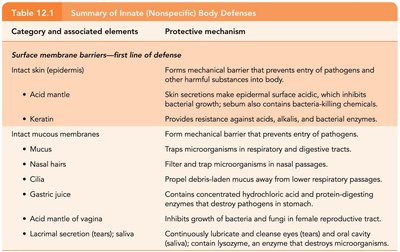
Innate defenses include mechanical barriers and chemical responses to pathogens.
First line of defense: Surface membrane barriers (skin and mucous membranes) and their secretions.
Second line of defense: Internal defenses such as phagocytes, natural killer cells, inflammation, antimicrobial proteins, and fever.
First Line: Surface Membrane Barriers
Skin: Acidic pH and sebum inhibit bacterial growth; keratin provides resistance.
Mucous membranes: Trap microorganisms; secretions (e.g., saliva, tears) contain lysozyme, an enzyme that destroys bacteria.
Stomach mucosa: Secretes hydrochloric acid and protein-digesting enzymes.
Mucus: Traps microorganisms in digestive and respiratory tracts.
Second Line: Internal Defenses
Phagocytes: Neutrophils and macrophages engulf and digest foreign material.
Natural Killer (NK) Cells: Lyse and kill virus-infected and cancer cells by releasing perforin.
Inflammatory Response: Triggered by tissue injury; characterized by redness, heat, swelling, and pain. Functions to prevent spread, dispose of debris/pathogens, and set the stage for repair.
Antimicrobial Proteins: Complement proteins and interferons attack microorganisms and hinder their reproduction.
Fever: Systemic response to infection; high temperature inhibits bacterial growth and speeds repair.
Adaptive (Specific) Body Defenses
Introduction to Adaptive Defenses
Adaptive defenses are the body's third line of defense, providing specific resistance to disease. The immune response is the system's reaction to a threat, and immunology is the study of immunity.
Antigen specific: Recognizes and acts against particular foreign substances.
Systemic: Not restricted to the initial infection site.
Memory: Mounts a stronger attack on previously encountered pathogens.
Antigens
Antigens: Substances capable of exciting the immune system and provoking a response (e.g., foreign proteins, nucleic acids, large carbohydrates, some lipids, pollen, microorganisms).
Self-antigens: Surface proteins on human cells; immune cells do not attack own proteins but may react to foreign cells (important in transplants).
Haptens: Small molecules that become antigenic when combined with body proteins, sometimes causing harmful immune responses.
Cells of the Adaptive Defense System
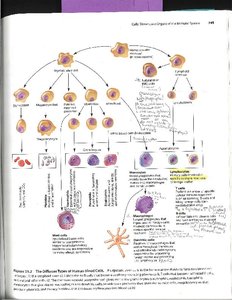
Lymphocytes: B cells (develop in bone marrow, provide humoral immunity) and T cells (develop in thymus, provide cell-mediated immunity).
Antigen-presenting cells (APCs): Dendritic cells, macrophages, and B lymphocytes that present antigens to T cells.
Types of Adaptive Immunity
Humoral immunity: Antibody-mediated, provided by antibodies in body fluids.
Cellular immunity: Cell-mediated, targets virus-infected cells, cancer cells, and foreign grafts.
Humoral (Antibody-Mediated) Immune Response
B lymphocytes bind to specific antigens, undergo clonal selection, and produce plasma cells (which secrete antibodies) and memory cells (for rapid future response).
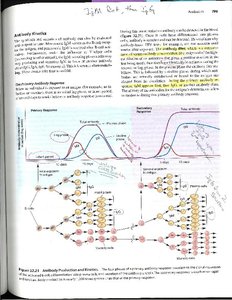
Primary response: First exposure to antigen; secondary response: Faster, stronger response upon re-exposure due to memory cells.
Antibodies (Immunoglobulins)
Soluble proteins secreted by plasma cells, capable of binding specifically to antigens.
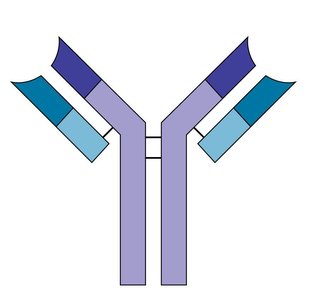
Structure: Four polypeptide chains (two heavy, two light) forming a Y-shape; variable regions form antigen-binding sites.
Five major classes: IgM, IgA, IgD, IgG, IgE (each with distinct roles).
Functions: Complement fixation, neutralization, agglutination, precipitation.
Active and Passive Immunity
Active immunity: Body produces antibodies after exposure to antigen (naturally by infection or artificially by vaccination).
Passive immunity: Antibodies are obtained from another source (e.g., mother to fetus, immune serum); no immunological memory is established.
Cellular (Cell-Mediated) Immune Response
Antigens must be presented by APCs to T cells, which then undergo clonal selection and differentiate into effector and memory T cells.
Helper T cells: Recruit other immune cells, stimulate B and cytotoxic T cells, and release cytokines.
Cytotoxic (Killer) T cells: Destroy infected cells by releasing perforin and granzymes.
Regulatory T cells: Suppress immune response to prevent overactivity.
Clinical Aspects and Disorders
Organ Transplants and Rejection
Types of grafts: Autografts (same person), isografts (identical twin), allografts (unrelated person), xenografts (different species).
Blood and tissue matching is essential; immunosuppressive therapy is required to prevent rejection.
Disorders of Immunity
Autoimmune diseases: Immune system attacks self-tissues (e.g., rheumatoid arthritis, multiple sclerosis, type I diabetes mellitus, lupus).
Allergies (hypersensitivities): Overreaction to harmless antigens, can be immediate (IgE-mediated) or delayed (T cell-mediated).
Immunodeficiencies: Abnormalities in immune elements (e.g., SCID, AIDS).
Developmental Aspects
Lymphatic vessels form from veins; thymus and spleen are first lymphoid organs to appear in embryo.
Immune response develops around birth; efficiency wanes with age, increasing susceptibility to infections and autoimmune diseases.
