Back
BackChapter 16: The Endocrine System – Structure, Function, and Disorders
Study Guide - Smart Notes
 Tailored notes based on your materials, expanded with key definitions, examples, and context.
Chapter 16: The Endocrine System
Overview of the Endocrine System
The endocrine system is a major regulatory system of the body, working closely with the nervous system to maintain homeostasis. It consists of glands and hormone-secreting cells that release chemical messengers (hormones) into the bloodstream to regulate the metabolic activities of target cells throughout the body.
Major Endocrine Glands: Pituitary, thyroid, parathyroid, adrenal, pineal, and thymus glands.
Hormone-Secreting Cells: Found in the brain, kidney, liver, pancreas, heart, stomach, gonads, and small intestine.
Endocrine vs. Exocrine: Endocrine glands are ductless and secrete hormones directly into the bloodstream. Exocrine glands have ducts and secrete substances onto epithelial surfaces (e.g., sweat, saliva).
Hormones: Chemical Messengers
Hormones are chemical messengers produced by ductless glands and cells. They regulate the metabolic function of other cells, typically acting more slowly than neurotransmitters but with longer-lasting effects. Hormone secretion is usually regulated by negative feedback mechanisms.
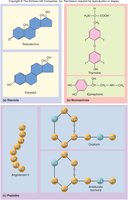
Classification: Hormones are classified as either amino acid-based (proteins, peptides, amines) or steroids.
Goal of Hormone Action: Hormones can alter membrane permeability, stimulate protein synthesis, activate/deactivate enzymes, induce secretory activity, or stimulate mitosis in target cells.
Types of Hormones
Amino Acid-Based Hormones: Includes peptides and monoamines. These are water-soluble, act rapidly but have a short duration, and are transported freely in the bloodstream (except thyroxine).
Steroid Hormones: Derived from cholesterol, lipid-soluble, act slowly but have a long duration, and require plasma proteins for transport. Includes gonadal and adrenocortical hormones.
Target Cell Specificity and Activation
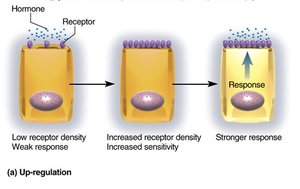
Hormones circulate throughout the body but only affect target cells with specific receptors. These receptors may be on the plasma membrane or intracellular. The response depends on hormone levels, receptor density, and receptor affinity.
Up-Regulation: Increase in receptor number increases sensitivity and response.
Down-Regulation: Decrease in receptor number reduces sensitivity and response.
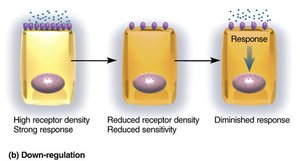
Mechanisms of Hormone Action
Second Messenger Mechanism: Used by amino acid-based hormones. Hormone binds to a membrane receptor, activates a G protein, which then activates an effector enzyme to produce a second messenger (e.g., cAMP), leading to a cellular response.
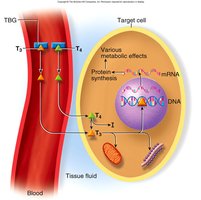
Direct Gene Activation: Used by steroid and thyroid hormones. Hormone enters the cell, binds to an intracellular receptor, and directly influences gene transcription and protein synthesis.
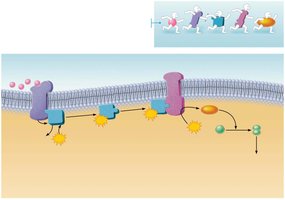
Regulation of Hormone Release
Hormone release is controlled by three main types of stimuli:
Humoral Stimuli: Changes in blood levels of ions or nutrients (e.g., low Ca2+ stimulates PTH release).
Neural Stimuli: Nerve fibers stimulate hormone release (e.g., SNS stimulates adrenal medulla to release epinephrine).
Hormonal Stimuli: Hormones stimulate other endocrine glands to release hormones (e.g., TSH stimulates thyroid hormone release).
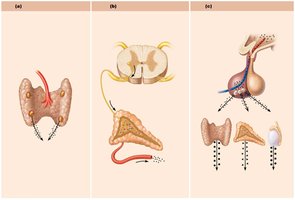
Major Endocrine Organs
Pituitary Gland (Hypophysis)
The pituitary gland is a two-lobed organ that secretes nine major hormones. It is divided into the neurohypophysis (posterior lobe, neural tissue) and adenohypophysis (anterior lobe, glandular tissue).
Posterior Pituitary (Neurohypophysis): Stores and releases hormones made in the hypothalamus (oxytocin and ADH).
Anterior Pituitary (Adenohypophysis): Produces and releases its own hormones, regulated by the hypothalamus via the hypophyseal portal system.
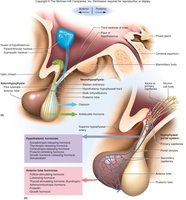
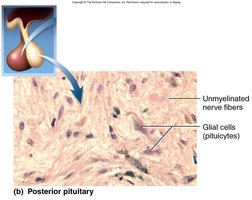
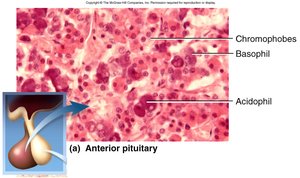
Posterior Pituitary Hormones
Oxytocin: Stimulates uterine contractions during childbirth and milk ejection during breastfeeding. In males, involved in sperm release and bonding.
Antidiuretic Hormone (ADH): Increases water reabsorption in kidneys, raising blood volume and pressure, and decreasing urine output. Released in response to dehydration or low BP.
Anterior Pituitary Hormones
Follicle Stimulating Hormone (FSH): Regulates gamete production and hormone activity in ovaries/testes.
Luteinizing Hormone (LH): Works with FSH in reproductive regulation.
Adrenocorticotropic Hormone (ACTH): Stimulates adrenal cortex hormone release.
Thyroid Stimulating Hormone (TSH): Stimulates thyroid hormone release.
Growth Hormone (GH): Stimulates protein synthesis, bone, and muscle growth.
Prolactin (PRL): Promotes breast development, lactation, and testosterone production in males.
Growth Hormone Disorders
Hyposecretion in Children: Dwarfism (short stature, normal proportions and mental development).
Hypersecretion in Children: Gigantism (tall stature, normal proportions and mental development).
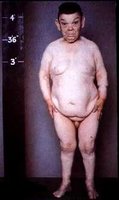
Hypersecretion in Adults: Acromegaly (enlarged hands, feet, and facial features).


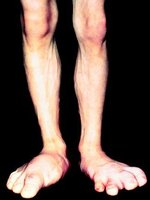
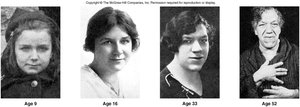
TSH Disorders
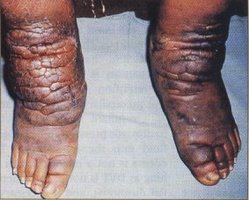
Hyposecretion: Cretinism in children (mental retardation, dwarfism), Myxedema in adults (thick/puffy skin, lethargy).
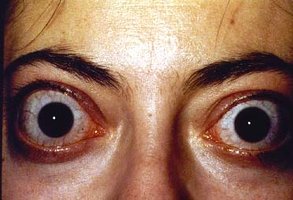
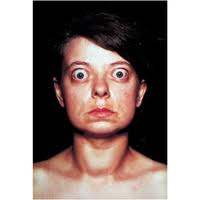
Hypersecretion: Grave’s disease (exophthalmos, increased metabolism), Goiter (thyroid hypertrophy, often due to iodine deficiency).
Prolactin Disorders
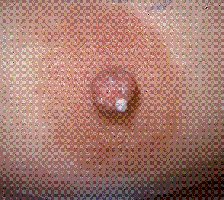
Hypersecretion: Galactorrhea (inappropriate lactation), gynecomastia (male breast enlargement).
Hyposecretion: Inadequate milk production in new mothers.

Thyroid Gland
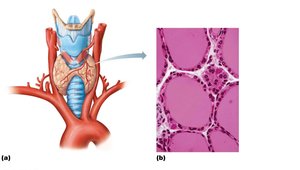
The thyroid gland is composed of follicular cells (produce T3 and T4), colloid (stores T3/T4), and parafollicular cells (produce calcitonin). Thyroid hormone (TH) is the body's major metabolic hormone, increasing metabolic rate, heat production, and regulating tissue growth and development.
T3 (triiodothyronine) and T4 (thyroxine): Both contain iodine; T3 is more potent, but T4 is more abundant and converted to T3 at target cells.
Calcitonin: Lowers blood calcium levels, antagonistic to PTH.
Thyroid Disorders
Hyposecretion: Congenital hypothyroidism (cretinism), myxedema (adults).
Hypersecretion: Hyperthyroidism, Grave’s disease, goiter.


Parathyroid Glands
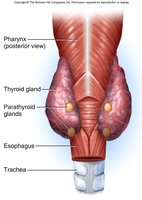
Small glands located on the posterior aspect of the thyroid. They secrete parathyroid hormone (PTH), which raises blood calcium levels and is essential for life.
Hypoparathyroidism: Low blood calcium, muscle tetany, convulsions, death.
Hyperparathyroidism: High blood calcium, brittle bones, kidney stones, abdominal pain.
Adrenal (Suprarenal) Glands
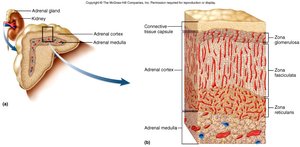
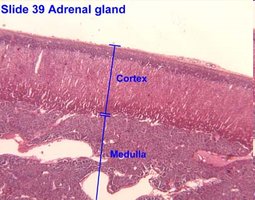
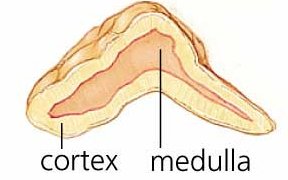
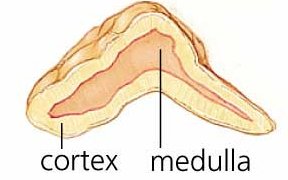
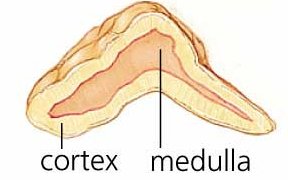
Located atop the kidneys, each adrenal gland consists of an outer cortex (glandular) and inner medulla (nervous tissue). The cortex produces corticosteroids, while the medulla secretes catecholamines (epinephrine and norepinephrine).
Adrenal Medulla: Part of the sympathetic nervous system, responsible for the fight-or-flight response.
Adrenal Cortex: Three layers produce mineralocorticoids (aldosterone), glucocorticoids (cortisol), and gonadocorticoids (androgens).

Mineralocorticoids (Aldosterone)
Regulate sodium and potassium balance, blood volume, and blood pressure.
Secretion stimulated by high K+, low Na+, low BP.
Glucocorticoids (Cortisol)
Main stress hormone; increases blood glucose, fatty acids, and amino acids.
Excessive release suppresses immune response and alters metabolism.
Gonadocorticoids (Sex Hormones)
Mostly androgens (testosterone); contribute to puberty, secondary sex characteristics, and sex drive.
Can be converted to estrogens in females.
Adrenal Gland Disorders
Addison’s Disease: Hyposecretion of aldosterone and cortisol; symptoms include dehydration, low BP, weight loss, bronze skin.
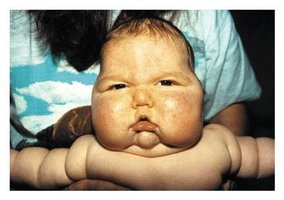
Cushing’s Syndrome: Hypersecretion; symptoms include "moon face," fat redistribution, high blood glucose, high BP.
Adrenogenital Syndrome (AGS): Excess androgens cause masculinization in females.


Pancreas
The pancreas is both an exocrine and endocrine gland. Acinar cells produce digestive enzymes, while pancreatic islets secrete hormones. Alpha cells produce glucagon (raises blood glucose), and beta cells produce insulin (lowers blood glucose).
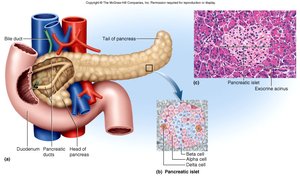
Glucagon: Promotes glycogenolysis and gluconeogenesis, raising blood glucose.
Insulin: Promotes glucose uptake and storage, lowering blood glucose.
Diabetes Mellitus (DM)
Type I: Autoimmune destruction of beta cells; requires insulin therapy.
Type II: Insulin resistance; associated with obesity and lifestyle.
Gestational Diabetes: Temporary, occurs during pregnancy; increases risk for Type II DM.
Symptoms: Polyuria, polydipsia, polyphagia, weakness, disorientation.
Pineal Gland
Small gland in the brain that produces melatonin (at night) and serotonin (during the day). Melatonin regulates circadian rhythms and delays puberty onset.
Thymus
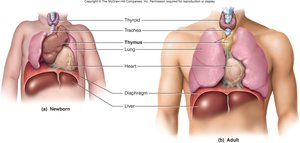
Located deep to the sternum, the thymus produces thymosin, essential for T cell development and immune function. The thymus decreases in size with age.
Gonads
The gonads (ovaries and testes) produce both exocrine (gametes) and endocrine (sex hormones) products. Regulation involves GnRH, FSH, and LH.
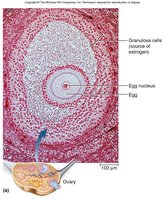
Ovaries: Produce estrogens and progesterone, responsible for reproductive organ maturation, secondary sex characteristics, and menstrual cycle regulation.
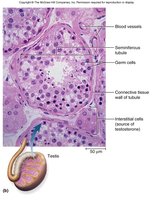
Testes: Produce testosterone, responsible for male reproductive organ maturation, secondary sex characteristics, sex drive, and sperm production.