 Back
BackChapter 17: Blood – Structure, Function, and Clinical Relevance
Study Guide - Smart Notes
 Tailored notes based on your materials, expanded with key definitions, examples, and context.
Blood: Overview and Functions
Introduction to Blood
Blood is a specialized connective tissue that plays a vital role in the transport of substances, regulation of physiological parameters, and protection against disease. It is the only fluid tissue in the body, consisting of living cells (formed elements) suspended in a nonliving fluid matrix (plasma).
Transport: Delivers oxygen, nutrients, hormones, and removes metabolic wastes.
Regulation: Maintains body temperature, pH, and fluid volume.
Protection: Prevents blood loss (hemostasis) and combats infection (immune response).
Composition of Blood
Formed Elements and Plasma
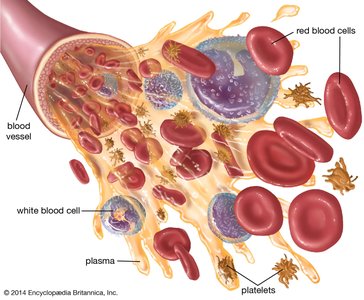
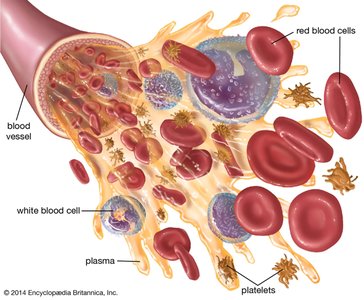
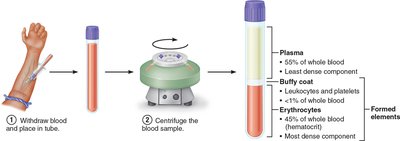
Blood is composed of two main components: plasma and formed elements. Plasma is the liquid portion, while formed elements include erythrocytes (red blood cells), leukocytes (white blood cells), and platelets.
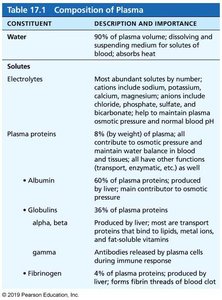
Plasma: Straw-colored, sticky fluid; ~90% water; contains over 100 dissolved solutes (nutrients, gases, hormones, wastes, proteins, electrolytes).
Formed Elements: Erythrocytes (RBCs), leukocytes (WBCs), and platelets. Only WBCs are complete cells; platelets are cell fragments.

Physical Characteristics and Volume
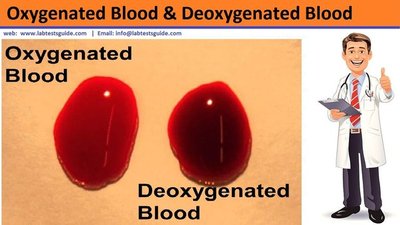
Color: Varies with oxygen content (bright red when oxygenated, dark red when deoxygenated).
Volume: Males: 5–6 L; Females: 4–5 L; constitutes ~8% of body weight.
Hematocrit: Percentage of blood volume occupied by erythrocytes (Males: 47% ± 5%; Females: 42% ± 5%).
Plasma Composition
Plasma contains water, electrolytes, plasma proteins, nutrients, respiratory gases, hormones, and metabolic wastes. Plasma proteins (albumin, globulins, fibrinogen) are the most abundant solutes by weight and serve various functions such as maintaining osmotic pressure and blood pH.
Constituent | Description and Importance |
|---|---|
Water | 90% of plasma volume; dissolving and suspending medium for solutes of blood; absorbs heat |
Electrolytes | Help maintain plasma osmotic pressure and normal blood pH |
Plasma proteins | Contribute to osmotic pressure and water balance; include albumin, globulins, fibrinogen |
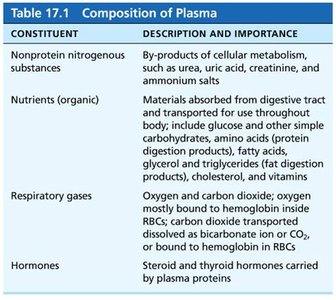
Nonprotein nitrogenous substances | By-products of cellular metabolism (urea, uric acid, creatinine) |
Nutrients | Glucose, amino acids, fatty acids, vitamins, etc. |
Respiratory gases | Oxygen and carbon dioxide |
Hormones | Steroid and thyroid hormones carried by plasma proteins |

Formed Elements
Origin and Types
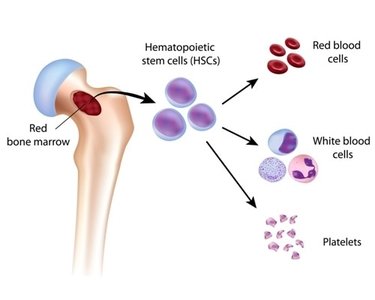
All formed elements originate from hematopoietic stem cells (hemocytoblasts) in red bone marrow. The three main types are:
Erythrocytes (RBCs): Transport oxygen and carbon dioxide.
Leukocytes (WBCs): Defense against disease.
Platelets: Cell fragments involved in blood clotting.
Erythrocytes (Red Blood Cells)
Structure and Function
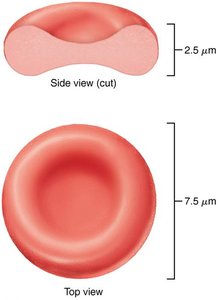
Erythrocytes are biconcave discs filled with hemoglobin, lacking nuclei and mitochondria. Their primary function is to transport oxygen from the lungs to tissues and carbon dioxide from tissues to the lungs.
Biconcave shape: Increases surface area for gas exchange.
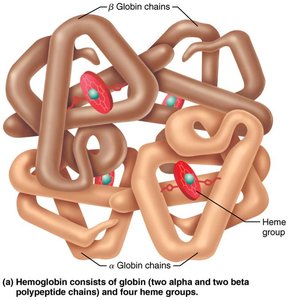
Hemoglobin (Hb): Each molecule can bind four oxygen molecules; millions of Hb molecules per RBC.
Oxygen transport: O2 binds reversibly to iron in heme groups.


Hemoglobin and Gas Transport
Oxyhemoglobin: Hemoglobin bound to oxygen (bright red).
Deoxyhemoglobin: Hemoglobin after oxygen is released (dark red).
Carbaminohemoglobin: Hemoglobin bound to carbon dioxide.

Erythropoiesis: Production of Erythrocytes
Process and Regulation
Erythropoiesis is the process of RBC formation, occurring in red bone marrow. It is regulated by erythropoietin (EPO), a hormone produced by the kidneys in response to hypoxia (low oxygen levels).
Stages: Hematopoietic stem cell → Proerythroblast → Erythroblast stages → Reticulocyte → Mature erythrocyte
Regulation: EPO stimulates RBC production; dietary requirements include iron, vitamin B12, and folic acid.

Fate and Destruction of Erythrocytes
Life Cycle and Breakdown
RBCs have a lifespan of 100–120 days. Old or damaged RBCs are engulfed by macrophages in the spleen, and their components are recycled.
Heme: Degraded to bilirubin and excreted in bile.
Iron: Stored and reused.
Globin: Broken down into amino acids.
Erythrocyte Disorders
Anemia
Anemia is a condition characterized by a decreased oxygen-carrying capacity of blood. It can result from blood loss, decreased RBC production, or increased RBC destruction.
Blood loss: Acute (trauma) or chronic (ulcers, menstruation).
Not enough RBCs produced: Iron-deficiency anemia, pernicious anemia (B12 deficiency), renal anemia (lack of EPO), aplastic anemia (bone marrow failure).
Too many RBCs destroyed: Hemolytic anemias (incompatible transfusions, infections, genetic disorders such as sickle-cell anemia).

Polycythemia
Polycythemia is an abnormal excess of RBCs, increasing blood viscosity and risk of clotting. Causes include polycythemia vera (genetic), secondary polycythemia (high altitude), and blood doping (athletes).
Leukocytes (White Blood Cells)
Types and Functions
Leukocytes are the only complete cells in blood and are crucial for defense against disease. They can leave capillaries (diapedesis) and respond to chemical signals (chemotaxis).
Granulocytes: Neutrophils (phagocytize bacteria), eosinophils (attack parasites), basophils (release histamine).
Agranulocytes: Lymphocytes (T and B cells, immunity), monocytes (differentiate into macrophages).
Leukocyte Disorders
Leukemia: Cancer of WBCs; abnormal proliferation of nonfunctional WBCs.
Leukopenia: Abnormally low WBC count, often due to drugs or bone marrow suppression.
Platelets and Hemostasis
Platelets
Platelets are cell fragments derived from megakaryocytes. They play a key role in stopping bleeding by forming platelet plugs and releasing clotting factors.
Hemostasis: Stopping Blood Loss
Hemostasis is the process that prevents blood loss after vessel injury. It involves three steps:
Vascular spasm: Vasoconstriction of damaged vessel.
Platelet plug formation: Platelets adhere to exposed collagen fibers and aggregate.
Coagulation: Fibrin threads reinforce the platelet plug, forming a stable clot.
Clot Retraction and Fibrinolysis
Clot retraction: Platelets contract to pull wound edges together.
Fibrinolysis: Plasmin digests fibrin, dissolving the clot after repair.
Disorders of Hemostasis
Thromboembolic disorders: Inappropriate clot formation (thrombosis, embolism).
Bleeding disorders: Thrombocytopenia (low platelets), hemophilia (genetic clotting factor deficiency).
Blood Transfusions and Blood Groups
Blood Typing and Transfusion Reactions
Blood transfusions require compatibility testing to prevent immune reactions. RBC membranes have antigens (agglutinogens) that determine blood type (ABO and Rh systems). Mismatched transfusions can cause agglutination and hemolysis, leading to serious complications.
Universal donor: Type O
Universal recipient: Type AB
Diagnostic Blood Tests
Clinical Importance
Blood tests are essential for diagnosing and monitoring health conditions. Common tests include:
Differential WBC count: Proportions of different WBC types.
Prothrombin time and platelet counts: Assess clotting ability.
Comprehensive metabolic panel (CMP): Blood chemistry profile.
Complete blood count (CBC): Measures formed elements, hematocrit, hemoglobin.
Blood in Health Professions
Understanding blood structure and function is critical for careers in medicine, nursing, pharmacy, dietetics, physical therapy, and clinical exercise physiology. Professionals must interpret blood tests, recognize disorders, and respond to changes in patient status.
