 Back
BackChapter 2: Basic Chemistry – Essentials of Human Anatomy & Physiology
Study Guide - Smart Notes
 Tailored notes based on your materials, expanded with key definitions, examples, and context.
Basic Chemistry for Anatomy & Physiology
Matter and Energy
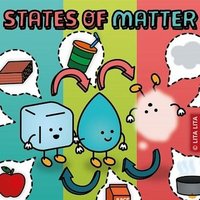
Understanding matter and energy is fundamental to studying human anatomy and physiology. Matter is anything that occupies space and has mass, and it exists in three primary states: solid, liquid, and gas. Energy is the capacity to do work and can be found in various forms within the body, such as chemical, electrical, and mechanical energy.
Composition of Matter
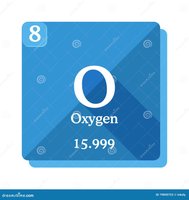
Matter is composed of elements, which are fundamental units that cannot be broken down by ordinary chemical means. The human body is primarily made up of four elements: Oxygen (O), Carbon (C), Hydrogen (H), and Nitrogen (N). The periodic table lists all known elements, each represented by a unique atomic symbol.
Atoms and Subatomic Particles
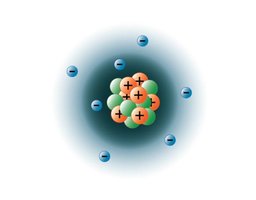
Elements are made of atoms, which are the smallest units of matter retaining the properties of the element. Atoms consist of three main subatomic particles:
Protons: Positively charged, found in the nucleus
Neutrons: Neutral, found in the nucleus
Electrons: Negatively charged, orbit the nucleus
Atoms are electrically neutral when the number of protons equals the number of electrons.
Ions and Atomic Balance
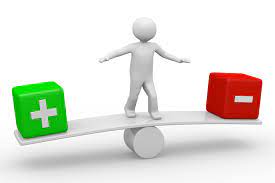
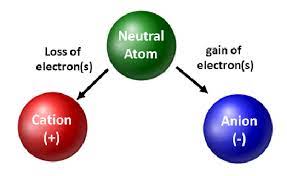
An ion is an atom that has gained or lost electrons, resulting in a net charge. Cations are positively charged (loss of electrons), while anions are negatively charged (gain of electrons). Opposite charges attract, forming ionic bonds.
Molecules and Compounds
Molecules vs. Compounds
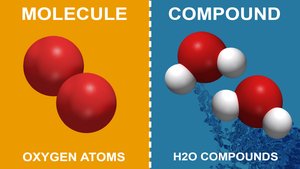
A molecule is formed when two or more atoms of the same element combine chemically. A compound is formed when atoms of different elements combine. Chemical reactions involve the making or breaking of bonds between atoms.
Role of Electrons and Chemical Bonding
Electron Shells and Valence Electrons
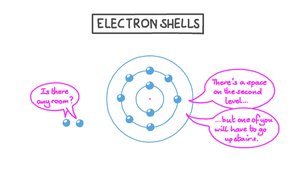
Electrons occupy energy levels called shells. The first shell holds up to 2 electrons, the second up to 8, and the third up to 18. Only electrons in the outermost shell (valence shell) participate in bonding. Atoms with full valence shells are chemically inert.

Types of Chemical Bonds
Ionic Bonds: Formed by complete transfer of electrons from one atom to another, resulting in ions that attract each other.
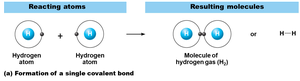
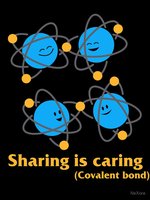
Covalent Bonds: Formed by sharing electrons between atoms. Can be single, double, or triple bonds.
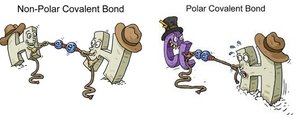
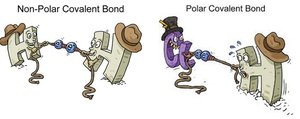
Nonpolar Covalent Bonds: Electrons are shared equally.
Polar Covalent Bonds: Electrons are shared unequally, creating partial charges.
Chemical Reactions
Synthesis and Decomposition Reactions
Chemical reactions are essential for life. Two main types are:
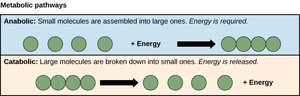
Synthesis (Anabolic) Reactions: Atoms or molecules combine to form larger, more complex molecules. Energy is required.
Decomposition (Catabolic) Reactions: Molecules are broken down into smaller molecules. Energy is released.
Biochemistry: The Chemical Composition of Living Matter
Inorganic vs. Organic Compounds
Inorganic compounds lack carbon and are usually small, simple molecules (e.g., water, salts, acids, bases). Organic compounds contain carbon and are typically large, complex molecules (e.g., carbohydrates, lipids, proteins, nucleic acids).
Water
Water is the most abundant inorganic compound in the body, accounting for two-thirds of body weight. It is vital for chemical reactions, temperature regulation, and transport of substances.
Salts, Acids, and Bases
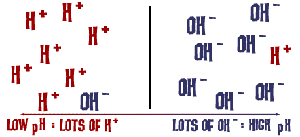
Salts are ionic compounds that dissociate in water to form electrolytes, which conduct electrical currents. Acids release hydrogen ions (H+) and are proton donors. Bases release hydroxyl ions (OH-) and are proton acceptors.
Type | Definition | Properties |
|---|---|---|
Acids | Proton donors (release H+) | Sour, sticky, turns litmus red |
Bases | Proton acceptors (release OH-) | Bitter, slippery, turns litmus blue |
Salts | Ionic compounds | Dissolve in water, conduct electricity |
pH Scale
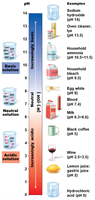
The pH scale measures the concentration of hydrogen ions in a solution, ranging from 0 (most acidic) to 14 (most basic). A pH of 7 is neutral. Buffers help regulate pH changes in the body.
Organic Compounds
Polymers and Monomers
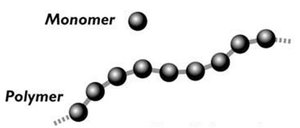
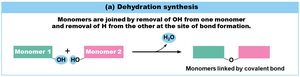
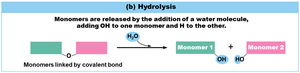
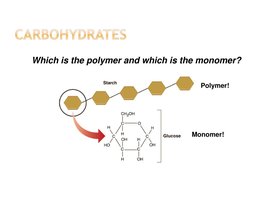
Many biological molecules are polymers, made of repeating units called monomers. Examples include carbohydrates and proteins.
Dehydration Synthesis and Hydrolysis
Dehydration synthesis joins monomers to form polymers by removing water. Hydrolysis breaks polymers into monomers by adding water.
Carbohydrates
Carbohydrates contain carbon, hydrogen, and oxygen. They are classified by size:
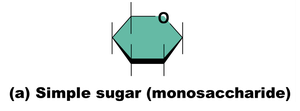
Monosaccharides: Simple sugars (e.g., glucose, fructose)
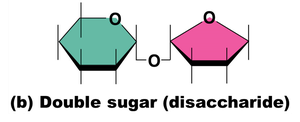
Disaccharides: Two monosaccharides joined (e.g., sucrose, lactose)
Polysaccharides: Long chains of monosaccharides (e.g., starch, glycogen)
Lipids
Lipids include triglycerides, phospholipids, and steroids. They are insoluble in water and serve as energy storage, structural components, and signaling molecules.
Proteins
Proteins are made of amino acids and are essential for structure, function, and regulation of the body's tissues and organs. They act as enzymes, hormones, and antibodies.
Nucleic Acids
Nucleic acids (DNA and RNA) store and transmit genetic information. They are composed of nucleotides, each containing a nitrogenous base, a pentose sugar, and a phosphate group.
Adenosine Triphosphate (ATP)
ATP is the primary energy carrier in cells. It is composed of a ribose sugar, adenine base, and three phosphate groups. Energy is released when the high-energy phosphate bond is broken.
Summary Table: Common Elements in the Human Body
Element | Symbol | Body Function |
|---|---|---|
Oxygen | O | Cellular respiration, water formation |
Carbon | C | Organic molecules, backbone of life |
Hydrogen | H | Water, pH balance |
Nitrogen | N | Proteins, nucleic acids |
Calcium | Ca | Bone structure, muscle contraction |
Phosphorus | P | ATP, nucleic acids |
Potassium | K | Nerve function |
Sodium | Na | Fluid balance, nerve function |
Magnesium | Mg | Enzyme activity |
Iron | Fe | Hemoglobin, oxygen transport |
