 Back
BackChapter 2: The Chemistry of Life – Study Notes for Anatomy & Physiology
Study Guide - Smart Notes
 Tailored notes based on your materials, expanded with key definitions, examples, and context.
Chapter 2: The Chemistry of Life
Module 2.1: Atoms and Elements
The study of chemistry is foundational to understanding anatomy and physiology, as all biological processes are based on chemical interactions. Matter is anything that has mass and occupies space, existing in solid, liquid, or gas states.
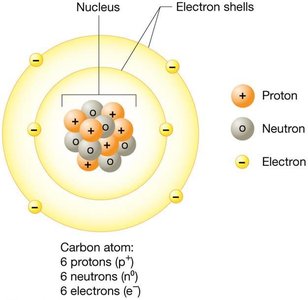
Atom: The smallest unit of matter that retains the properties of an element. Atoms are composed of subatomic particles: protons (p+, positive charge), neutrons (n0, no charge), and electrons (e-, negative charge).
Atomic Structure: Protons and neutrons are located in the nucleus, while electrons occupy electron shells surrounding the nucleus.
Electron Shells: The first shell holds 2 electrons, the second holds 8, and the third holds up to 18 (but is stable with 8).
Atomic Number: The number of protons in the nucleus, defining the element.
Element: A substance that cannot be broken down into simpler substances by chemical means. Each element is made of atoms with the same number of protons.
Elements in the Human Body
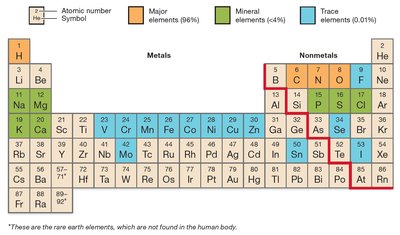
The human body is primarily composed of four elements: Oxygen (65%), Carbon (18%), Hydrogen (10%), and Nitrogen (3%).
Other elements include 7 mineral elements (less than 4%) and 13 trace elements (in very small amounts).
Isotopes and Radioactivity
Mass Number: The sum of protons and neutrons in the nucleus.
Isotope: Atoms of the same element with different numbers of neutrons (thus different mass numbers).
Radioisotopes: Unstable isotopes that release energy or radiation as they decay to a more stable form.
Module 2.2: Matter Combined – Mixtures and Chemical Bonds
Atoms combine to form molecules and compounds through chemical bonds, which are energy relationships between atoms, not physical structures.
Molecule: Two or more atoms of the same element bonded together.
Compound: Two or more atoms from different elements bonded together.
Chemical Bonds
Valence Electrons: Electrons in the outermost shell; determine chemical reactivity and bonding.
Octet Rule: Atoms are most stable with 8 electrons in their valence shell (except for very small atoms, which follow the duet rule and are stable with 2 electrons).
Ions and Ionic Bonds
Ionic Bond: Formed when electrons are transferred from a metal to a nonmetal, creating charged particles called ions.
Cation: Positively charged ion (metal loses electrons).
Anion: Negatively charged ion (nonmetal gains electrons).
Ionic bonds result in the formation of salts.
Covalent Bonds
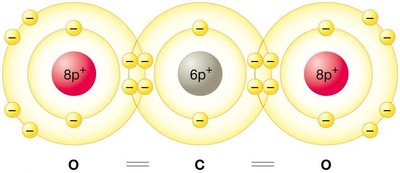
Covalent Bond: The strongest type of bond; formed when two or more nonmetals share electrons.
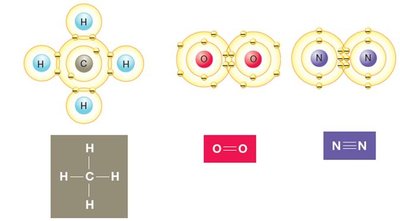
Single, double, or triple bonds are possible depending on the number of shared electron pairs.
Nonpolar and Polar Covalent Bonds
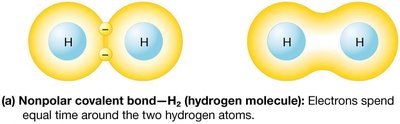
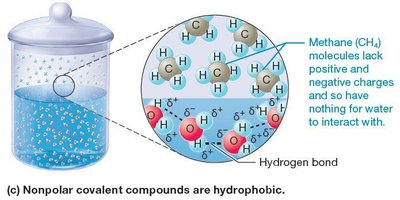
Nonpolar Covalent Bond: Electrons are shared equally between atoms (e.g., H2, O2, CH4).
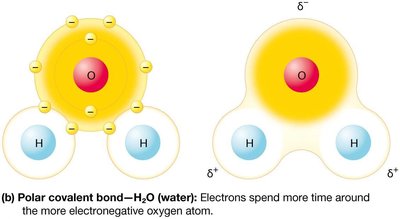
Polar Covalent Bond: Electrons are shared unequally due to differences in electronegativity, resulting in partial charges (e.g., H2O).
Dipole: A molecule with partially positive and negative ends due to polar bonds.
Hydrogen Bonds
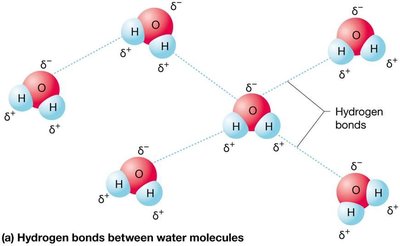
Hydrogen Bond: A weak attraction between the partially positive end of one dipole and the partially negative end of another dipole.
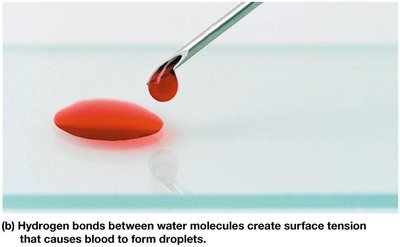
Responsible for water's surface tension and many properties of biological molecules.
Module 2.3: Chemical Reactions
Chemical reactions involve the formation, breaking, or rearrangement of chemical bonds, or the transfer of electrons between atoms or molecules.
Reactants: Starting substances in a chemical reaction.
Products: Substances formed as a result of the reaction.
Reversible Reactions: Can proceed in both directions (indicated by two arrows).
Irreversible Reactions: Proceed in one direction only (indicated by a single arrow).
Energy in Chemical Reactions
Energy: The capacity to do work or cause change. Exists as potential (stored) or kinetic (in motion).
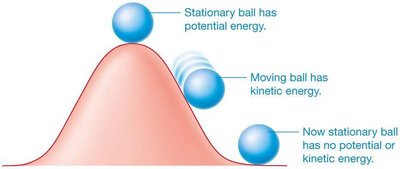
Endergonic Reactions: Require energy input; products have more energy than reactants.
Exergonic Reactions: Release energy; products have less energy than reactants.
Types of Chemical Reactions
Catabolic (Decomposition) Reactions: Break large molecules into smaller ones; usually exergonic.
Exchange Reactions: Atoms are exchanged between reactants; includes oxidation-reduction (redox) reactions where electrons are transferred.
Anabolic (Synthesis) Reactions: Build larger molecules from smaller subunits; usually endergonic.
Reaction Rates and Enzymes
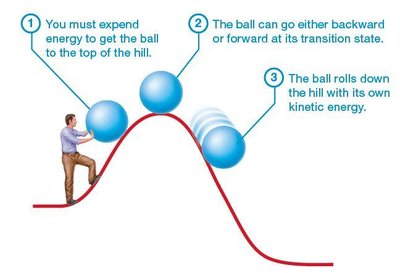
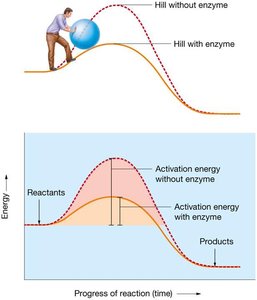
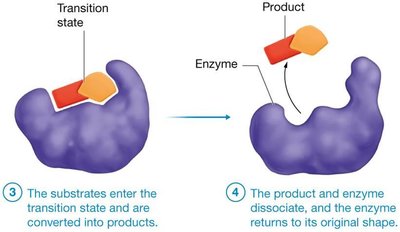
Activation Energy (Ea): The energy required to start a chemical reaction.
Factors that increase reaction rate: higher concentration, higher temperature, smaller particle size, and presence of a catalyst.
Catalyst: Lowers activation energy, increasing reaction rate without being consumed.
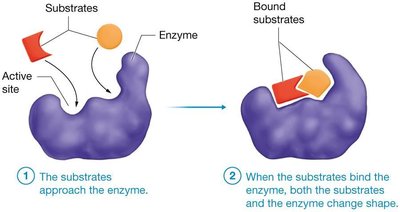
Enzyme: A biological catalyst, usually a protein, that speeds up reactions by lowering activation energy and is highly specific for its substrate.
Module 2.4: Inorganic Compounds – Water, Acids, Bases, and Salts
Biochemistry distinguishes between inorganic compounds (generally do not contain carbon-hydrogen bonds) and organic compounds (contain carbon-hydrogen bonds).
Water (H2O): Makes up 60–80% of body mass; has high heat capacity, acts as a solvent, lubricant, and cushion.
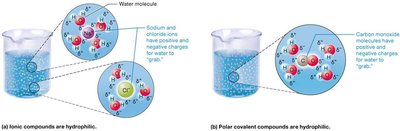
Water dissolves hydrophilic (charged or polar) solutes but not hydrophobic (nonpolar) solutes.
Acids, Bases, and pH
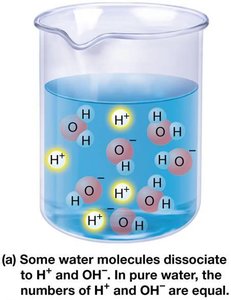
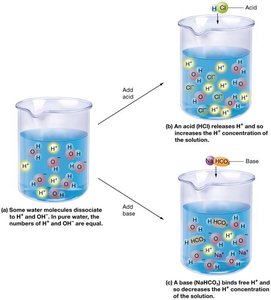
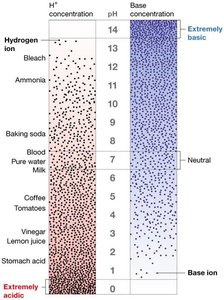
Acid: Proton (H+) donor; increases H+ concentration in solution.
Base: Proton acceptor; decreases H+ concentration in solution.
pH Scale: Measures H+ concentration; ranges from 0 (acidic) to 14 (basic), with 7 being neutral.
Buffer: Chemical system that resists changes in pH; important for maintaining homeostasis (e.g., carbonic acid–bicarbonate buffer system in blood).
Salt: Compound formed from a metal cation and a nonmetal anion; dissociates in water to form electrolytes.
Module 2.5: Organic Compounds – Carbohydrates, Lipids, Proteins, and Nucleotides
Organic compounds are essential to life and include carbohydrates, lipids, proteins, and nucleic acids. They are often polymers built from monomer subunits.
Carbohydrates
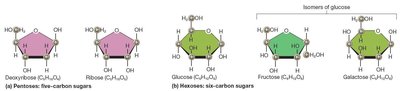
Monosaccharides: Simple sugars (e.g., glucose, fructose, galactose, ribose, deoxyribose).
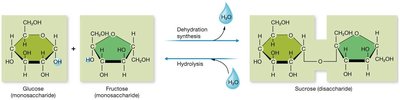
Disaccharides: Two monosaccharides joined by dehydration synthesis (e.g., sucrose).
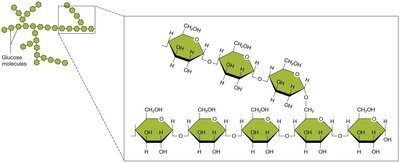
Polysaccharides: Many monosaccharides joined together (e.g., glycogen, a storage form of glucose).
Lipids
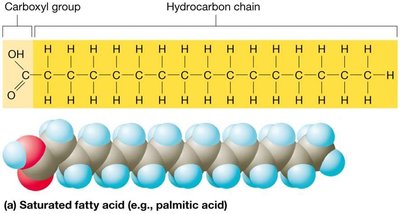
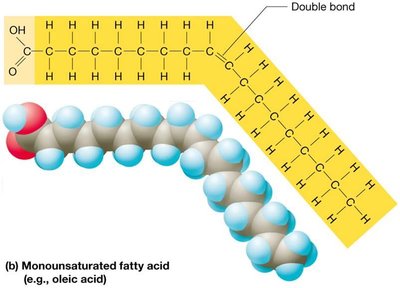
Fatty Acids: Monomers of lipids; can be saturated (no double bonds, solid at room temperature) or unsaturated (one or more double bonds, liquid at room temperature).
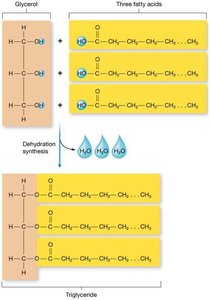
Triglycerides: Three fatty acids linked to glycerol; main storage form of energy in the body.
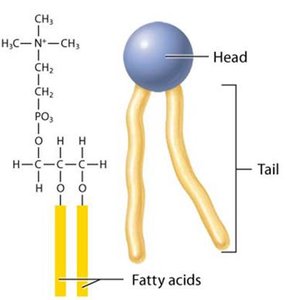
Phospholipids: Glycerol backbone, two fatty acid tails, and a phosphate head; amphiphilic and essential for cell membranes.
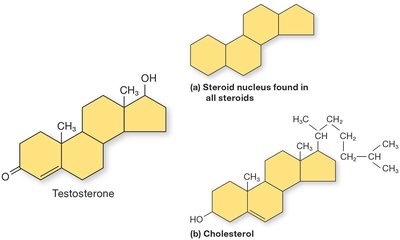
Steroids: Nonpolar molecules with a four-ring structure; cholesterol is the precursor for all other steroids.
Proteins
Amino Acids: Monomers of proteins; each has a central carbon, amino group, carboxylic acid group, hydrogen, and R group.
Peptide Bonds: Special covalent bonds joining amino acids.
Protein Structure: Four levels – primary (amino acid sequence), secondary (alpha helix, beta-pleated sheet), tertiary (3D folding), quaternary (multiple polypeptide chains).
Denaturation: Loss of protein structure and function due to heat, pH changes, or chemicals.
Functions: Enzymes, structural roles, movement, immune defense, and as fuel.
Nucleotides and Nucleic Acids
Nucleotides: Monomers of nucleic acids; consist of a nitrogenous base, five-carbon sugar (ribose or deoxyribose), and phosphate group.
Types of Nitrogenous Bases: Purines (adenine, guanine) and pyrimidines (cytosine, uracil, thymine).
ATP (Adenosine Triphosphate): Main energy carrier in cells; produced from ADP and phosphate using energy from food oxidation.
DNA: Double helix; stores genetic information; composed of deoxyribose, phosphate, and bases (A, T, G, C); exhibits complementary base pairing (A=T, C≡G).
RNA: Single strand; contains ribose and uracil instead of thymine; involved in protein synthesis (transcription and translation).
*Additional info: For a comprehensive understanding, students should be familiar with the basic structure and function of each macromolecule, as well as the role of water, acids, bases, and buffers in maintaining physiological homeostasis.*
