 Back
BackChapter 21: The Immune System – Innate and Adaptive Body Defenses
Study Guide - Smart Notes
 Tailored notes based on your materials, expanded with key definitions, examples, and context.
The Immune System: Overview
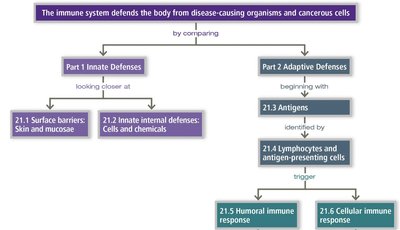
The immune system is a complex network of cells, tissues, and molecules that protects the body from disease-causing organisms and cancerous cells. Unlike organ systems with clear anatomical boundaries, the immune system is functionally interconnected and operates throughout the body. Immunity refers to being free or exempt from disease, achieved through coordinated innate and adaptive defenses.

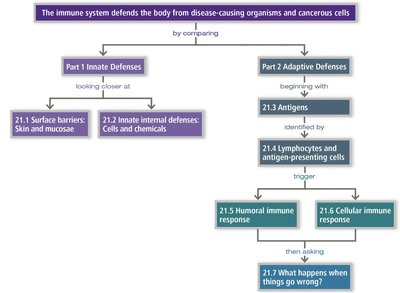
Divisions of the Immune System
Innate Immunity
Innate immunity is present at birth and provides nonspecific defense against a wide variety of pathogens. It does not require prior exposure to a substance and responds immediately to potential threats.
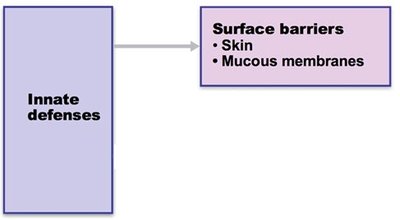
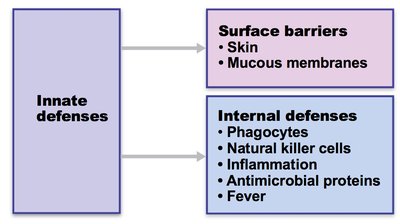
First Line of Defense: Surface barriers (skin and mucous membranes)
Second Line of Defense: Internal defenses (phagocytes, natural killer cells, inflammation, antimicrobial proteins, fever)
Adaptive Immunity
Adaptive immunity (acquired/specific immunity) involves specialized lymphocytes (T and B cells) that target specific foreign substances. This response is slower to develop but provides specificity and memory, allowing for a stronger response upon re-exposure to the same pathogen.
Third Line of Defense: Adaptive (specific) defenses
Lines of Defense
First Line: Surface Barriers (Innate)
The skin and mucous membranes form physical and chemical barriers to prevent pathogen entry.
Acid mantle: Low pH inhibits microbial growth.
Lysozymes: Enzymes that destroy bacteria.
Gastric acid: Destroys pathogens in the stomach.
Respiratory modifications: Mucus-coated hairs and cilia trap and remove particles.
Second Line: Internal Defenses (Innate)
If pathogens breach surface barriers, internal defenses are activated:
Phagocytes: Engulf and digest pathogens (e.g., neutrophils, macrophages).
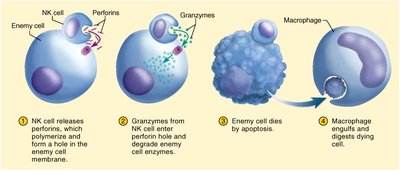
Natural Killer (NK) Cells: Destroy virus-infected and cancerous cells by inducing apoptosis.
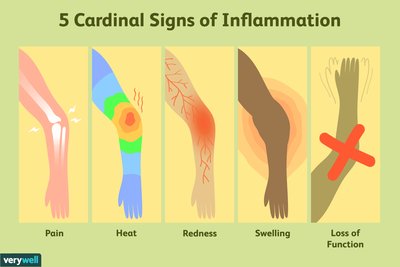
Inflammation: Localized response to injury or infection, characterized by pain, redness, heat, swelling, and loss of function.
Antimicrobial Proteins: Interferons and complement proteins that hinder pathogen reproduction.
Fever: Systemic response that increases body temperature to inhibit pathogens and enhance immune activity.
Phagocytes
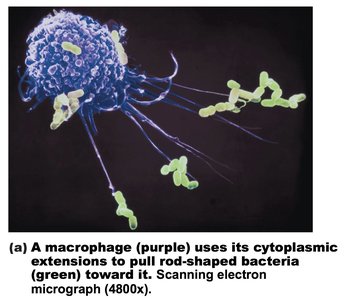
Phagocytes include neutrophils and macrophages (free or fixed). They adhere to pathogens, engulf them, and digest them in phagolysosomes. Opsonization marks pathogens for destruction.
Natural Killer (NK) Cells
NK cells are lymphocytes that kill abnormal cells by releasing perforins and granzymes, leading to apoptosis. They are not phagocytic; macrophages clean up after them. NK cells also enhance inflammation.
Inflammation
Inflammation prevents the spread of damaging agents, disposes of debris, alerts the adaptive immune system, and sets the stage for repair. It can be acute or chronic. The five cardinal signs are pain, redness, heat, swelling, and loss of function.
Phagocyte Mobilization
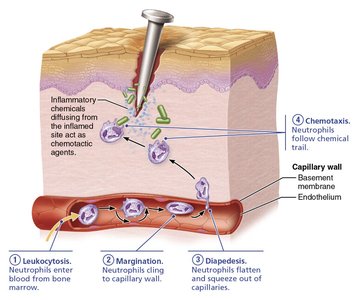
Following inflammation, phagocytes are mobilized in four steps:
Leukocytosis: Increased production and release of neutrophils from bone marrow.
Margination: Neutrophils cling to capillary walls at the site of inflammation.
Diapedesis: Neutrophils squeeze through capillary walls into tissues.
Chemotaxis: Neutrophils follow chemical signals to the site of infection.
Antimicrobial Proteins
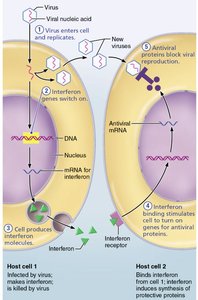
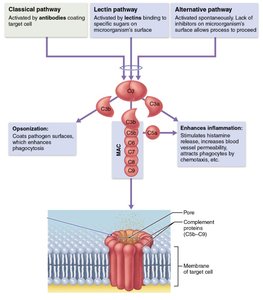
Interferons are secreted by virus-infected cells to prevent viral replication and activate NK cells and macrophages. The complement system consists of plasma proteins that enhance inflammation, opsonization, and cytolysis via membrane attack complexes (MACs). Complement can be activated by classical, lectin, or alternative pathways.
Fever
Fever is a systemic response to infection. Pyrogens released by leukocytes and macrophages act on the hypothalamus to raise body temperature. Fever helps by sequestering iron and zinc, promoting interferon activity, and increasing metabolic rate for faster healing.
Adaptive (Specific) Defenses: Third Line
The adaptive immune system recognizes and targets specific foreign substances. It is characterized by specificity and memory, and involves two main mechanisms: humoral (antibody-mediated) and cellular (cell-mediated) immunity.
Humoral Immunity
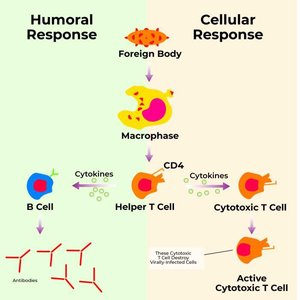
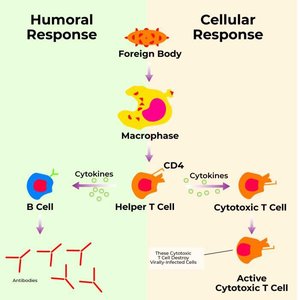
Humoral immunity targets extracellular pathogens using antibodies produced by B lymphocytes. Antibodies bind to antigens, inactivate them, and mark them for destruction by phagocytes or complement.
Cellular Immunity
Cellular immunity targets infected or abnormal cells. T lymphocytes act directly by killing infected cells or indirectly by releasing chemicals that enhance the immune response or activate other immune cells.
Antigens
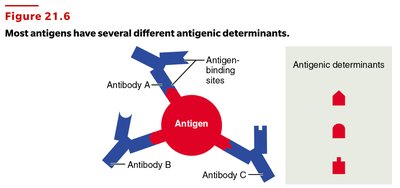
An antigen is any molecule that triggers an immune response. "Non-self" antigens are recognized as foreign, while "self" antigens (such as MHC proteins) are unique to each individual. Haptens are incomplete antigens that have reactivity but not immunogenicity unless attached to a carrier.
Major Histocompatibility Complex (MHC)
MHC proteins are glycoproteins on cell surfaces that present antigen fragments to T cells. They are essential for immune recognition and self-tolerance.

Comparison of Innate and Adaptive Defenses
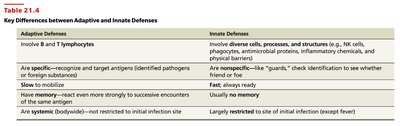
Adaptive Defenses | Innate Defenses |
|---|---|
Involve B and T lymphocytes | Involve diverse cells, processes, and structures (e.g., NK cells, phagocytes, antimicrobial proteins, inflammatory chemicals, and physical barriers) |
Are specific—recognize and target antigens | Are nonspecific—like "guards," check identification to see whether friend or foe |
Slow to mobilize | Fast; always ready |
Have memory—react more strongly to successive encounters of the same antigen | Usually no memory |
Are systemic (bodywide)—not restricted to initial infection site | Largely restricted to site of initial infection (except fever) |
Summary
The immune system is essential for defending the body against pathogens and abnormal cells. It consists of innate (nonspecific) and adaptive (specific) defenses, each with unique mechanisms and roles. Understanding these divisions and their interactions is crucial for comprehending how the body maintains health and combats disease.
