 Back
BackChapter 24: Nutrition, Metabolism, and Energy Balance – Study Notes
Study Guide - Smart Notes
 Tailored notes based on your materials, expanded with key definitions, examples, and context.
Nutrition, Metabolism, and Energy Balance
Metabolism: Definition and Overview
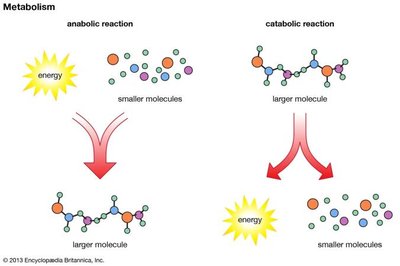
Metabolism refers to the sum of all chemical reactions occurring in the body’s cells. These reactions are essential for maintaining life, supporting growth, and enabling repair. Metabolism encompasses both anabolic (building up) and catabolic (breaking down) processes.
Metabolism: The total of all chemical reactions in the body.
Nutrient: Substance in food needed for growth, maintenance, and repair.
Macronutrients: Carbohydrates, lipids, and proteins; make up the bulk of ingested food.
Micronutrients: Vitamins and minerals; required in small amounts.
Essential nutrients: Must be eaten because the body cannot synthesize them.
Nonessential nutrients: Can be synthesized by the liver if not enough is available.
Carbohydrates, Lipids, and Proteins: Structure and Function
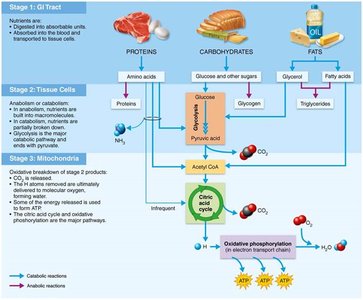
Macronutrients are vital for energy production and structural functions in the body. Their digestion yields specific end products that are used in metabolic pathways.
Carbohydrates: Digestion yields glucose and other sugars. Glucose is the primary fuel for ATP production, especially in neurons and red blood cells. Excess glucose is stored as glycogen or fat.
Lipids: Digestion yields glycerol and fatty acids. Lipids provide protection, insulation, and fuel storage. They are essential for cell membranes, myelin sheaths, and as precursors for hormones and bile salts.
Proteins: Digestion yields amino acids. Proteins serve as structural materials (e.g., keratin, collagen) and functional molecules (e.g., enzymes, hormones). Protein synthesis requires all essential amino acids to be present.
Vitamins and Minerals
Vitamins and minerals are micronutrients required for proper body functioning. They assist in the utilization of macronutrients and are involved in numerous biochemical processes.
Vitamins: Organic compounds, mostly ingested. Some are synthesized in the body (e.g., vitamin D, some B and K vitamins).
Minerals: Required in moderate (e.g., calcium, phosphorus) or trace amounts. Work with nutrients to ensure proper body functioning.
Balance: Uptake and excretion must be balanced to prevent toxicity.
Metabolic Pathways for Carbohydrates, Lipids, and Proteins
Metabolic pathways are the series of chemical reactions that process nutrients for energy and structural needs. These pathways include both anabolic and catabolic reactions.
Anabolism: Synthesis of large molecules from small ones (e.g., protein synthesis from amino acids).
Catabolism: Breakdown of complex molecules into simpler ones (e.g., protein breakdown into amino acids).
Carbohydrate Metabolism
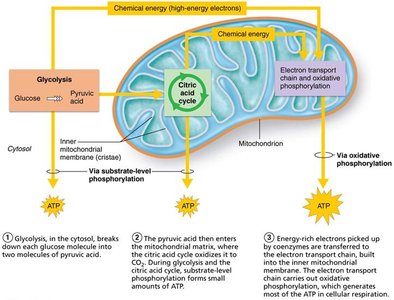
Complete glucose catabolism involves three main pathways:
Glycolysis: Occurs in the cytosol; breaks down glucose into pyruvic acid.
Krebs Cycle (Citric Acid Cycle): Occurs in mitochondria; processes pyruvic acid to produce CO2, ATP, and high-energy electrons.
Electron Transport Chain and Oxidative Phosphorylation: Occurs in mitochondria; uses high-energy electrons to produce most ATP.
Key Equations:
Lipid Metabolism
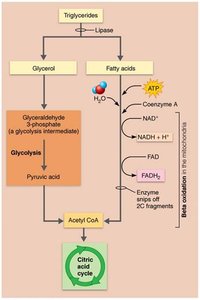
Only triglycerides are routinely oxidized for energy. Glycerol and fatty acids are processed separately:
Glycerol: Converted to glyceraldehyde-3-phosphate, enters glycolysis, yields ATP.
Fatty acids: Undergo beta oxidation in mitochondria, producing acetyl CoA, NADH, and FADH2.
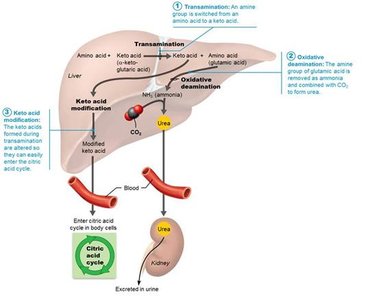
Protein Metabolism
Proteins are not stored in the body and must be continually broken down and replaced. Amino acids are recycled or used for energy if dietary protein is in excess.
Transamination: Amino group is transferred to another molecule.
Oxidative deamination: Amino group is removed as ammonia, which is converted to urea for excretion.
Keto acid modification: Keto acids enter the citric acid cycle for energy production.
Basal Metabolic Rate (BMR) and Energy Balance
Metabolic rate is the total heat produced by chemical reactions and mechanical work in the body. Basal Metabolic Rate (BMR) reflects the energy required for essential activities.
Energy intake: Energy liberated during food oxidation.
Energy output: Includes energy lost as heat (~60%), used for work (driven by ATP), and stored as fat or glycogen.
BMR Influences: Age, gender, body temperature, stress, and thyroxine levels.
Example: Males typically have a higher BMR than females; BMR decreases with age.
Summary Table: Macronutrient Digestion and Metabolism
Macronutrient | End Product of Digestion | Main Metabolic Pathway | Energy Yield |
|---|---|---|---|
Carbohydrates | Glucose and other sugars | Glycolysis, Krebs cycle, Electron Transport Chain | High (primary ATP source) |
Lipids | Glycerol, Fatty acids | Beta oxidation, Citric Acid Cycle | High (especially fatty acids) |
Proteins | Amino acids | Transamination, Deamination, Citric Acid Cycle | Variable (used if carbs/fats unavailable) |
Additional info: The notes expand on brief points by providing definitions, examples, and context for each metabolic pathway. Images included directly reinforce the explanation of metabolic processes and pathways.
