 Back
BackChapter 3: Cells – The Living Units (Mini-Textbook Study Notes)
Study Guide - Smart Notes
 Tailored notes based on your materials, expanded with key definitions, examples, and context.
Cells: The Living Units
Cell Theory and Cell Diversity
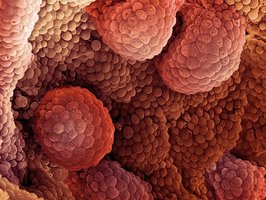
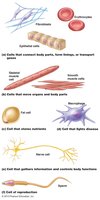
The cell theory forms the foundation of modern biology, stating that cells are the structural and functional units of all living things. The activity of an organism depends on the activities of its cells, and the biochemical activity of cells is determined by their shapes and forms. Life continuity is maintained through cellular reproduction. Human bodies contain over 200 different cell types, varying in size, shape, subcellular components, and functions, with a total of 50 to 100 trillion cells.
Cell Theory: All living organisms are composed of cells.
Cell Diversity: Cells differ in morphology and function, such as muscle cells, nerve cells, and blood cells.
Complementarity: Cell function is determined by cell structure.
Continuity: Cells arise from pre-existing cells.
Example: Red blood cells transport oxygen, neurons transmit signals, and muscle cells contract for movement.
Generalized Cell Structure
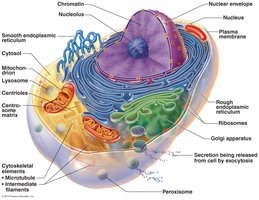
All cells share common structural features and functions. The three main parts of a cell are the plasma membrane, cytoplasm, and nucleus. The plasma membrane is the primary focus for understanding cell-environment interactions.
Plasma Membrane: Boundary separating internal and external environments.
Cytoplasm: Contains organelles and cytosol.
Nucleus: Contains genetic material (DNA).
Plasma Membrane Structure and Function
Fluid Mosaic Model
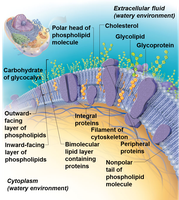
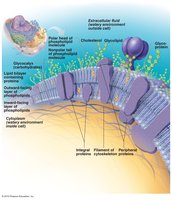
The plasma membrane is a dynamic, selectively permeable barrier composed of a lipid bilayer with embedded proteins and cholesterol. Its fluidity allows components to move, influenced by fatty acid composition and cholesterol content.
Lipid Bilayer: Composed of phospholipids, glycolipids, and cholesterol.
Fluidity: Unsaturated fatty acids increase fluidity; cholesterol stabilizes and decreases fluidity.
Selective Permeability: Controls entry and exit of substances.
Membrane Lipids
Membrane lipids include phospholipids (with hydrophilic heads and hydrophobic tails), glycolipids (with sugar groups), and cholesterol. Lipid rafts are specialized regions for docking proteins and receptors.
Phospholipids: Form the basic structure of the membrane.
Glycolipids: Involved in cell recognition.
Cholesterol: Provides stability and modulates fluidity.
Lipid Rafts: Sites for cell signaling and membrane junctions.

Membrane Proteins
Membrane proteins are diverse and categorized as integral (embedded in the bilayer) or peripheral (attached to the surface). They perform various functions, including transport, enzymatic activity, cell recognition, and intercellular joining.
Integral Proteins: Span the membrane; function as channels, carriers, receptors.
Peripheral Proteins: Attached to membrane surface; function as enzymes, motor proteins, and cell-to-cell links.
Glycoproteins: Important for cell recognition.
Lipoproteins: Involved in lipid transport.
Functions of Membrane Proteins
Membrane proteins serve six major functions:
Transport: Provide channels or carriers for substances to cross the membrane.
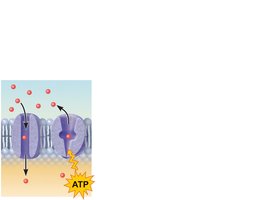
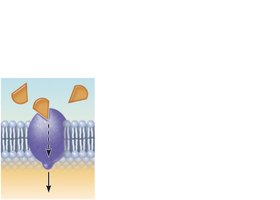
Receptors for Signal Transduction: Bind chemical messengers and initiate cellular responses.
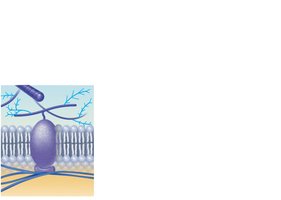
Attachment to Cytoskeleton and ECM: Maintain cell shape and stabilize membrane.
Enzymatic Activity: Catalyze reactions at the membrane surface.
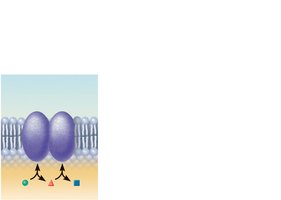
Intercellular Joining: Form junctions between cells for communication and adhesion.
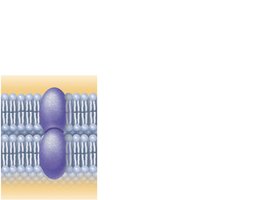
Cell-Cell Recognition: Glycoproteins act as identification tags.
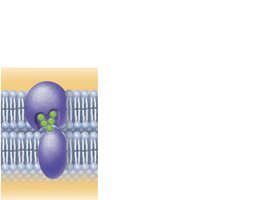
Membrane Junctions
Cells are connected by specialized junctions: tight junctions, desmosomes, and gap junctions. These junctions regulate communication, adhesion, and permeability between cells.
Tight Junctions: Prevent passage of substances between cells.
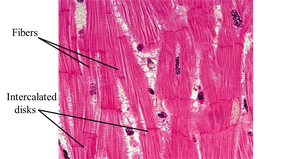
Desmosomes: Anchor cells together, providing mechanical strength.
Gap Junctions: Allow communication via passage of ions and small molecules.
Membrane Transport
Types of Membrane Transport
Cell membranes are selectively permeable, allowing certain substances to cross while restricting others. Transport occurs via passive or active processes.
Passive Processes: Do not require energy; substances move down concentration gradients.
Active Processes: Require energy (ATP); substances move against concentration gradients.
Passive Processes
Passive transport includes simple diffusion, facilitated diffusion, osmosis, and filtration. The ability of a substance to permeate the membrane depends on its lipid solubility and the presence of specific transport proteins.
Simple Diffusion: Non-polar, lipid-soluble substances move unaided. Example: Oxygen, carbon dioxide, fat-soluble vitamins.
Facilitated Diffusion: Lipophobic molecules use carrier or channel proteins. Example: Glucose, amino acids, ions.
Osmosis: Diffusion of water through the membrane or aquaporins.
Filtration: Movement of substances across membranes using pressure.
Osmosis and Tonicity
Osmosis is the movement of water based on solute concentration. Tonicity describes the effect of a solution on cell volume, depending on the concentration of non-permeable solutes.
Isotonic Solution: No net change in cell volume.
Hypertonic Solution: Cells lose water and shrink.
Hypotonic Solution: Cells gain water and may burst.
Active Processes
Active transport uses carrier proteins (solute pumps) to move substances against their concentration gradients. Types include primary and secondary active transport, as well as vesicular transport.
Primary Active Transport: Direct use of ATP to move ions (e.g., Na+-K+ ATPase pump).
Secondary Active Transport: Uses ion gradients created by primary transport to move other substances.
Vesicular Transport: Moves large particles and macromolecules via exocytosis, endocytosis, and transcytosis.
Application: Membrane Potential
Generation and Maintenance of Resting Membrane Potential (RMP)
Membrane potential is the separation of charged particles across the membrane, essential for nerve and muscle function. The Na+-K+ pump and selective permeability establish and maintain RMP.
RMP: Typically ranges from –50 to –100 mV.
Na+-K+ Pump: Ejects Na+ and brings K+ into the cell, maintaining gradients.
K+ Leakage Channels: Allow K+ to diffuse out, creating a negative interior.
Cell-Environment Interactions
Cell Adhesion Molecules (CAMs) and Membrane Receptors
Cells interact with their environment via CAMs and membrane receptors. CAMs anchor cells and guide migration, while membrane receptors mediate contact and chemical signaling.
CAMs: Anchor cells, guide migration, and transmit signals.
Membrane Receptors: Mediate contact and chemical signaling (e.g., G protein–linked receptors).
Ligands: Chemicals that bind to receptors to alter cell activity.
G Protein-linked Receptor Mechanism
Ligand binding activates a G protein, which then activates an effector enzyme, producing a second messenger that triggers cellular responses. This allows amplification of the signal.
Step 1: Ligand binds to receptor.
Step 2: G protein is activated.
Step 3: Effector enzyme produces second messenger.
Step 4: Second messenger activates kinase, leading to cellular responses.
Additional info: These notes provide a comprehensive overview of cell structure, membrane composition, transport mechanisms, and cell-environment interactions, suitable for exam preparation in an anatomy and physiology college course.
