 Back
BackChapter 7: The Immune System – Structure, Function, and Integration in Human Physiology
Study Guide - Smart Notes
 Tailored notes based on your materials, expanded with key definitions, examples, and context.
The Immune System: Overview and Core Concepts
Introduction to the Immune System
The immune system is a complex network of cells, tissues, and molecules that protects the body from pathogens and maintains homeostasis. It distinguishes between self and non-self, removes abnormal or dead cells, and coordinates with other physiological systems.
Homeostasis: The immune system helps maintain internal stability by eliminating threats and abnormal cells.
Communication: Immune cells use chemical signals (cytokines, hormones) to coordinate responses.
Molecular Interactions: Recognition of pathogens relies on specific molecular interactions between immune receptors and pathogen-associated molecules.
Compartmentation: Immune functions occur in both extracellular and intracellular spaces, reflecting the need to monitor the entire body.
Structure-Function: The diffuse organization of immune tissues supports surveillance and rapid response.
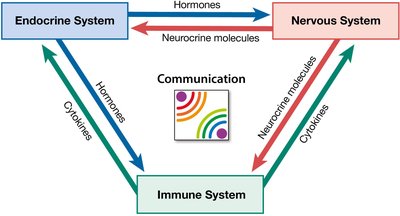



Major Functions of the Immune System
Recognition and Response
The immune system serves three primary functions:
Recognition and removal of abnormal "self" cells: Detects and eliminates cells that are cancerous or infected.
Removal of dead or damaged cells: Clears cellular debris to maintain tissue health.
Protection from pathogens: Identifies and destroys bacteria, viruses, parasites, and other foreign invaders.
Distinguishing between self and non-self is critical to prevent autoimmunity.
Anatomy of the Immune System
Lymphoid Tissues
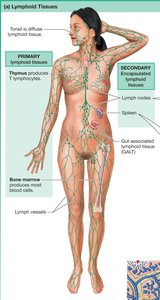
Lymphoid tissues are distributed throughout the body and are classified as primary or secondary:
Primary lymphoid tissues: Sites of immune cell development and maturation (bone marrow and thymus gland).
Secondary lymphoid tissues: Sites where immune responses are initiated (spleen, lymph nodes, tonsils, mucosa-associated lymphoid tissue [MALT], and gut-associated lymphoid tissue [GALT]).
Barriers: The First Line of Defense
Physical, Mechanical, and Chemical Barriers
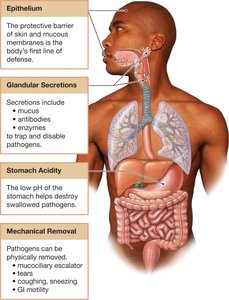
The body employs several barriers to prevent pathogen entry:
Physical barriers: Skin, mucous membranes, and ciliated epithelium.
Mechanical barriers: Actions such as coughing, sneezing, and vomiting physically expel pathogens.
Chemical barriers: Stomach acid and enzymes destroy ingested pathogens; secretions like mucus and antibodies trap and neutralize invaders.
Microbiota: Beneficial microorganisms outcompete pathogens for resources.
Internal Immune Responses
Four-Step Response to Pathogen Invasion
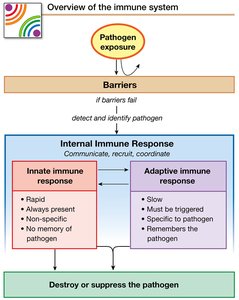
If pathogens breach barriers, the immune system responds in four steps:
Detection and identification of the pathogen
Communication with other immune cells
Recruitment and coordination of the immune response
Destruction or suppression of the pathogen
Innate Immunity
Characteristics and Cells
Innate immunity provides a rapid, non-specific response to pathogens and is present in all animals.
Features: Immediate response (minutes to hours), no memory, inflammation is a hallmark.
Cells: Neutrophils, macrophages, dendritic cells, basophils, eosinophils, and natural killer (NK) cells.
Adaptive Immunity
Characteristics and Cells
Adaptive immunity is specific to particular pathogens, slower to develop, and has memory for faster future responses. It is unique to vertebrates.
Features: Specific, slow (days to weeks), remembered by immune system.
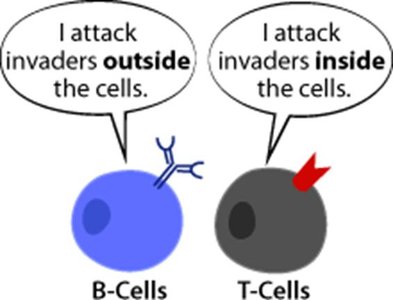
Types: Cell-mediated immunity (T cells) and antibody-mediated (humoral) immunity (B cells).
Leukocytes: The Immune Cells
Types and Functions
Leukocytes (white blood cells) are classified by function:
Granulocytes: Release granules to attack pathogens (e.g., neutrophils).
Phagocytes: Engulf and digest pathogens (e.g., neutrophils, macrophages, dendritic cells).
Antigen-presenting cells (APCs): Display antigen fragments to T cells (e.g., macrophages, dendritic cells, B cells).
Neutrophils
Neutrophils are the most abundant leukocytes and are key players in innate immunity.
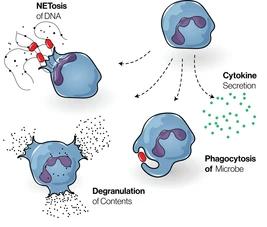
Destroy pathogens by phagocytosis, degranulation, cytokine secretion, and NETosis (release of DNA to trap microbes).
Macrophages
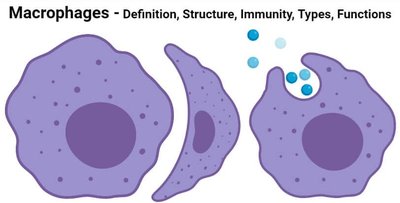
Macrophages develop from monocytes and reside in tissues, where they patrol for pathogens and debris.
Engulf and digest pathogens, recruit other immune cells, and act as APCs.
Dendritic Cells
Dendritic cells are found in skin and organs, act as phagocytes, and are crucial APCs that bridge innate and adaptive immunity by activating T and B cells in lymph nodes.
Other Leukocytes
Basophils and mast cells: Mediate inflammation and allergic responses.
Eosinophils: Combat parasites and participate in allergic reactions.
Lymphocytes: Include T cells, B cells, and NK cells; central to adaptive immunity.
Recognition of Pathogens
Pattern Recognition Receptors (PRRs) and PAMPs
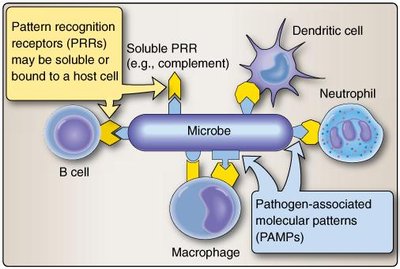
Innate immune cells recognize pathogens using pattern recognition receptors (PRRs) that bind pathogen-associated molecular patterns (PAMPs), triggering immune responses.
Phagocytosis
Mechanism and Importance
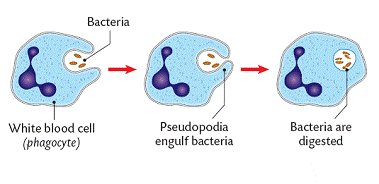
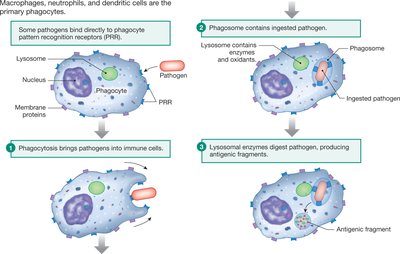
Phagocytosis is the process by which phagocytes (neutrophils, macrophages, dendritic cells) engulf and digest pathogens.
Phagocytes use pseudopodia to surround and internalize microbes, which are then digested by lysosomal enzymes.
Inflammatory Response
Role of Cytokines and Inflammation
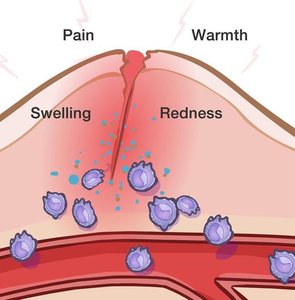
Inflammation is a hallmark of innate immunity, characterized by redness, heat, swelling, and pain. Cytokines attract immune cells, create barriers to infection, and promote tissue repair.
Antigen Presentation and MHC Molecules
Major Histocompatibility Complex (MHC)
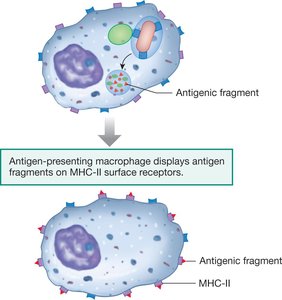
Antigen-presenting cells (APCs) display pathogen fragments on their surface using MHC molecules, which are essential for T cell activation.
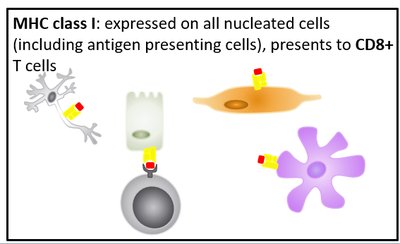
MHC Class I: Expressed on all nucleated cells; presents endogenous antigens (e.g., viral, cancer) to CD8+ cytotoxic T cells.
MHC Class II: Expressed only on professional APCs (macrophages, dendritic cells, B cells); presents exogenous antigens to CD4+ helper T cells.
Adaptive Immunity: Lymphocytes and Specificity
B and T Lymphocytes
Lymphocytes mediate adaptive immunity. Each B and T cell recognizes a specific antigen.
B cells: Mature in bone marrow, differentiate into plasma cells, and secrete antibodies (immunoglobulins).
T cells: Mature in thymus, include cytotoxic (CD8+), helper (CD4+), and regulatory T cells.
Self-Tolerance and Autoimmunity
Self-tolerance prevents immune responses against the body's own cells. Failure leads to autoimmune diseases. Negative selection and clonal deletion eliminate self-reactive lymphocytes during development.
T Cell Activation
T cell activation requires three signals:
TCR-MHC interaction (antigen recognition)
Co-stimulation (additional receptor-ligand interactions)
Cytokine signaling (contextual cues)
This multi-step process ensures specificity and prevents inappropriate activation.
Types of T Cells
Cytotoxic T cells (CD8+): Destroy infected or abnormal cells displaying MHC-I-antigen complexes.
Helper T cells (CD4+): Secrete cytokines to activate other immune cells.
Regulatory T cells (Tregs): Suppress immune responses to prevent excessive reactions.
Antibodies and Humoral Immunity
Classes and Functions of Antibodies
Antibodies (immunoglobulins) are proteins produced by plasma cells. There are five main classes:
IgG: Most abundant in serum, crosses placenta, secondary responses.
IgA: Found in external secretions (e.g., saliva, tears).
IgE: Targets parasites, mediates allergic responses.
IgM: First antibody produced in primary response.
IgD: Surface of B cells; function unclear.
Primary and Secondary Immune Responses
Clonal Expansion and Memory
Upon first exposure to an antigen, naïve lymphocytes undergo clonal expansion. B cells become plasma cells (secreting antibodies), and T cells become effector cells. Memory cells enable a faster, stronger secondary response upon re-exposure.
Pathogens: Bacteria vs. Viruses
Differences in Structure and Defense Mechanisms
Bacteria: Can be targeted by antibiotics; extracellular or intracellular.
Viruses: Require host cells for replication; targeted by cytotoxic T cells and antibodies.
Immune System Pathologies
Types of Immune Disorders
Incorrect responses: Autoimmune diseases (immune system attacks self).
Overactive responses: Allergies and hypersensitivity reactions (excessive response to harmless antigens).
Lack of response: Immunodeficiency diseases (primary or acquired, e.g., AIDS).
Vaccination and Herd Immunity
Principles and Benefits
Vaccination introduces inactivated or attenuated pathogens to stimulate a primary immune response and generate memory cells, providing rapid protection upon real exposure. Herd immunity protects the population by reducing the number of susceptible hosts.
Types of vaccines: Live attenuated, killed, molecular subunits.
Herd immunity: Achieved when enough individuals are immune, preventing disease spread.
Basic Reproduction Number (R0)
R0 measures the contagiousness of a disease (e.g., measles R0 = 12–18, influenza R0 = 1–2).
Additional info: This summary integrates core concepts from physiology, immunology, and pathology, providing a comprehensive overview suitable for ANP college students.
