 Back
BackChemical Level of Organization: Inorganic and Organic Molecules
Study Guide - Smart Notes
 Tailored notes based on your materials, expanded with key definitions, examples, and context.
Chemical Level of Organization
Introduction to Inorganic and Organic Molecules
The chemical level of organization forms the foundation for understanding the structure and function of the human body. All matter, including living organisms, is composed of chemicals that can be classified as either inorganic or organic compounds. This distinction is essential for understanding physiological processes and the molecular basis of life.
Inorganic Compounds
Definition and Examples
Inorganic compounds do not contain carbon-hydrogen (C-H) bonds.
Examples include water, salts, acids, and bases.
These compounds are vital for physiological processes such as fluid balance, pH regulation, and electrical signaling.
Water: The Most Important Inorganic Compound
Water is the most abundant and essential inorganic compound in living organisms, accounting for 60–80% of cell volume. Its unique properties make it indispensable for life.
High heat capacity: Absorbs and releases heat slowly, preventing sudden temperature changes.
High heat of vaporization: Requires significant energy to evaporate, aiding in cooling mechanisms like sweating.
Polar solvent properties: Dissolves and dissociates ionic substances, forming hydration layers around charged molecules, and serves as the body's major transport medium.
Reactivity: Participates in hydrolysis and dehydration synthesis reactions.
Cushioning: Protects organs from physical trauma (e.g., cerebrospinal fluid cushions the brain).
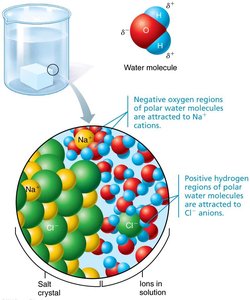
Electrolytes: Salts, Acids, and Bases
Electrolytes are substances that dissociate into ions in water, carrying electrical charges essential for nerve impulses, muscle contraction, and fluid balance.
Salts: Ionic compounds (e.g., NaCl, CaCO3) that dissociate into cations and anions other than H+ and OH–.
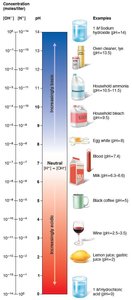
Acids: Proton donors that release H+ ions in solution.
Bases: Proton acceptors that take up H+ ions.
pH Scale
The pH scale measures the concentration of hydrogen ions [H+] in a solution, indicating its acidity or alkalinity. The scale ranges from 0 (most acidic) to 14 (most basic), with 7 being neutral. Proper pH balance is critical for physiological function.
Organic Compounds
Definition and Major Classes
Organic compounds contain carbon-hydrogen (C-H) bonds and are unique to living systems.
Major classes include carbohydrates, lipids, proteins, and nucleic acids.
Macromolecules: Polymers and Monomers
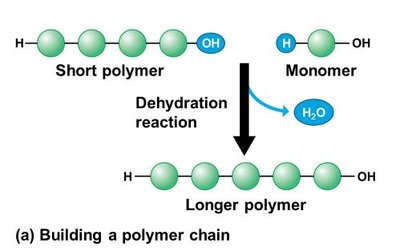
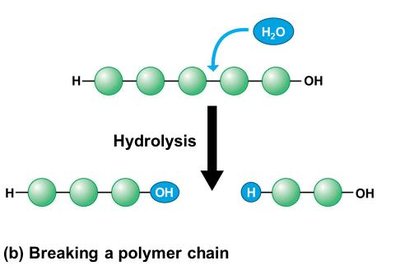
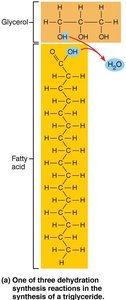
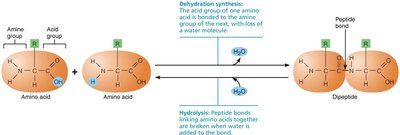
Macromolecules are large molecules formed by joining smaller units called monomers through dehydration synthesis reactions. The reverse process, hydrolysis, breaks polymers into monomers by adding water.
Polymer: A large molecule made of repeating monomer units.
Monomer: The basic building block of a polymer.

Carbohydrates
Structure and Classification
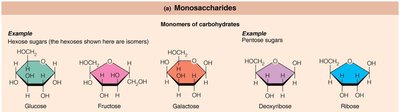
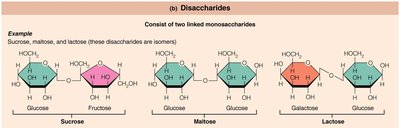
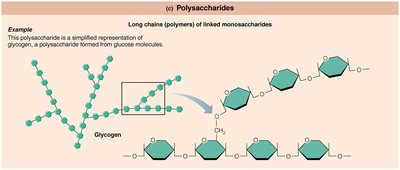
Carbohydrates are organic molecules composed of carbon, hydrogen, and oxygen, typically in a 1:2:1 ratio. They serve as the primary energy source for cells.
Monosaccharides: Simple sugars (e.g., glucose, fructose, ribose).
Disaccharides: Double sugars formed by joining two monosaccharides (e.g., sucrose, maltose, lactose).
Polysaccharides: Long chains of monosaccharides (e.g., glycogen in animals, starch in plants).
Lipids
Types and Functions
Lipids are hydrophobic organic molecules that include fats, oils, phospholipids, steroids, and eicosanoids. They are important for energy storage, insulation, cell membrane structure, and signaling.
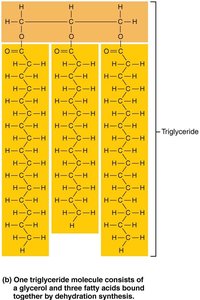
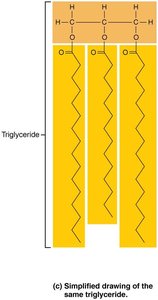
Triglycerides: Composed of glycerol and three fatty acids; main function is energy storage.
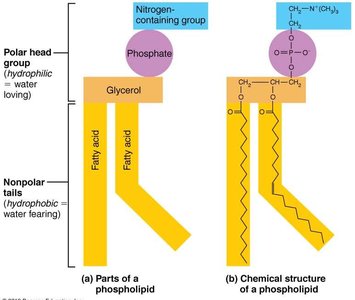
Phospholipids: Modified triglycerides with a phosphate group; essential for cell membranes.
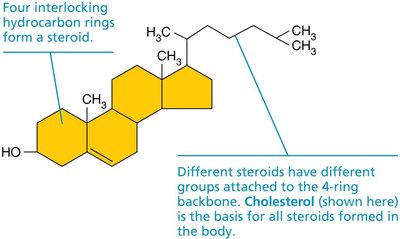
Steroids: Four interlocking hydrocarbon rings; cholesterol is the most important steroid.
Eicosanoids: Derived from arachidonic acid; involved in inflammation and other signaling pathways.
Saturated vs. Unsaturated Fats
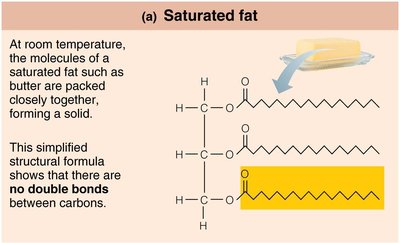
Saturated fats: No double bonds between carbon atoms; solid at room temperature (e.g., butter).
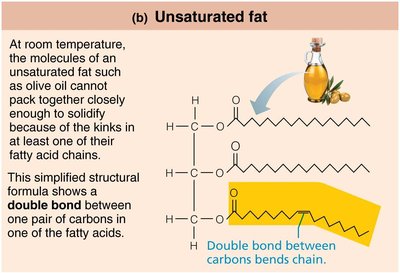
Unsaturated fats: One or more double bonds; liquid at room temperature (e.g., olive oil).
Phospholipids and Cell Membranes
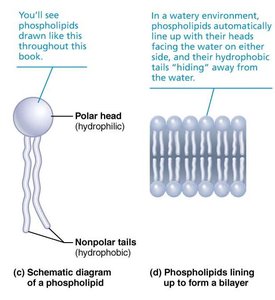
Phospholipids have a hydrophilic (water-attracting) head and two hydrophobic (water-repelling) tails, allowing them to form bilayers that make up cell membranes.
Steroids
Steroids are lipids with four fused hydrocarbon rings. Cholesterol is a precursor for steroid hormones, vitamin D, and bile salts.
Proteins
Structure and Functions
Proteins are polymers of amino acids joined by peptide bonds. They perform a vast array of functions, including structural support, catalysis, transport, movement, communication, and defense.
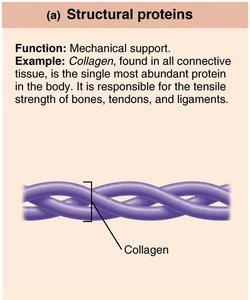
Structural proteins: Provide support (e.g., collagen).
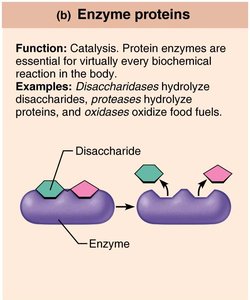
Enzyme proteins: Catalyze biochemical reactions.
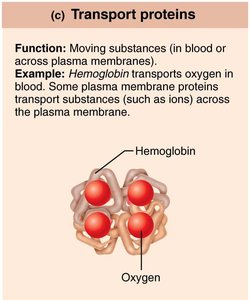
Transport proteins: Move substances in blood or across membranes.
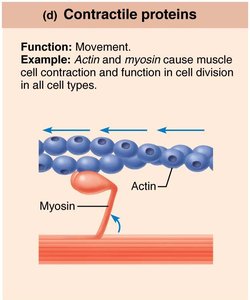
Contractile proteins: Enable movement (e.g., actin, myosin).
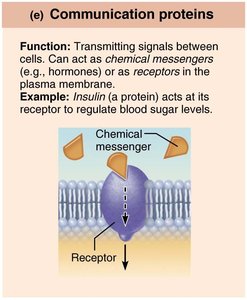
Communication proteins: Transmit signals (e.g., hormones, receptors).
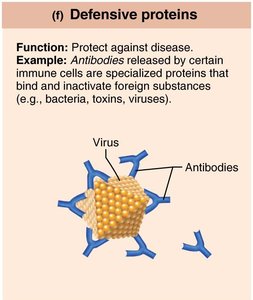
Defensive proteins: Protect against disease (e.g., antibodies).
Amino Acids and Peptide Bonds
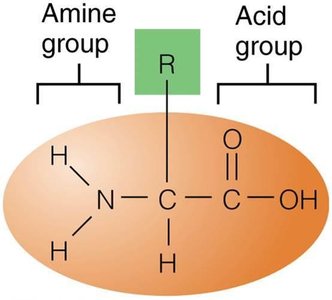
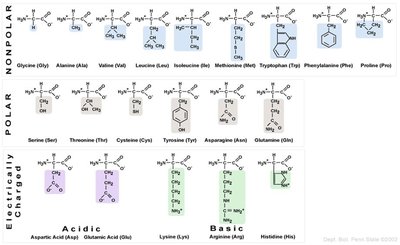
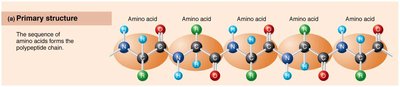
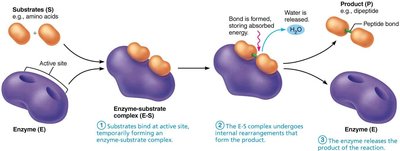
There are 20 different amino acids, each with a central carbon, an amine group, an acid group, and a unique "R" group. Peptide bonds form between the amine group of one amino acid and the acid group of another via dehydration synthesis.
Levels of Protein Structure
Primary: Linear sequence of amino acids.
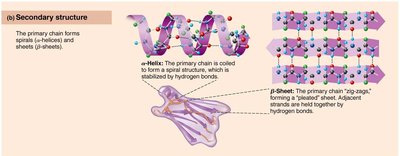
Secondary: Alpha helices and beta sheets formed by hydrogen bonding.
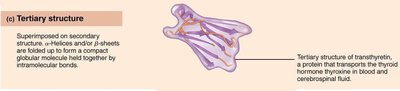
Tertiary: Three-dimensional folding due to interactions among R groups.
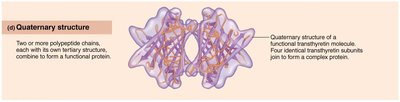
Quaternary: Association of two or more polypeptide chains.
Fibrous vs. Globular Proteins
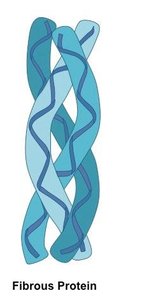
Fibrous proteins: Strand-like, stable, and insoluble in water (e.g., collagen).
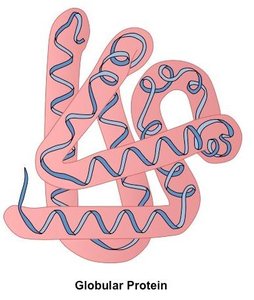
Globular proteins: Compact, spherical, water-soluble, and sensitive to environmental changes (e.g., enzymes, antibodies).
Protein Denaturation
Proteins can lose their functional shape (denature) due to changes in pH or temperature, especially globular proteins. Denatured proteins lose their biological activity.
Enzymes and Enzyme Activity
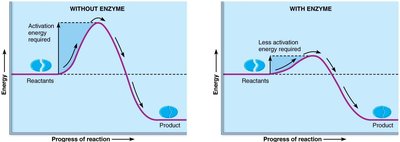
Enzymes are globular proteins that act as biological catalysts, speeding up chemical reactions by lowering the activation energy required. They are not consumed in the reaction.
Nucleic Acids
Structure and Function
Nucleic acids are polymers of nucleotides, which consist of a 5-carbon sugar, a phosphate group, and a nitrogenous base. They store and transmit genetic information.
DNA (Deoxyribonucleic Acid): Double-stranded, stores genetic information, bases pair A-T and G-C.
RNA (Ribonucleic Acid): Single-stranded, involved in protein synthesis, contains uracil instead of thymine.
ATP (Adenosine Triphosphate)
Structure and Role
ATP is the primary energy carrier in cells. It stores energy in its high-energy phosphate bonds, which can be released to power cellular processes when ATP is hydrolyzed to ADP or AMP.
Clinical and Public Health Relevance
Understanding the chemical level of organization is essential for interpreting lab values, medication actions, and physiological responses in health care.
Knowledge of molecular interactions underpins nutrition, water safety, and public health policy.
Review Questions
What is the difference between organic and inorganic molecules? Give examples of each.
Why is water considered the most important inorganic compound in the body? List two properties and their physiological significance.
What are electrolytes, and why are they important for homeostasis?
How do acids and bases differ, and what does the pH scale measure?
What is the general structure of a macromolecule? Define polymers and monomers, and describe the reactions that form and break them.
Describe the differences among monosaccharides, disaccharides, and polysaccharides. Which is glucose? Which is used for energy storage in humans?
List the main types of lipids in the body. How do saturated and unsaturated fats differ? What makes phospholipids essential for cell membranes?
What are proteins made of? Describe the four levels of protein structure and the importance of shape. What happens when a protein is denatured?
What do enzymes do in the body? How do they speed up reactions?
What are the building blocks of DNA and RNA? How do they differ, and what is the role of base pairing?
What is ATP, how does it store energy, and why is it essential for cellular function?
