 Back
BackChemistry Comes Alive: Foundations for Anatomy & Physiology
Study Guide - Smart Notes
 Tailored notes based on your materials, expanded with key definitions, examples, and context.
Chemistry Comes Alive
The Hierarchy of Organization
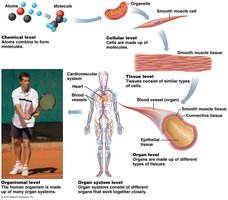
The human body is organized into a hierarchy of structural levels, each building upon the previous. Understanding these levels is essential for grasping how chemical principles underpin biological structure and function.
Chemical Level: Atoms combine to form molecules.
Cellular Level: Molecules form organelles, which make up cells—the basic units of life.
Tissue Level: Groups of similar cells form tissues.
Organ Level: Different tissues combine to form organs.
Organ System Level: Organs work together in organ systems.
Organismal Level: All organ systems together make up the organism.
Matter and Its Forms
Definition and States of Matter
Matter is any physical substance that occupies space and has mass. In biological systems, matter is found in three primary states:
Solid: Definite shape and volume (e.g., bones).
Liquid: Definite volume, no definite shape (e.g., blood plasma).
Gas: No definite shape or volume (e.g., oxygen, carbon dioxide in the lungs).
For this course, mass is considered equivalent to weight.
Elements and Atoms
Elements
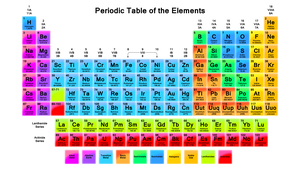
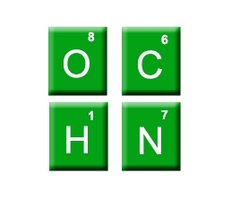
Elements are pure substances that cannot be broken down into simpler substances by ordinary chemical means. There are 118 recognized elements, with 92 occurring naturally. Key elements in the human body include hydrogen, oxygen, nitrogen, and carbon.
Atoms
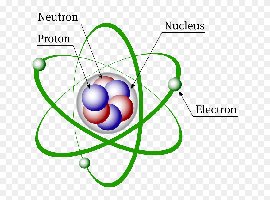
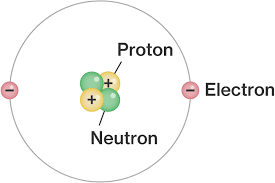
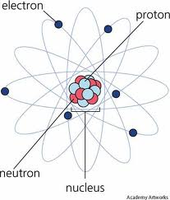
Atoms are the smallest units of matter that retain the properties of an element. Atoms are non-living and composed of subatomic particles:
Protons: Positively charged, found in the nucleus.
Neutrons: Neutral, found in the nucleus.
Electrons: Negatively charged, orbit the nucleus.
Molecules and Compounds
Definitions and Examples
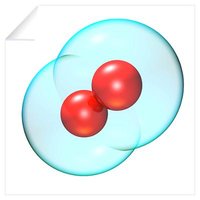
Most atoms do not exist alone; they combine with other atoms to form molecules (two or more atoms held together by chemical bonds). If a molecule contains more than one element, it is called a compound.
Molecule Example: O2 (oxygen gas)
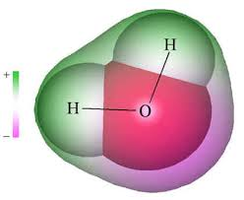
Compound Example: H2O (water)
Mixtures and Solutions
Solutions
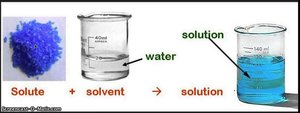
Solutions are homogeneous mixtures of two or more substances. The solvent is the substance present in the greatest amount (usually a liquid, such as water), and the solute is present in a smaller amount.
Solutions can be solid, liquid, or gas.
They have the same composition throughout.
Water: The Universal Solvent
Properties and Importance
Water is the most important compound in the human body, making up 60–80% of body weight. It is a polar molecule, meaning it has positively and negatively charged ends, which allows it to dissolve many substances and facilitate chemical reactions.
Hydrophilic: Substances that dissolve in water ("water-loving").
Hydrophobic: Substances that do not dissolve in water ("water-fearing").
Ions and Electrolytes
Formation and Types
Ions are charged atoms that have gained or lost electrons. They are also known as electrolytes because they conduct electricity in solution.
Cation: An atom that loses electrons and becomes positively charged.
Anion: An atom that gains electrons and becomes negatively charged.
Acids, Bases, and pH
Acids
Acids are electrolytes that release hydrogen ions (H+) in water. They are proton donors, taste sour, and react with metals.
Bases (Alkalines)
Bases are electrolytes that release hydroxyl ions (OH−) in water. They are proton acceptors, taste bitter, and feel slippery.
pH Scale
The pH scale measures the concentration of hydrogen ions in a solution, indicating how acidic or basic it is. The scale ranges from 0 (most acidic) to 14 (most basic), with 7 being neutral.
pH < 7: Acidic
pH = 7: Neutral
pH > 7: Basic (alkaline)
The relationship between hydrogen ion concentration and pH is given by:
Buffers
Buffers are systems in the body that help maintain a stable pH by binding or releasing hydrogen ions as needed. This is crucial for homeostasis, as even small changes in pH can disrupt biological processes.
Resist acidic changes by binding H+
Resist basic changes by releasing H+
Biomolecules: The Molecules of Life
Overview
There are four main types of biomolecules essential for life: proteins, carbohydrates, nucleic acids, and lipids. All are built on a framework of covalently bonded carbon atoms.
Polymers: Long chains of repeating units (monomers). Proteins, carbohydrates, and nucleic acids are polymers; lipids are not.
Organic Compounds
Definition and Types
Organic compounds contain carbon and are unique to living organisms. The four main classes are:
Carbohydrates
Proteins
Lipids
Nucleic Acids
Carbohydrates
Structure and Function
Carbohydrates are composed of carbon, hydrogen, and oxygen. They provide a readily available source of energy for cells and can also serve as structural components.
Monosaccharides: Simple sugars (e.g., glucose, fructose, galactose, ribose, deoxyribose).
Disaccharides: Two monosaccharides joined together (must be broken down for absorption).
Polysaccharides: Many monosaccharides linked together (e.g., starch in plants, glycogen in animals).
Lipids
Structure and Function
Lipids ("fats") are insoluble in water and composed mainly of carbon and hydrogen, with few oxygen atoms. They serve as energy storage, hormone production, and structural components of cell membranes.
Triglycerides: Long-term energy storage, insulation, and protection.
Phospholipids: Main component of cell membranes; have a hydrophilic head and two hydrophobic tails.
Steroids: Four interlocking rings; include cholesterol (important for cell membranes and hormone synthesis).
Proteins
Structure and Function
Proteins provide structure, act as enzymes, and perform many cellular functions. They are made of amino acids linked by peptide bonds and can have primary, secondary, and tertiary structures.
Amino Acids: 20 different types, building blocks of proteins.
Enzymes: Proteins that act as catalysts, speeding up chemical reactions in the body.
Without enzymes, most biochemical reactions would occur too slowly to sustain life.
Nucleic Acids
Types and Functions
Nucleic acids are the largest organic molecules in the body. They include:
DNA (Deoxyribonucleic Acid): Contains genetic information; nucleotides include adenine, thymine, cytosine, guanine.
RNA (Ribonucleic Acid): Involved in protein synthesis; nucleotides include adenine, uracil, cytosine, guanine.
ATP (Adenosine Triphosphate): The "energy currency" of the cell, transferring energy for cellular activities.
ATP Equation:
Where ADP is adenosine diphosphate and is inorganic phosphate.
