 Back
BackChemistry Comes Alive: Foundations for Human Anatomy & Physiology
Study Guide - Smart Notes
 Tailored notes based on your materials, expanded with key definitions, examples, and context.
Chapter 2: Chemistry Comes Alive
Introduction
Chemistry is fundamental to understanding physiological processes in the human body. All body functions, from movement to digestion, are governed by chemical and biochemical reactions. This chapter introduces the basic principles of chemistry as they relate to anatomy and physiology.
2.1 Matter and Energy
Matter
Matter is anything that has mass and occupies space. It can be seen, smelled, or felt.
States of matter:
Solid: Definite shape and volume.
Liquid: Changeable shape, definite volume.
Gas: Changeable shape and volume.
Weight is mass plus the effects of gravity.
Energy
Energy is the capacity to do work or put matter into motion. It does not have mass or occupy space.
Forms of energy:
Kinetic energy: Energy in action.
Potential energy: Stored (inactive) energy.
Chemical energy: Stored in bonds of chemical substances.
Electrical energy: Results from movement of charged particles.
Mechanical energy: Directly involved in moving matter.
Radiant (electromagnetic) energy: Travels in waves (e.g., heat, visible light, X-rays).
Energy can be transformed from one form to another, but some energy is always lost as heat.
2.2 Atoms and Elements
Elements
Elements are substances that cannot be broken down into simpler substances by ordinary chemical methods.
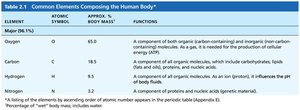
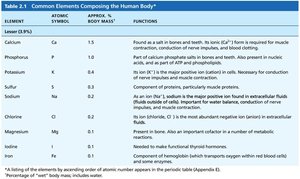
Four elements make up 96% of the human body: Oxygen (O), Carbon (C), Hydrogen (H), and Nitrogen (N).
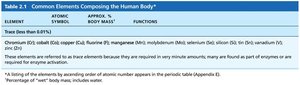
Other elements are present in lesser or trace amounts but are still essential for life.
Atoms
Atoms are the smallest units of an element that retain the properties of that element.
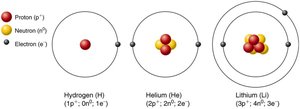
Atoms are composed of subatomic particles:
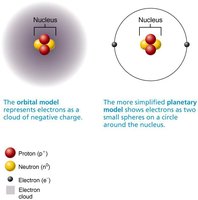
Protons (p+): Positive charge, found in the nucleus.
Neutrons (n0): No charge, found in the nucleus.
Electrons (e-): Negative charge, orbit the nucleus.
Atomic Structure and Isotopes
The number of protons defines the element (atomic number).
The sum of protons and neutrons is the mass number.
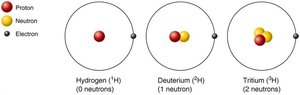
Isotopes are atoms of the same element with different numbers of neutrons.
2.3 Combining Matter
Molecules and Compounds
Molecule: Two or more atoms bonded together (e.g., O2).
Compound: Molecule with two or more different kinds of atoms (e.g., H2O).
Mixtures
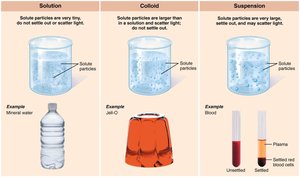
Most matter exists as mixtures: two or more components physically intermixed.
Types of mixtures:
Solutions: Homogeneous mixtures; solute particles are very tiny and do not settle out or scatter light.
Colloids: Heterogeneous mixtures; solute particles are larger and scatter light but do not settle out.
Suspensions: Heterogeneous mixtures; solute particles are very large, settle out, and may scatter light.
2.4 Chemical Bonds
Role of Electrons in Chemical Bonding
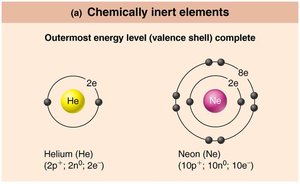
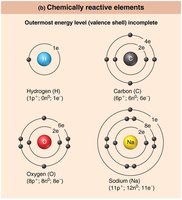
Electrons occupy energy levels called electron shells.
The outermost shell is the valence shell and determines chemical reactivity.
Octet rule: Atoms tend to gain, lose, or share electrons to achieve 8 electrons in their valence shell (except H and He, which seek 2).
Types of Chemical Bonds
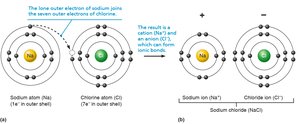
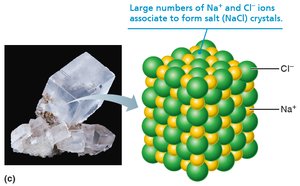
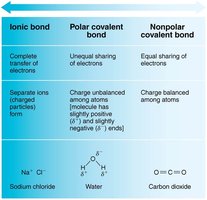
Ionic bonds: Formed by the transfer of electrons from one atom to another, creating ions (cations and anions).
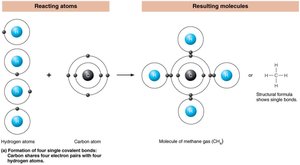
Covalent bonds: Formed by sharing electrons between atoms. Can be single, double, or triple bonds.
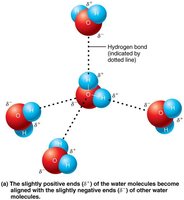
Hydrogen bonds: Weak attractions between a hydrogen atom and an electronegative atom (e.g., between water molecules).
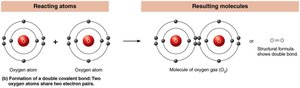
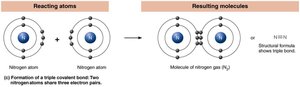
Polar and Nonpolar Covalent Bonds
Nonpolar covalent bonds: Equal sharing of electrons (e.g., O2, CO2).
Polar covalent bonds: Unequal sharing of electrons, resulting in partial charges (e.g., H2O).
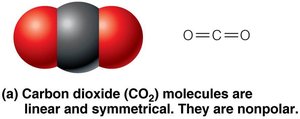
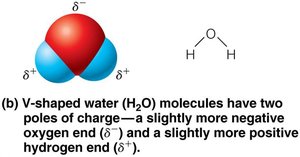
Hydrogen Bonds
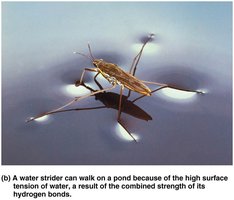
Hydrogen bonds are responsible for many of water's unique properties, such as high surface tension and the ability to dissolve many substances.
2.5 Chemical Reactions
Chemical Equations
Chemical reactions involve the formation, rearrangement, or breaking of chemical bonds.
Chemical equations show reactants and products, with balanced numbers of atoms.
Types of Chemical Reactions
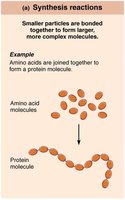
Synthesis (combination) reactions: Atoms or molecules combine to form larger, more complex molecules. Important in anabolic processes.
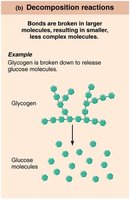
Decomposition reactions: Molecules are broken down into smaller molecules or atoms. Important in catabolic processes.
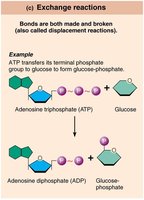
Exchange (displacement) reactions: Involve both synthesis and decomposition; bonds are both made and broken.
Redox (oxidation-reduction) reactions: Involve the transfer of electrons between atoms. Essential in energy production and metabolism.
Energy Flow in Chemical Reactions
Exergonic reactions: Release energy; products have less potential energy than reactants (e.g., catabolic reactions).
Endergonic reactions: Absorb energy; products have more potential energy than reactants (e.g., anabolic reactions).
Reversibility and Rate of Chemical Reactions
All chemical reactions are theoretically reversible, but many biological reactions are not due to energy requirements or removal of products.
Factors affecting reaction rate:
Temperature (higher increases rate)
Concentration of reactants (higher increases rate)
Particle size (smaller increases rate)
Catalysts (e.g., enzymes) increase reaction rate without being consumed.
Summary Table: Types of Chemical Bonds
Bond Type | Electron Sharing/Transfer | Resulting Structure | Example |
|---|---|---|---|
Ionic | Complete transfer of electrons | Separate ions (charged particles) form | NaCl (sodium chloride) |
Polar Covalent | Unequal sharing of electrons | Charge unbalanced among atoms (partial charges) | H2O (water) |
Nonpolar Covalent | Equal sharing of electrons | Charge balanced among atoms | CO2 (carbon dioxide) |
Additional info: Understanding these chemical principles is essential for grasping more advanced topics in anatomy and physiology, such as cellular metabolism, nerve impulse transmission, and muscle contraction.
