 Back
BackChemistry Foundations for Anatomy & Physiology: Matter, Atoms, and Bonds
Study Guide - Smart Notes
 Tailored notes based on your materials, expanded with key definitions, examples, and context.
Chemistry Part I: Matter, Atoms, and Bonds
Overview of Levels of Organization
The study of the human body begins at the simplest level of organization: atoms and molecules. Atoms are the basic particles of matter, and their interactions form molecules, which determine the characteristics of all living and nonliving things.
Matter
Definition and States of Matter
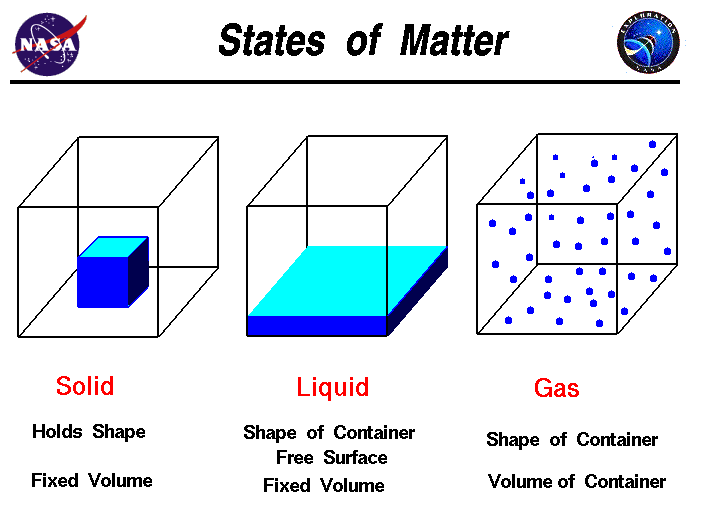
Matter is anything that has mass and takes up space. It exists in three physical states: solid, liquid, and gas. The mass of an object is the amount of matter it contains, while weight is the measurement of the pull of gravity on an object. Mass remains constant regardless of location, but weight can change with gravity.
Solid: Defined shape and volume; molecules are closely packed and regularly arranged; very slow movement; not easily compressed or expanded.
Liquid: Takes the shape of its container; defined volume at a given temperature; molecules are moderately packed; medium speed movement; can compress or expand slightly when heated.
Gas: Takes the shape and volume of its container; molecules are scattered and far apart; fast movement; easily compressed or expanded.
Elements
Definition and Periodic Table
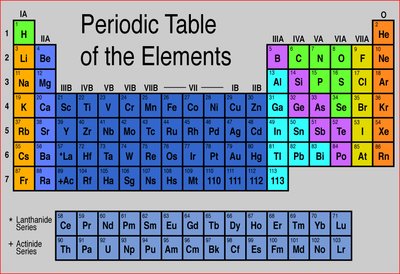
All matter is composed of elements, substances that cannot be broken down by normal chemical reactions. The periodic table organizes elements by their atomic structure. Each element has a unique name and symbol, often derived from English, Latin, or German.
Elements in the Human Body
About 25 elements are essential for life, but four—carbon (C), hydrogen (H), nitrogen (N), and oxygen (O)—make up about 96% of human body mass. Element symbols use one or two letters, with the first capitalized and the second lowercase.
Atoms
Structure and Subatomic Particles
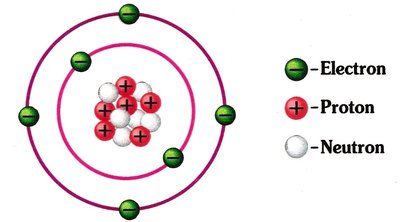
Atoms are the smallest units of matter and the smallest particles of an element that retain its properties. Atoms are composed of subatomic particles:
Protons: Positive charge, mass of 1, found in the nucleus.
Neutrons: No charge (neutral), mass of 1, found in the nucleus.
Electrons: Negative charge, negligible mass, orbit the nucleus in shells.
Atomic Number and Atomic Mass
The atomic number is the number of protons in an atom and determines the element's identity. The atomic mass is the sum of protons and neutrons in the nucleus.
Isotopes: Atoms of the same element with different numbers of neutrons, resulting in different atomic masses but the same atomic number.
Radioactive Isotopes: Unstable isotopes that decay, emitting radiation. Used in medical imaging (e.g., PET scans) and cancer treatment (radiation therapy).
Electron Shells and the Periodic Table
Electron Shells
Electrons orbit the nucleus in electron shells, which represent energy levels. The number of shells corresponds to the element's row in the periodic table. The innermost shell holds 2 electrons, the second holds 8, and the third holds 18.
Atoms are neutral, with equal numbers of protons and electrons.
Electrons fill shells in order: innermost first.
Valence Shells and Valence Electrons
The valence shell is the outermost electron shell, and its electrons are called valence electrons. Atoms with full valence shells are inert (non-reactive). Atoms with incomplete valence shells are unstable and interact with other atoms to achieve stability.
Elements in the far-right column of the periodic table (e.g., helium, neon) have filled valence shells and are inert.
Elements like hydrogen, carbon, oxygen, and sodium have vacancies and are chemically reactive.
Molecules and Compounds
Formation and Types
When valence electrons of different atoms interact, they form bonds and create molecules. Molecules may consist of atoms of one element (e.g., O2, H2) or more than one element, in which case they are called compounds (e.g., H2O, CO2).
Chemical Bonds
Ionic Bonds
Ionic bonds are formed when atoms transfer electrons to fill their valence shells, resulting in charged ions. Oppositely charged ions (cations and anions) attract each other to form ionic bonds. Example: NaCl (sodium chloride).
Cation: Atom that loses electrons (positive charge).
Anion: Atom that gains electrons (negative charge).
Covalent Bonds
Covalent bonds are formed when atoms share electrons to fill their valence shells. Sharing one pair of electrons creates a single covalent bond; sharing two pairs creates a double covalent bond.
Nonpolar covalent bonds: Electrons are shared equally.
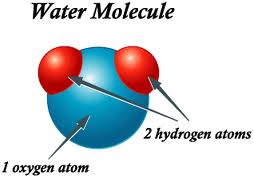
Polar covalent bonds: Electrons are shared unequally, resulting in partial charges (e.g., water molecule).
Electronegativity and Polar Molecules
Electronegativity is an atom's attraction for electrons in a covalent bond. Highly electronegative atoms (e.g., oxygen, nitrogen) pull electrons closer, creating polar molecules with distinct positive and negative regions.
Hydrogen Bonds
Hydrogen bonds form between polar molecules, specifically between a slightly positive hydrogen atom and a slightly negative oxygen or nitrogen atom of another molecule. These bonds are weaker than ionic or covalent bonds but are crucial for many biological processes.
Properties of Water
Importance in Physiology
Water is a polar molecule and is essential for life due to its unique properties:
Essential reactant: Involved in chemical reactions (e.g., hydrolysis, dehydration synthesis).
High heat capacity: Absorbs and retains heat, minimizing temperature fluctuations in organisms.
Excellent solvent: Dissolves a variety of molecules, forming solutions. Ionic compounds dissociate in water, while polar organic molecules dissolve without dissociation.
Dissociation in Water
When ionic compounds dissolve in water, their bonds break and ions are surrounded by water molecules. Polar organic molecules (e.g., glucose) dissolve but do not dissociate.
Concept Checks
Water is an excellent solvent.
In water molecules, hydrogen atoms have a slight positive charge, and the oxygen atom has a slight negative charge due to unequal sharing of electrons.
