 Back
BackChemistry Foundations for Anatomy & Physiology: Matter, Atoms, and Macromolecules
Study Guide - Smart Notes
 Tailored notes based on your materials, expanded with key definitions, examples, and context.
Chemistry and Matter in Human Physiology
Introduction to Chemistry
Chemistry is fundamental to understanding the organization and function of the human body at the molecular level. Matter, which is anything that takes up space and has mass, exists in three states: solids, liquids, and gases. The properties and interactions of matter underpin physiological processes.
Matter: Defined as anything with mass and volume.
States of Matter: Solid, liquid, and gas.
Application: The body utilizes all three states (e.g., bone as solid, blood as liquid, oxygen as gas).
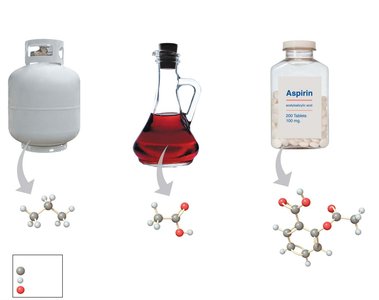
Principle Elements and Atomic Structure
The Atom and Subatomic Particles
Atoms are the smallest units of matter and are composed of subatomic particles: protons, neutrons, and electrons. The arrangement and number of these particles determine the chemical properties of each element.
Protons (p+): Positively charged, found in the nucleus.
Neutrons (n): Electrically neutral, found in the nucleus.
Electrons (e-): Negatively charged, orbit the nucleus in electron shells.
Atomic Number and Atomic Mass
The atomic number is the number of protons in the nucleus, which defines the element. Atomic mass is the sum of protons and neutrons.
Atomic Number: Determines the identity of the element.
Atomic Mass:
Electron Shells and Valence Electrons
Electrons occupy shells around the nucleus. The chemical behavior of an atom is largely determined by the number of electrons in its outermost shell (valence shell).
1st Shell: Maximum of 2 electrons.
2nd & 3rd Shells: Maximum of 8 electrons each.
Valence Electrons: Electrons in the outermost shell, crucial for chemical bonding.
Chemical Bonds and Molecular Interactions
Types of Chemical Bonds
Atoms achieve stability by gaining, losing, or sharing electrons, forming chemical bonds. The main types are covalent, ionic, and hydrogen bonds.
Non-Polar Covalent Bonds: Electrons are shared equally; no charge separation (e.g., O2, H2).
Polar Covalent Bonds: Electrons are shared unequally, creating partial charges (e.g., H2O).
Ionic Bonds: Formed by electrical attraction between cations (positive ions) and anions (negative ions).
Hydrogen Bonds: Weak interactions between hydrogen (in a polar molecule) and another electronegative atom.
Inert vs. Reactive Elements
Inert elements have filled valence shells and do not react, while reactive elements have unfilled valence shells and readily form bonds.
Inert Elements: Noble gases (e.g., Helium, Neon).
Reactive Elements: Most other elements, especially those essential for life.
Water and Its Biological Importance
Properties of Water
Water is essential for life, acting as a universal solvent and participating in numerous physiological processes. Its unique properties arise from hydrogen bonding.
Surface Tension: Caused by hydrogen bonds, allows small objects to float.
Solubility: Water dissolves hydrophilic (polar) molecules easily.
Ionization: Water can break apart ionic compounds, facilitating electrolyte function.
Electrolytes and pH
Electrolytes are substances whose ions conduct electricity in solution. The pH scale measures hydrogen ion concentration, affecting cellular function.
Normal Blood pH: 7.35–7.45
Acidosis: pH < 7.35, can depress CNS.
Alkalosis: pH > 7.45, can cause muscle contractions.
pH Equation:
Macromolecules: Structure and Function
Overview of Macromolecules
Macromolecules are large, complex molecules essential for life. They include carbohydrates, lipids, nucleic acids, and proteins.
Monomers: Small subunits (e.g., amino acids, glucose).
Polymers: Chains of monomers (e.g., proteins, glycogen).
Dehydration Synthesis: Forms polymers by removing water.
Hydrolysis: Breaks polymers into monomers by adding water.
Lipids
Lipids are diverse molecules with roles in energy storage, cell signaling, and membrane structure.
Triglycerides: Glycerol + 3 fatty acids; main energy reserve.
Fatty Acids: Hydrophilic head (carboxyl group), hydrophobic tail (hydrocarbon chain).
Saturated Fatty Acids: No double bonds, solid at room temperature.
Unsaturated Fatty Acids: One or more double bonds, liquid at room temperature.
Eicosanoids: Signaling molecules (inflammation, pain).
Steroids: Hormone synthesis.
Phospholipids: Main component of cell membranes.
Carbohydrates
Carbohydrates provide energy and structural support. They are classified as monosaccharides, disaccharides, and polysaccharides.
Glycogen: Storage form of glucose in liver and muscle.
Hydrolysis: Glycogen broken down to glucose for energy.
Nucleic Acids
Nucleic acids (DNA and RNA) store and transmit genetic information. They are polymers of nucleotides.
Nucleotides: Composed of a nitrogenous base (purines: A, G; pyrimidines: C, T, U), a 5-carbon sugar, and a phosphate group.
DNA: Genetic information storage.
RNA: Protein synthesis and ribosome structure.
Proteins
Proteins are dynamic macromolecules with diverse functions, including catalysis, structure, transport, and signaling. They are polymers of amino acids.
Primary Structure: Sequence of amino acids.
Secondary Structure: Alpha helices and beta sheets.
Tertiary Structure: Three-dimensional folding.
Quaternary Structure: Multiple polypeptide chains.
Protein-Ligand Binding: Specificity, affinity, saturation, and competition.
Protein Activation: Requires cofactors or proteolytic cleavage.
Protein Modulation: Influenced by chemical (allosteric) and physical (pH, temperature) modulators.
Up-Regulation: Increased protein synthesis.
Down-Regulation: Decreased protein synthesis.
Protein-Ligand Binding and Law of Mass Action
Proteins interact with ligands (substrates) based on specificity and affinity. The law of mass action governs the equilibrium of these interactions.
Law of Mass Action:
Equilibrium: Changes in concentration shift the reaction to restore balance.
Summary Table: Macromolecule Types and Functions
Macromolecule | Monomer | Polymer | Main Function |
|---|---|---|---|
Carbohydrate | Glucose | Glycogen | Energy storage |
Lipid | Fatty acid | Triglyceride | Energy, insulation, signaling |
Protein | Amino acid | Polypeptide | Catalysis, structure, transport |
Nucleic Acid | Nucleotide | DNA/RNA | Genetic information |
