 Back
BackComprehensive Study Guide for BIO163 Final Exam II (Chapters 10–16)
Study Guide - Smart Notes
 Tailored notes based on your materials, expanded with key definitions, examples, and context.
Q1. What are the main components of blood, and what are the properties of each constituent?
Background
Topic: Blood Composition
This question tests your understanding of the different parts of blood, their physical properties, and their functions in the body.
Key Terms and Concepts:
Plasma: The liquid portion of blood, mostly water, containing proteins, nutrients, hormones, and waste products.
Formed Elements: Includes red blood cells (erythrocytes), white blood cells (leukocytes), and platelets (thrombocytes).
Red Blood Cells (RBCs): Carry oxygen using hemoglobin.
White Blood Cells (WBCs): Involved in immune defense; several types exist (e.g., neutrophils, lymphocytes).
Platelets: Cell fragments important for blood clotting.
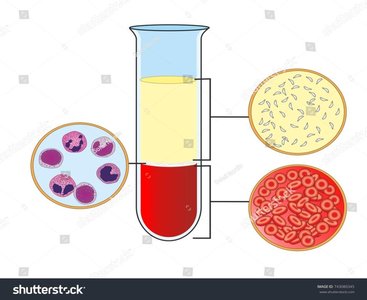
Step-by-Step Guidance
Identify the three main layers/components in a centrifuged blood sample: plasma (top), buffy coat (middle, contains WBCs and platelets), and red blood cells (bottom).
Describe the properties and functions of plasma, including its role in transporting nutrients, hormones, and waste.
List the types of formed elements and briefly state the function of each (RBCs, WBCs, platelets).
Explain why each component is essential for homeostasis and survival.
Try solving on your own before revealing the answer!
Q2. What are the different types of blood cells and their functions?
Background
Topic: Blood Cell Types and Functions
This question focuses on the identification and roles of erythrocytes, leukocytes, and thrombocytes in the circulatory and immune systems.
Key Terms:
Erythrocytes (RBCs): Oxygen transport
Leukocytes (WBCs): Immune defense (various types: neutrophils, lymphocytes, monocytes, eosinophils, basophils)
Thrombocytes (Platelets): Blood clotting
Step-by-Step Guidance
List the three main types of blood cells.
For each type, describe its primary function in the body.
Identify at least two subtypes of white blood cells and their specific roles.
Explain how these cells work together to maintain health.
Try solving on your own before revealing the answer!
Q3. How do blood groups determine compatibility for transfusions? Use the chart to answer the following:
Background
Topic: Blood Groups and Transfusion Compatibility
This question tests your ability to interpret blood typing results and understand the principles of agglutination and compatibility.
Key Terms and Concepts:
Antigen: A molecule on the surface of RBCs that can trigger an immune response.
Antibody: A protein produced by the immune system that binds to specific antigens.
Agglutination: Clumping of cells due to antibody-antigen reaction.
Universal Donor: Blood type O-
Universal Acceptor: Blood type AB+
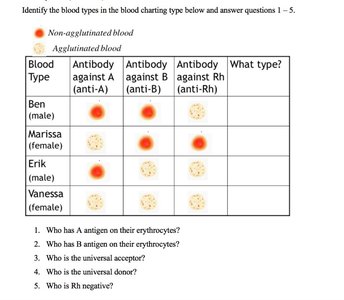
Step-by-Step Guidance
Examine the chart for agglutination patterns with anti-A, anti-B, and anti-Rh antibodies for each individual.
Determine which antigens are present on each person's RBCs based on where agglutination occurs.
Use this information to assign the correct blood type to each individual.
Recall which blood types are universal donors and acceptors, and identify who is Rh negative.
Try solving on your own before revealing the answer!
Q5. Identify the major anatomical structures of the heart and describe the function of each part.
Background
Topic: Heart Anatomy and Physiology
This question assesses your knowledge of the heart's chambers, valves, and major blood vessels, as well as their roles in circulation.
Key Terms:
Atria: Upper chambers that receive blood
Ventricles: Lower chambers that pump blood out
Valves: Prevent backflow of blood
Major vessels: Aorta, pulmonary arteries/veins, vena cava
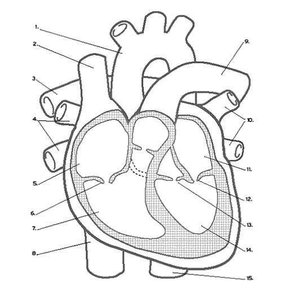
Step-by-Step Guidance
Identify the four chambers of the heart and their locations.
Label the major blood vessels entering and leaving the heart.
Describe the function of each valve and how it ensures one-way blood flow.
Explain the path of blood through the heart, starting from the vena cava.
Try solving on your own before revealing the answer!
