 Back
BackDigestive System: Structure, Function, and Processes
Study Guide - Smart Notes
 Tailored notes based on your materials, expanded with key definitions, examples, and context.
Digestive System Overview
Main Functions of the Digestive System
The digestive system is responsible for processing food to extract and absorb nutrients, and eliminate waste. Its main functions include:
Ingestion: Taking in food.
Mechanical and Chemical Breakdown: Breaking food into nutrient molecules.
Absorption: Moving nutrient molecules into the bloodstream.
Excretion: Removing indigestible remains from the body.
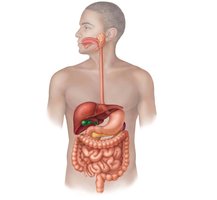
Digestive System Anatomy
Accessory Digestive Organs
Accessory organs aid digestion but are not part of the alimentary canal. They include:
Teeth and Tongue
Gallbladder
Digestive glands: Salivary glands, liver, pancreas
Alimentary Canal
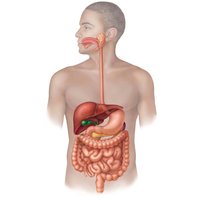
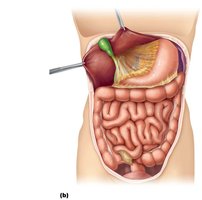
The alimentary canal is a continuous tube from mouth to anus, including the oral cavity, pharynx, esophagus, stomach, small intestine, and large intestine.
Digestive Processes
Six Essential Activities
Ingestion: Eating food.
Propulsion: Moving food through the canal (swallowing and peristalsis).
Mechanical Breakdown: Chewing, mixing, churning, and segmentation.
Digestion: Enzymatic breakdown of complex molecules.
Absorption: Passage of digested fragments into blood or lymph.
Defecation: Elimination of indigestible substances.
Functional Anatomy of the Digestive System
Mouth and Associated Organs
The mouth is the entry point for food, where mechanical and chemical digestion begins. Associated organs include the tongue, salivary glands, and teeth.
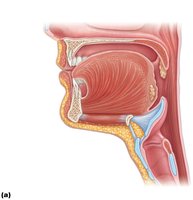
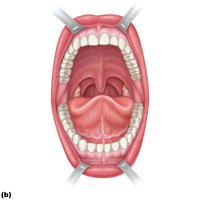
Teeth and Dentition
Teeth are essential for mastication (chewing), breaking food into smaller fragments. Dentition refers to the arrangement and types of teeth:
Incisors: Cutting
Canines: Tearing
Premolars: Grinding
Molars: Crushing
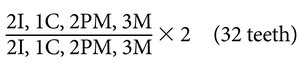
Dental formulas indicate the number and types of teeth:
Type | Formula | Total Teeth |
|---|---|---|
Primary (deciduous) | 2I, 1C, 2M (upper) / 2I, 1C, 2M (lower) × 2 | 20 |
Permanent | 2I, 1C, 2PM, 3M (upper) / 2I, 1C, 2PM, 3M (lower) × 2 | 32 |

Microscopic Anatomy of the Digestive Tract
Esophagus Structure
The esophagus is a muscular tube lined with stratified squamous epithelium, transitioning to simple columnar epithelium at the stomach.
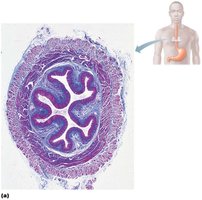
Stomach Structure
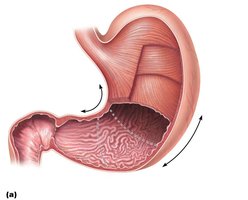
The stomach is a temporary storage tank that initiates protein digestion and converts food into chyme. It has specialized regions and a mucosa with gastric pits and glands.
Hormonal Regulation of Digestion
Hormones and Paracrines
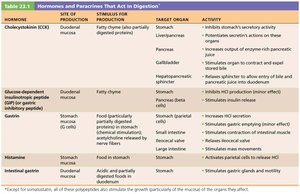
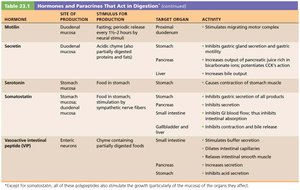
Several hormones and paracrines regulate digestive processes. Key examples include:
Hormone | Site of Production | Stimulus | Target Organ | Activity |
|---|---|---|---|---|
Cholecystokinin (CCK) | Duodenal mucosa | Fatty chyme | Stomach, Liver, Pancreas, Gallbladder | Inhibits stomach activity, stimulates enzyme-rich pancreatic juice, stimulates gallbladder contraction |
Secretin | Duodenal mucosa | Acidic chyme | Stomach, Pancreas, Liver | Inhibits gastric secretion, stimulates bicarbonate-rich pancreatic juice, increases bile output |
Gastrin | Stomach mucosa | Food in stomach | Stomach, Small intestine, Large intestine | Stimulates gastric glands and motility |
Liver, Gallbladder, and Pancreas
Liver Anatomy and Function
The liver is the largest gland in the body, producing bile for fat emulsification. It consists of four lobes and is anchored by ligaments.
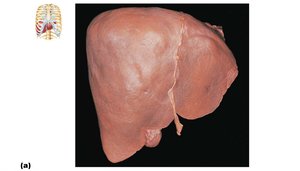
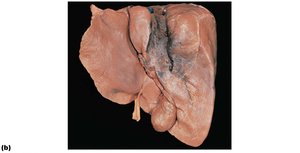
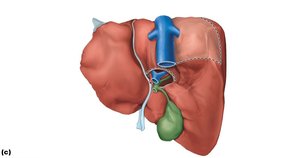
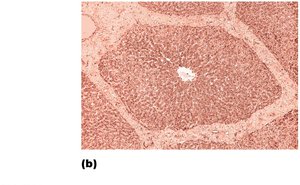
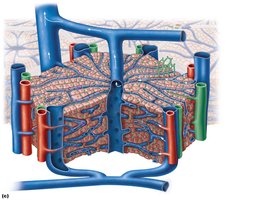
Microscopic Anatomy of the Liver
Liver lobules are hexagonal units composed of hepatocytes. Blood flows through sinusoids, and Kupffer cells remove debris. Hepatocytes produce bile, process nutrients, store vitamins, and detoxify blood.
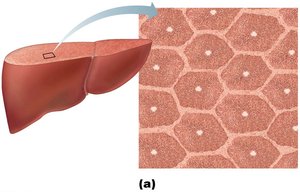
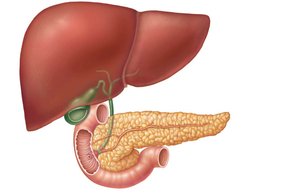
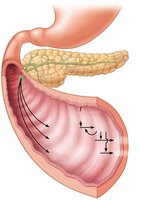
Gallbladder and Pancreas
The gallbladder stores and concentrates bile. The pancreas produces digestive enzymes and bicarbonate, and has both exocrine and endocrine functions.
Small Intestine
Gross and Microscopic Anatomy
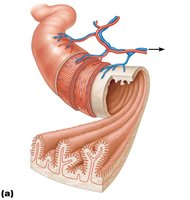
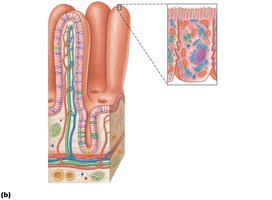
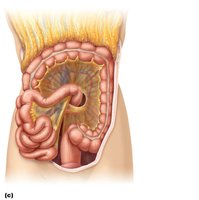
The small intestine is the major site of digestion and absorption, with three subdivisions: duodenum, jejunum, and ileum. Its surface area is increased by circular folds, villi, and microvilli.
Large Intestine
Gross Anatomy
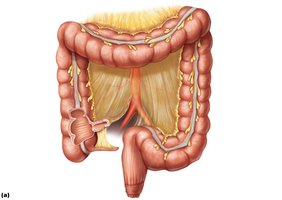
The large intestine absorbs water and electrolytes, and forms and expels feces. It includes the cecum, appendix, colon, rectum, and anal canal.
Processing of Nutrients
Digestion and Absorption of Carbohydrates
Carbohydrate digestion begins in the mouth with salivary amylase, continues in the small intestine with pancreatic amylase and brush border enzymes, and results in monosaccharides absorbed into the blood.
Digestion and Absorption of Proteins
Protein digestion starts in the stomach with pepsin, continues in the small intestine with pancreatic proteases and brush border enzymes, and results in amino acids absorbed into the blood.
Digestion and Absorption of Lipids
Lipid digestion requires emulsification by bile salts and breakdown by pancreatic lipases. Monoglycerides and fatty acids are absorbed and transported via chylomicrons in the lymphatic system.
Absorption of Water
Most water absorption occurs in the small intestine by osmosis, with the remainder absorbed in the large intestine.
