 Back
BackDigestive System: Structure, Function, and Regulation
Study Guide - Smart Notes
 Tailored notes based on your materials, expanded with key definitions, examples, and context.
Overview of the Digestive System
Introduction to Digestive Physiology
The digestive system is responsible for breaking down food into absorbable nutrients, which are then transported throughout the body to provide energy and support cellular functions. This process involves coordinated actions of multiple organs and regulatory mechanisms.
Macronutrients (carbohydrates, proteins, fats) are digested into absorbable forms.
Oxygen from the respiratory system is essential for cellular metabolism of these nutrients.
The circulatory system distributes nutrients and removes waste products such as CO2.
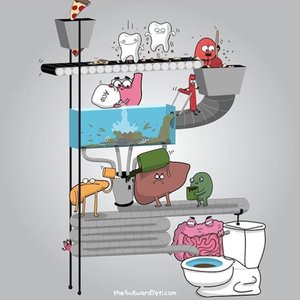
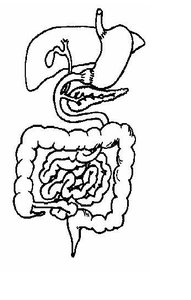
Four Basic Processes of the Digestive System
Main Functions
The digestive system performs four primary functions:
Secretion: Release of digestive enzymes, acids, mucus, and other substances to aid digestion.
Digestion: Mechanical and chemical breakdown of food into smaller molecules.
Absorption: Movement of nutrients, water, and ions from the lumen of the gut into the blood or lymph.
Motility: Movement of food through the digestive tract via muscle contractions.

Motility in the Digestive System
Types of Muscle Contractions
Motility refers to the movement of food through the digestive tract, which is achieved by different types of muscle contractions:
Tonic contractions: Sustained contractions, typically found in sphincters, prevent backflow of contents.
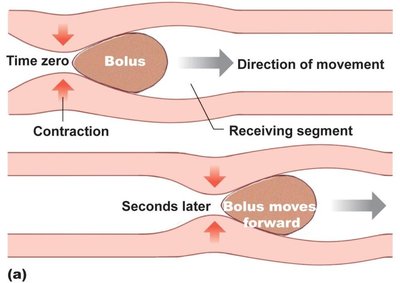
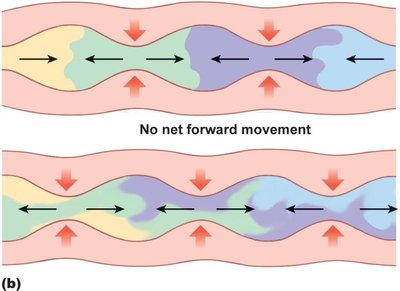
Phasic contractions: Short, rhythmic contractions that include peristalsis (propulsive movement) and segmentation (mixing movement).
Motility Patterns
Peristalsis: Coordinated contraction and relaxation of muscles to propel food forward.
Segmentation: Alternating contractions that mix contents without net forward movement.
Secretion in the Digestive System
Types of Secretions
Cells in the digestive tract secrete a variety of substances:
Hormones: Regulate digestive processes.
Digestive enzymes: Break down macronutrients.
Fluids and ions: Aid in digestion and absorption.
Mucus: Protects and lubricates the gut lining.
Fluid Secretion and Absorption
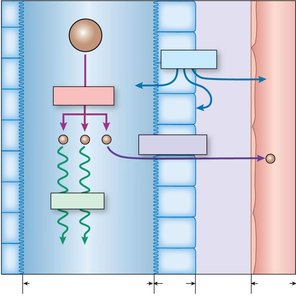
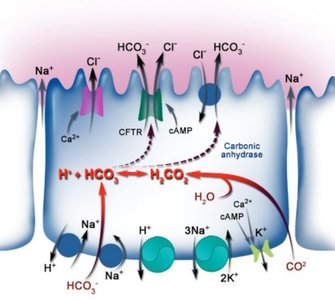
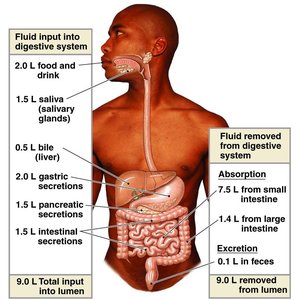
The GI tract secretes about 7 liters of fluid daily, including ions (Na+, H+, Cl-, K+, HCO3-) and water.
Distinct membranes and transporters regulate movement of these substances.
Digestion and Absorption of Macronutrients
Carbohydrate Digestion and Absorption
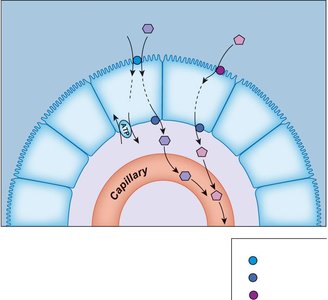
Carbohydrates are broken down by amylase into disaccharides (maltose, sucrose, lactose), then by brush border enzymes into monosaccharides (glucose, galactose, fructose).
Absorption mechanisms:
Glucose and galactose: Na+-dependent SGLT symporter (apical), GLUT2 (basolateral).
Fructose: GLUT5 (apical), GLUT2 (basolateral).
Protein Digestion and Absorption
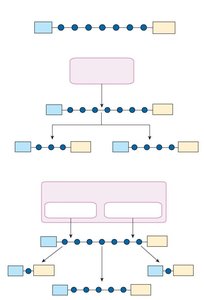
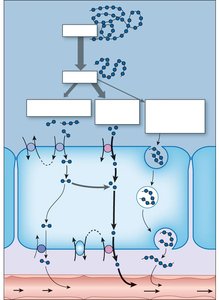
Proteins are digested by endopeptidases (e.g., pepsin, trypsin, chymotrypsin) and exopeptidases (carboxypeptidase, aminopeptidase).
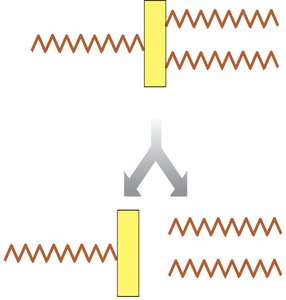
Endopeptidases cleave internal peptide bonds; exopeptidases remove terminal amino acids.
Absorption occurs as free amino acids, dipeptides, and tripeptides via specific transporters.
Lipid Digestion and Absorption
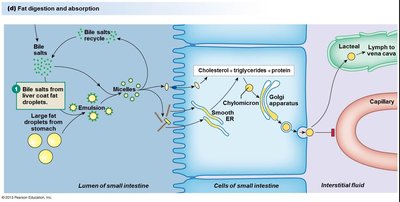
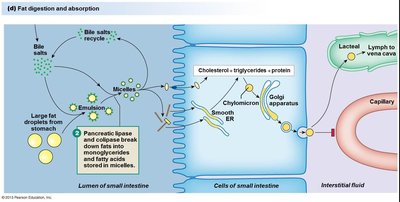
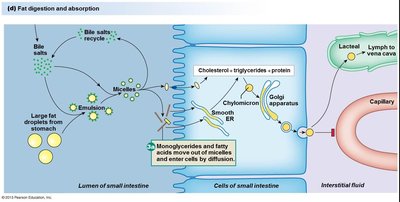
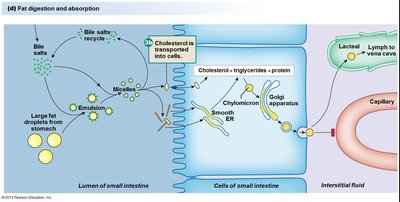
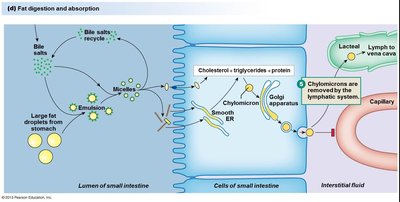
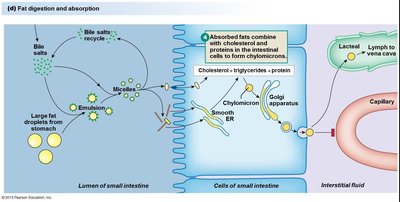
Most dietary fat is in the form of triglycerides, digested by lipases into monoglycerides and free fatty acids.
Bile salts emulsify fats, forming micelles for absorption.
Absorbed fats are reassembled into triglycerides and packaged as chylomicrons for transport via the lymphatic system.
Regulation of Digestive Function
Neural and Hormonal Control
Digestive processes are regulated by GI peptides (hormones, neurotransmitters, paracrine signals) that can excite or inhibit motility and secretion.
Short reflexes are mediated by the enteric nervous system (ENS) and do not require CNS input.
Long reflexes involve CNS integration and can be triggered by sensory input (e.g., sight, smell of food).
Phases of Digestion
Cephalic phase: Initiated by sight, smell, or thought of food; prepares the GI tract for incoming food.
Gastric phase: Begins when food enters the stomach; involves both long and short reflexes.
Intestinal phase: Starts as chyme enters the small intestine; regulates gastric emptying and secretion.
Swallowing and Gastric Function
Deglutition (Swallowing)
Swallowing moves the bolus from the mouth to the stomach, involving relaxation of the upper esophageal sphincter and closure of the airway by the epiglottis.
Gastric Storage and Digestion
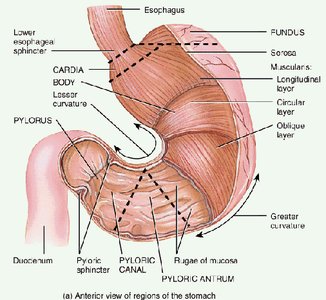
The upper stomach stores food via receptive relaxation, while the lower stomach mixes and digests food into chyme.
Gastric secretions include acid (HCl), enzymes (pepsin, lipase), mucus, and intrinsic factor.
Regulation of Gastric Secretion
Gastrin stimulates acid secretion directly and via histamine.
Somatostatin provides negative feedback to inhibit acid and pepsin release.
Small and Large Intestine Function
Small Intestine
Bicarbonate neutralizes gastric acid; bile aids fat digestion; digestive enzymes complete macronutrient breakdown.
Negative feedback slows gastric emptying and acid production; feedforward mechanisms stimulate enzyme secretion.
Pancreatic zymogens are activated in the small intestine (e.g., trypsinogen to trypsin).
Large Intestine
Concentrates waste for excretion and absorbs water and ions.
Motility includes mass movements and the defecation reflex.
Disruption can lead to diarrhea and dehydration.
Summary Table: Digestive Secretions and Functions
Cell Type | Secretion | Stimulus | Function |
|---|---|---|---|
Mucous neck cell | Mucus, Bicarbonate | Tonic, irritation | Protects and buffers epithelium |
Parietal cell | HCl, Intrinsic factor | Acetylcholine, gastrin, histamine | Activates pepsin, absorbs B12 |
Chief cell | Pepsinogen, Gastric lipase | Acetylcholine, acid, secretin | Digests proteins and fats |
Enterochromaffin-like cell | Histamine | Acetylcholine, gastrin | Stimulates acid secretion |
D cell | Somatostatin | Acid | Inhibits acid secretion |
G cell | Gastrin | Acetylcholine, peptides, amino acids | Stimulates acid secretion |
Key Terms and Concepts
Chyme: Semi-fluid mixture of partially digested food and digestive secretions in the stomach and small intestine.
Brush border: Microvilli-covered surface of enterocytes in the small intestine, site of final digestion and absorption.
Enteric nervous system (ENS): Intrinsic network of neurons regulating GI tract function independently of the CNS.
Zymogen: Inactive enzyme precursor activated in the digestive tract (e.g., trypsinogen).
Additional info: This guide integrates and expands upon the provided lecture slides and diagrams, ensuring a comprehensive overview of digestive physiology as outlined in Chapter 21 of standard physiology textbooks.
