 Back
BackEndocrine Glands: Adrenal, Thyroid, and Pancreas – Structure, Function, and Disorders
Study Guide - Smart Notes
 Tailored notes based on your materials, expanded with key definitions, examples, and context.
Adrenal Glands
Structure and Zones of the Adrenal Cortex
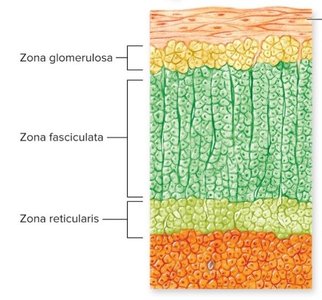
The adrenal cortex is divided into three distinct zones, each responsible for producing specific types of steroid hormones. These zones are:
Zona glomerulosa: Produces mineralocorticoids (e.g., aldosterone).
Zona fasciculata: Produces glucocorticoids (e.g., cortisol).
Zona reticularis: Produces adrenal androgens (e.g., DHEA).
Steroid Hormone Synthesis Pathways
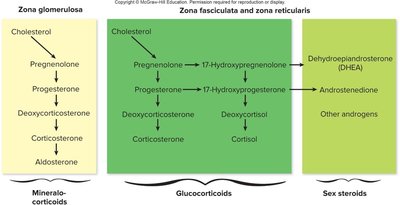
Steroid hormones are synthesized from cholesterol through a series of enzymatic steps. Each zone of the adrenal cortex specializes in producing certain hormones:
Mineralocorticoids (Zona glomerulosa): Regulate sodium and potassium balance. Example: aldosterone.
Glucocorticoids (Zona fasciculata): Affect metabolism, immune response, and stress adaptation. Example: cortisol.
Sex steroids (Zona reticularis): Supplement gonadal sex hormones. Example: DHEA.
Mineralocorticoids: Aldosterone
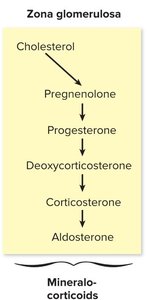
Aldosterone is a potent mineralocorticoid that regulates blood pressure and electrolyte balance by acting on the kidneys and colon:
Increases sodium reabsorption and potassium excretion.
Stimulated primarily by the renin–angiotensin–aldosterone system, and transiently by ACTH.
Excess aldosterone leads to high blood pressure; deficiency causes Addison's disease.
Glucocorticoids: Cortisol
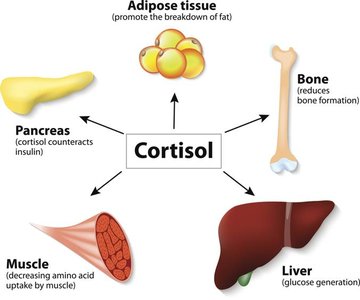
Cortisol is regulated by the hypothalamic-pituitary-adrenal axis and has widespread effects:
Controls blood sugar levels and metabolism.
Acts as an anti-inflammatory and influences memory formation.
Regulates salt and water balance, blood pressure, and fetal development.
Exogenous glucocorticoids are used medically to suppress immune responses.
Adrenal Androgens
Adrenal androgens are weak sex hormones that supplement those produced by the gonads. DHEA is the primary androgen produced in the zona reticularis.
Regulation of Cortisol Secretion
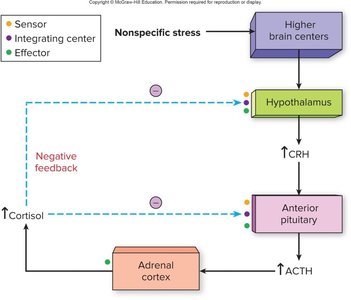
The hypothalamic-pituitary-adrenal axis regulates cortisol secretion:
CRH (corticotropin-releasing hormone) from the hypothalamus stimulates ACTH release from the anterior pituitary.
ACTH stimulates cortisol production in the adrenal cortex.
Cortisol exerts negative feedback on both the hypothalamus and pituitary.
Stress Response and General Adaptation Syndrome (GAS)
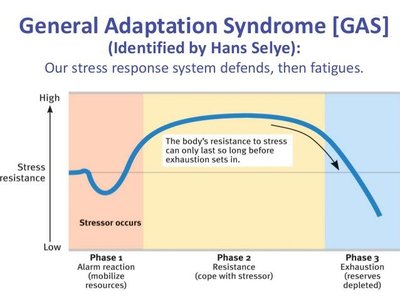
Stress triggers increased ACTH and cortisol release, as well as norepinephrine and epinephrine. The body's response to stress is described by the General Adaptation Syndrome:
Alarm reaction: Adrenal glands activated, heart rate increases, cortisol and adrenaline released.
Resistance: Body adapts to ongoing stress, cortisol levels decrease, physiological parameters normalize.
Exhaustion: Prolonged stress leads to illness or death.
Disorders of the Adrenal Cortex
Addison's disease: Deficiency of adrenal hormones, causing low blood pressure and lethargy.
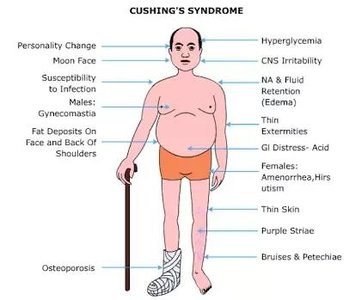
Cushing's syndrome: Excess glucocorticoids, causing fat redistribution ("buffalo hump", "moon face"), hyperglycemia, and other symptoms.

Hypothalamus and Anterior Pituitary Gland
Hormonal Regulation
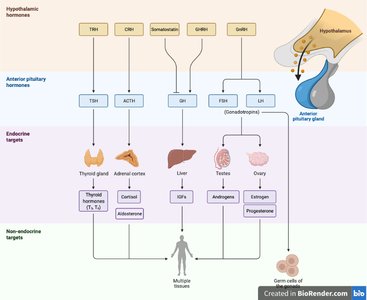
The hypothalamus regulates the anterior pituitary through releasing hormones delivered via the hypophyseal portal system. The anterior pituitary produces seven hormones, including:
Growth hormone (GH)
Thyroid-stimulating hormone (TSH)
Adrenocorticotropic hormone (ACTH)
Follicle-stimulating hormone (FSH)
Luteinizing hormone (LH)
Beta endorphin
Prolactin
Thyroid and Parathyroid Glands
Thyroid Gland Structure
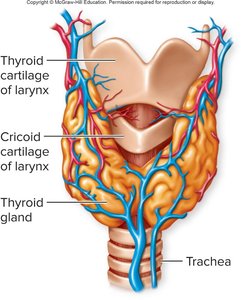
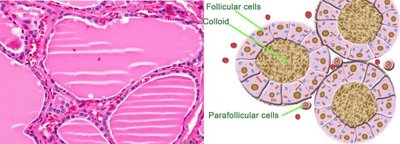
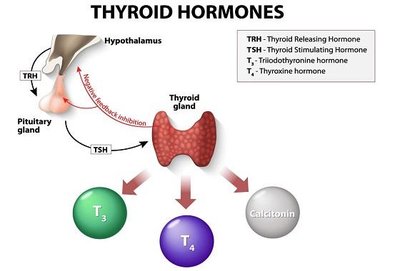
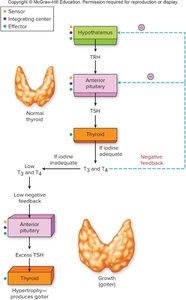
The thyroid gland is located below the larynx, with two lobes connected by the isthmus. It consists of follicles lined by follicular cells (produce T3 and T4) and parafollicular cells (produce calcitonin).
Production and Action of Thyroid Hormones
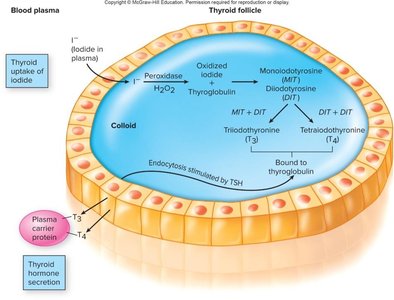
Thyroglobulin is synthesized by follicular cells and stored in the colloid. Iodide is actively transported, oxidized, and attached to tyrosine residues to form MIT and DIT. These combine to form T3 and T4, which are released upon TSH stimulation.
T3 (triiodothyronine): DIT + MIT
T4 (thyroxine): DIT + DIT
Actions of Thyroid Hormones
Stimulate protein synthesis
Promote maturation of the nervous system
Increase cellular respiration rates
Elevate basal metabolic rate
Thyroid Disorders
Iodine deficiency: Causes goiter due to lack of negative feedback, leading to thyroid gland growth and hypothyroidism.
Hypothyroidism: Low metabolic rate, weight gain, lethargy, poor cold adaptation, myxedema.
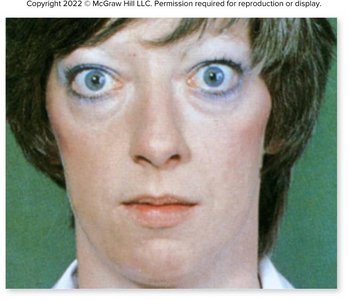
Graves' disease: Autoimmune hyperthyroidism, goiter, excessive thyroid hormone secretion, sensitivity to heat, palpitations.
Pancreas and Other Endocrine Glands
Pancreas Structure and Function
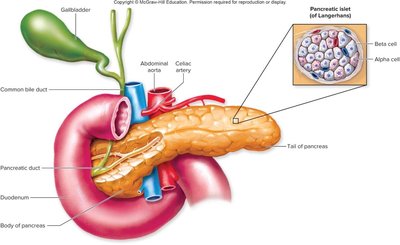
The pancreas is both an endocrine and exocrine gland. Endocrine cells are located in the islets of Langerhans:
Alpha cells: Secrete glucagon
Beta cells: Secrete insulin
Insulin: Regulation and Action
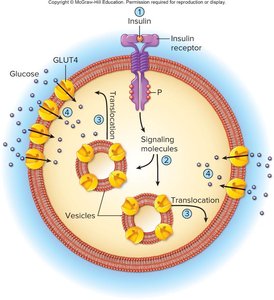
Insulin is secreted by beta cells in response to elevated blood glucose. Its main actions are:
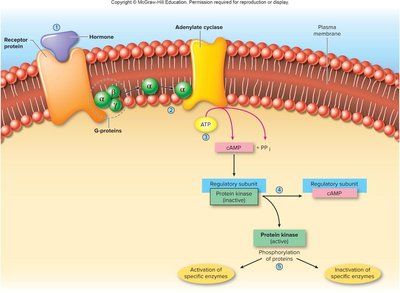
Binds to receptors on target cells, causing GLUT4 vesicles to translocate to the membrane and facilitate glucose uptake.
Stimulates glycogen synthase for sugar storage in liver and muscle.
Promotes fat storage in adipose tissue.
Glucagon: Regulation and Action
Glucagon is secreted by alpha cells when blood glucose is low. Its actions include:
Stimulates glycogen breakdown in the liver to release glucose.
Promotes gluconeogenesis (conversion of non-carbohydrates to glucose).
Stimulates lipolysis in adipose tissue for fat utilization.
Diabetes Mellitus
Diabetes mellitus is characterized by fasting hyperglycemia and glucose in urine. Major types:
Type 1 diabetes: Destruction of beta cells, lack of insulin secretion, often autoimmune.
Type 2 diabetes: Insulin resistance, decreased tissue sensitivity to insulin.
Gestational diabetes: Occurs during pregnancy due to increased demand and anti-insulin effects of placental hormones.
Type | Cause | Main Features |
|---|---|---|
Type 1 | Autoimmune destruction of beta cells | Lack of insulin, early onset |
Type 2 | Insulin resistance | Adult onset, obesity-related |
Gestational | Pregnancy-related hormonal changes | Temporary, resolves after delivery |
