 Back
BackFluid and Electrolyte Balance: Structure, Regulation, and Clinical Imbalances
Study Guide - Smart Notes
 Tailored notes based on your materials, expanded with key definitions, examples, and context.
Fluid and Electrolyte Balance
Overview
Fluid and electrolyte balance is essential for maintaining homeostasis in the human body. This topic explores the distribution of body fluids, mechanisms of fluid regulation, and the clinical significance of electrolyte imbalances.
Body Fluid Volumes and Compartments
Distribution of Body Fluids
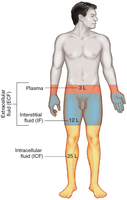
Water is the most abundant compound in the human body, with its proportion varying by age, gender, and body composition. The average adult male (70 kg) contains about 40 liters of water, distributed among three main compartments:
Plasma: The liquid component of blood (3 L)
Interstitial Fluid (IF): Fluid surrounding cells (12 L)
Intracellular Fluid (ICF): Fluid within cells (25 L)
Variation in Total Body Water
Infants: Water is about 80% of body weight.
Adult Males: Water is about 60% of body weight.
Adult Females: Water is about 50% of body weight (due to higher fat content).
Obesity: Increases fat, which contains less water, reducing total body water percentage.
Aging: Water content decreases as muscle (high in water) is replaced by fat (low in water).
Body Fluid Compartments
Extracellular Fluid (ECF): Includes plasma, interstitial fluid, and transcellular fluids (lymph, joint fluids, cerebrospinal fluid, eye humors).
Intracellular Fluid (ICF): Largest compartment, serves as a solvent for intracellular reactions.
Fluid Intake and Output
Sources of Fluid Intake
Ingested liquids
Water in food
Metabolic water (from cellular respiration)
Sources of Fluid Output
Water vapor (respiration)
Sweat (skin)
Urine (kidneys)
Feces (large intestine)
Regulation of Fluid Output
Fluid output is primarily regulated by the kidneys, with contributions from the lungs, skin, and large intestine. Hormones such as antidiuretic hormone (ADH) and aldosterone play key roles:
ADH: Increases water reabsorption in the kidneys, reducing urine volume and increasing ECF.
Aldosterone: Increases sodium (and thus water) reabsorption in the kidneys, expanding ECF volume.
Regulation of Fluid Intake
Thirst is regulated by sensory receptors that detect changes in ECF volume and concentration, sending signals to the hypothalamus. This triggers the sensation of thirst and increases fluid intake.
Water Output Under Different Conditions
Water loss increases with hot weather and prolonged exercise, mainly through sweat and respiration.
Forces Moving Fluids
Capillary Blood Pressure and Blood Proteins
Capillary Blood Pressure: Pushes fluid from blood to interstitial fluid (IF).
Blood Plasma Proteins: Create osmotic pressure, pulling water into the blood from IF.
IF volume varies the most among the three main body fluids.
Fluid Imbalances
Dehydration
Occurs when fluid output exceeds intake for an extended period. IF volume decreases first, followed by ICF and plasma if untreated. Signs include loss of skin elasticity (turgor).

Overhydration
Occurs when fluid intake exceeds output, leading to increased total body fluid volume. Severe cases can cause water intoxication, a potentially life-threatening condition due to electrolyte imbalance.
Electrolytes in Body Fluids
Definitions and Importance
Electrolytes: Compounds that dissociate in water to form ions (e.g., NaCl).
Nonelectrolytes: Organic substances that do not dissociate in water (e.g., glucose).
Cations: Positively charged ions (e.g., Na+, K+).
Anions: Negatively charged ions (e.g., Cl−, HCO3−).
Electrolyte Composition of Body Fluids
Major cations and anions are distributed differently among plasma, interstitial, and intracellular fluids.
Edema
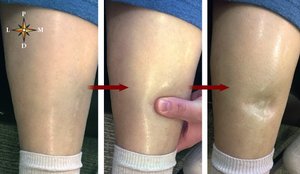
Edema is swelling caused by excess IF volume. Pitting edema is identified when depressions in the skin do not rapidly refill after pressure is applied.
Sodium-Containing Internal Secretions
The body produces large volumes of sodium-containing secretions (e.g., saliva, gastric juice, pancreatic juice, bile, intestinal secretions), which are important for digestion and fluid balance.
Electrolyte Imbalances
Sodium Imbalance
Hypernatremia: Blood sodium > 145 mEq/L. Causes: Overuse of salt, dehydration, prolonged diarrhea. Symptoms: CNS malfunction (headache, confusion, seizures, coma).
Hyponatremia: Blood sodium < 136 mEq/L. Causes: Excess ADH, sodium-free IV infusion, burns, diuretics. Symptoms: CNS malfunction.
Potassium Imbalance
Hyperkalemia: Blood potassium > 5.1 mEq/L. Causes: Increased intake, tissue trauma, renal failure. Symptoms: Muscle weakness, paralysis, cardiac arrest.
Hypokalemia: Blood potassium < 3.5 mEq/L. Causes: Fasting, low-potassium diet, laxative/diuretic abuse, diarrhea, vomiting. Symptoms: Muscle weakness, cardiac problems, GI motility issues.
Calcium Imbalance
Hypercalcemia: Blood calcium > 10.5 mg/dL. Causes: Excess intake, increased absorption, bone disease, hyperparathyroidism. Symptoms: Fatigue, muscle weakness, diminished reflexes, cardiac problems.
Hypocalcemia: Blood calcium < 8.4 mg/dL. Causes: Dietary deficiency, decreased absorption, pancreatitis, hypoparathyroidism, rickets, renal insufficiency. Symptoms: Cramping, muscle twitching, hyperactive reflexes, abnormal cardiac rhythms.
Summary Table: Common Electrolyte Imbalances
Electrolyte | Imbalance | Causes | Symptoms |
|---|---|---|---|
Sodium (Na+) | Hypernatremia / Hyponatremia | Salt intake, dehydration, ADH excess, IV fluids | CNS symptoms: headache, confusion, seizures, coma |
Potassium (K+) | Hyperkalemia / Hypokalemia | Renal failure, trauma, diet, diuretics, GI loss | Muscle weakness, paralysis, cardiac arrhythmias |
Calcium (Ca2+) | Hypercalcemia / Hypocalcemia | Bone disease, vitamin D, parathyroid disorders, diet | Muscle weakness, fatigue, cardiac issues, twitching |
Additional info: Electrolyte imbalances are commonly encountered in clinical medicine and require careful monitoring and management to prevent severe complications.
