 Back
BackFundamentals of the Nervous System and Nervous Tissue: Structure and Function
Study Guide - Smart Notes
 Tailored notes based on your materials, expanded with key definitions, examples, and context.
Overview of the Nervous System
Central and Peripheral Nervous System
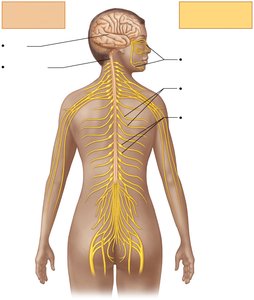
The nervous system is the master controlling and communicating system of the body, responsible for rapid and specific responses. It is divided into the central nervous system (CNS) and the peripheral nervous system (PNS). The CNS consists of the brain and spinal cord, serving as integrative and control centers. The PNS includes cranial and spinal nerves, which act as communication lines between the CNS and the rest of the body.
Neuroglia: Supporting Cells of the Nervous System
Astrocytes
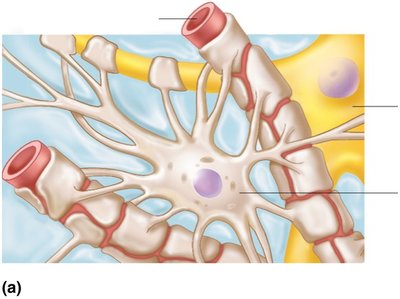
Astrocytes are the most abundant and versatile glial cells in the CNS. They cling to neurons, synaptic endings, and capillaries, providing support and bracing neurons. Their functions include regulating exchanges between capillaries and neurons, guiding migration of young neurons, controlling the chemical environment, and participating in information processing in the brain.
Ependymal Cells
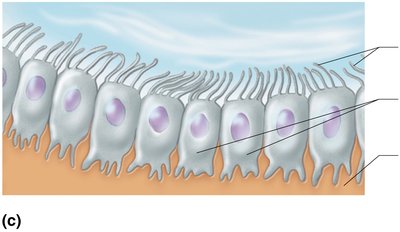
Ependymal cells line the central cavities of the brain and spinal cord. They may be ciliated, and their cilia help circulate cerebrospinal fluid (CSF). These cells form a permeable barrier between the CSF in the cavities and the tissue fluid bathing CNS cells.
Oligodendrocytes
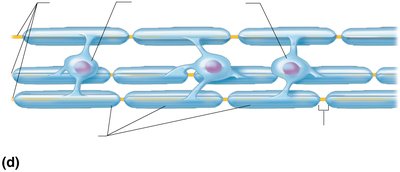
Oligodendrocytes are branched cells whose processes wrap CNS nerve fibers, forming insulating myelin sheaths in thicker nerve fibers. This myelination is crucial for rapid signal transmission in the CNS.
Neurons: Structure and Function
Neuron Cell Body and Processes
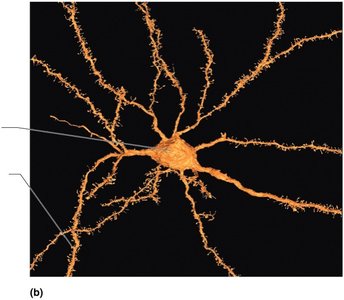
Neurons are the structural units of the nervous system, specialized for conducting impulses. Each neuron consists of a cell body (soma) and processes (dendrites and axons). Dendrites are the receptive regions, while axons are the impulse-generating and conducting regions. Dendritic spines increase the surface area for receiving signals.
Myelination in the Peripheral Nervous System
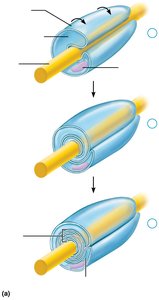
In the PNS, Schwann cells form myelin sheaths around axons. The process involves the Schwann cell enveloping the axon, rotating around it, and wrapping its plasma membrane in successive layers. The myelin sheath insulates the axon and increases the speed of nerve impulse transmission.
Classification of Neurons
Structural and Functional Classes
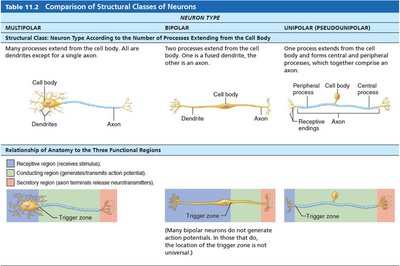
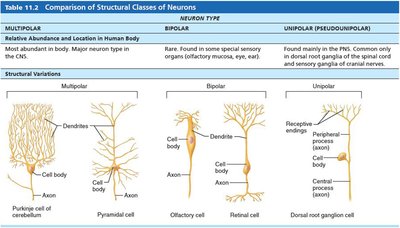
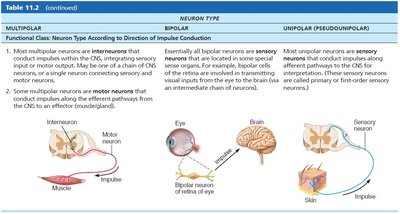
Neurons are classified structurally as multipolar, bipolar, or unipolar based on the number and arrangement of processes extending from the cell body. Functionally, they are classified as sensory (afferent), motor (efferent), or interneurons based on the direction of impulse conduction.
Neuron Type | Structure | Location |
|---|---|---|
Multipolar | Many dendrites, one axon | Most abundant in CNS |
Bipolar | One dendrite, one axon | Special sense organs |
Unipolar | Single process splits into two branches | PNS sensory neurons |
Ion Channels and Membrane Potentials
Types of Ion Channels
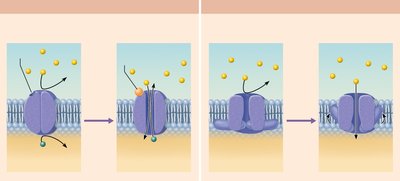
Membrane ion channels are large proteins that allow selective passage of ions. There are leakage (nongated) channels, which are always open, and gated channels, which open in response to specific stimuli. Gated channels include chemically gated, voltage-gated, and mechanically gated channels.
Action Potentials and Signal Transmission
Action Potential Propagation
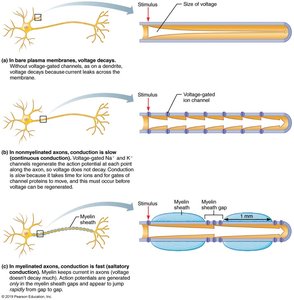
Action potentials are rapid changes in membrane potential that travel along axons. Myelinated axons conduct impulses faster due to saltatory conduction, where the action potential jumps from node to node. Unmyelinated axons conduct impulses more slowly via continuous conduction.
Synapses and Neural Integration
Types of Synapses
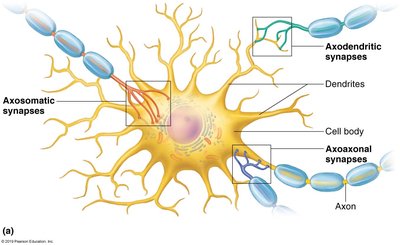
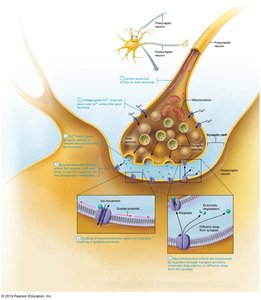
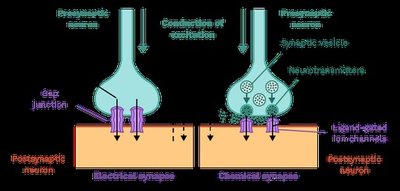
Neurons communicate at synapses, which can be electrical (direct cytoplasmic connections via gap junctions) or chemical (neurotransmitter release into synaptic cleft). Chemical synapses are more common and allow for complex signal integration.
Neuronal Circuits
Types of Circuits
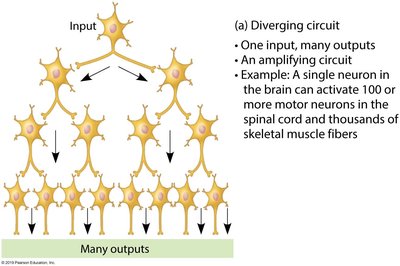
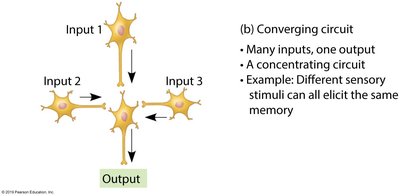
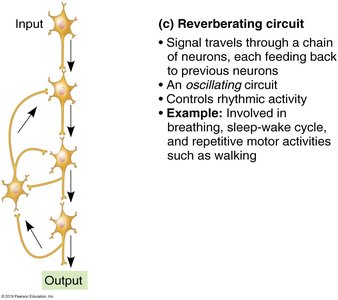
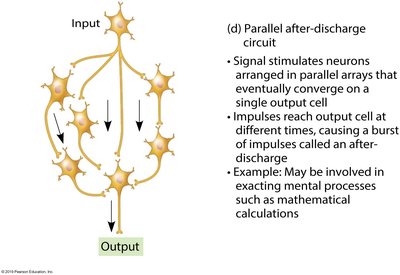
Neuronal circuits are patterns of synaptic connections in neuronal pools. The main types include diverging, converging, reverberating, and parallel after-discharge circuits. These circuits underlie complex processing such as reflexes, rhythmic activities, and higher mental functions.
Additional info: This guide covers the structure and function of the nervous system, focusing on the cellular and molecular basis of neural signaling, the organization of the CNS and PNS, and the integration of neural circuits. It is suitable for exam preparation in an Anatomy and Physiology II college course.
