 Back
Genes and Cellular Function: DNA, RNA, Protein Synthesis, and Cell Division
Study Guide - Smart Notes
 Tailored notes based on your materials, expanded with key definitions, examples, and context.
Genes and Cellular Function
DNA and RNA—The Nucleic Acids
This section explores the structure and function of DNA and RNA, their roles in heredity, and how they direct cellular activities.
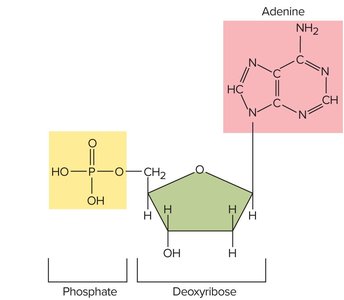
DNA (Deoxyribonucleic Acid): A long, thread-like molecule found in the nucleus, composed of nucleotides. Each nucleotide contains a deoxyribose sugar, a phosphate group, and a nitrogenous base.
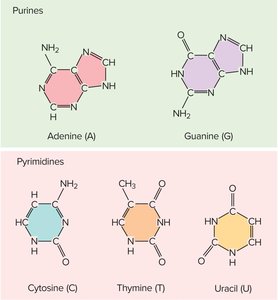
Nitrogenous Bases: DNA contains four bases: adenine (A), thymine (T), cytosine (C), and guanine (G). Purines (A, G) have double rings; pyrimidines (C, T, U) have single rings.
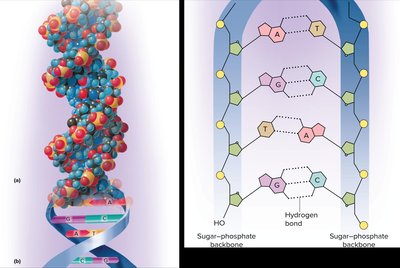
Double Helix: DNA's structure resembles a spiral staircase, with a sugar-phosphate backbone and base pairs (A-T, G-C) held by hydrogen bonds. The law of complementary base pairing ensures accurate replication and transcription.
Gene: A segment of DNA that codes for a specific protein or RNA molecule. Humans have about 20,000 genes, but most DNA is noncoding and involved in regulation and chromosome structure.
Chromatin and Chromosomes
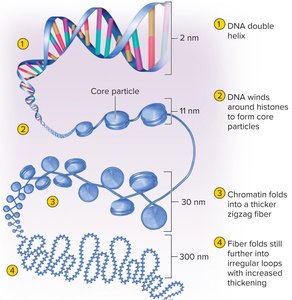
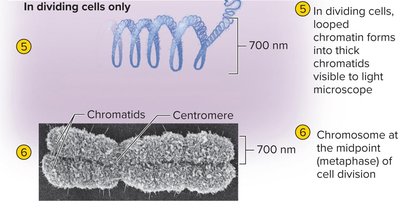
DNA is packaged with proteins to form chromatin, which condenses into chromosomes during cell division.
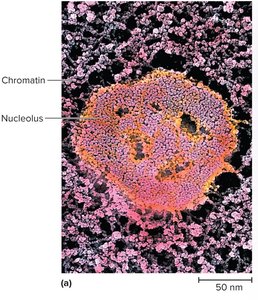
Chromatin: DNA complexed with histone proteins, forming a granular material visible under an electron microscope.
Histones: Proteins around which DNA winds, forming core particles (nucleosomes).
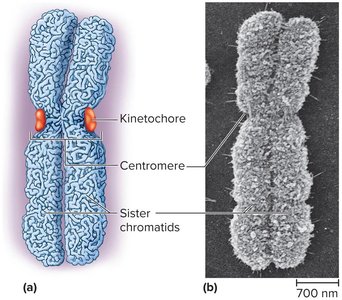
Chromosomes: Highly condensed chromatin visible during cell division. Each chromosome consists of two sister chromatids joined at a centromere, with kinetochores for spindle attachment.
RNA Structure and Function
RNA (Ribonucleic Acid) is essential for protein synthesis and gene regulation.
Structure: Single-stranded, contains ribose sugar, and bases A, U (uracil), G, C.
Types: Messenger RNA (mRNA), ribosomal RNA (rRNA), and transfer RNA (tRNA).
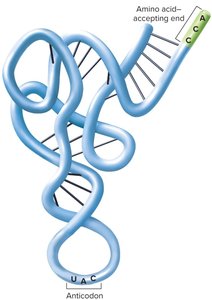
Function: mRNA carries genetic code from DNA to ribosomes; tRNA brings amino acids; rRNA forms part of ribosome structure.
Genes and Their Action
Definition of a Gene and the Genome
The concept of a gene has evolved with advances in genetics. The genome is the complete set of genetic material in an organism.
Gene: An information-containing segment of DNA that codes for the production of RNA, which may synthesize proteins.
Genome: All the DNA in one set of 23 chromosomes; contains about 3.1 billion nucleotide pairs.
Genomics: The study of the genome, including gene interactions and their effects on health and disease.
The Genetic Code
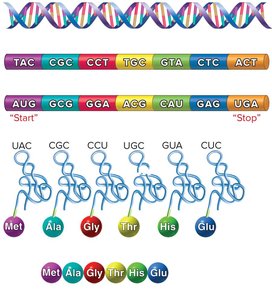
The genetic code translates DNA nucleotide sequences into amino acid sequences for protein synthesis.
Base Triplet: Sequence of three DNA nucleotides that codes for one amino acid.
Codon: Three-base sequence in mRNA corresponding to a DNA triplet.
Start Codon: AUG (methionine); Stop Codons: UAG, UGA, UAA (signal end of translation).
Protein Synthesis: Transcription and Translation
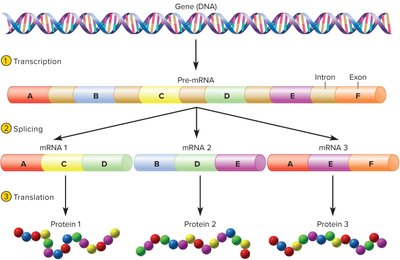
Protein synthesis involves two main steps: transcription (DNA to mRNA) and translation (mRNA to protein).
Transcription: RNA polymerase copies DNA into pre-mRNA, which is processed by removing introns and splicing exons (alternative splicing allows one gene to code for multiple proteins).
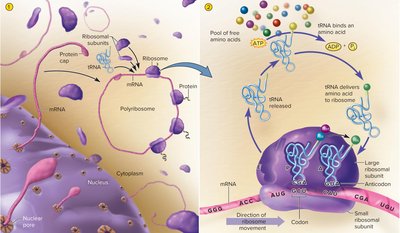
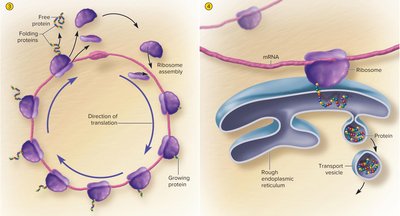
Translation: Ribosomes read mRNA, tRNA brings amino acids, and a polypeptide chain is assembled. Translation occurs in three steps: initiation, elongation, and termination.
Protein Processing and Secretion
After synthesis, proteins must be folded and modified to become functional.
Chaperone Proteins: Assist in proper folding of new proteins and refolding of damaged proteins.
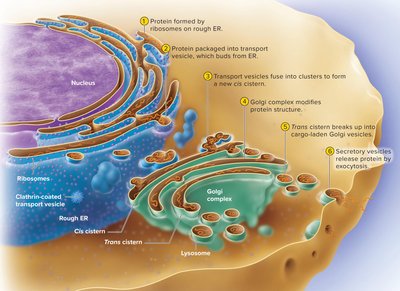
Posttranslational Modification: Proteins are modified in the endoplasmic reticulum (ER) and Golgi complex, then sorted for secretion or use within the cell.
Gene Regulation
Cells regulate gene expression to control which proteins are produced and when.
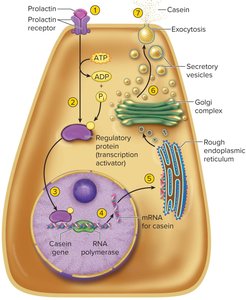
Gene Activation: Chemical signals (e.g., hormones) can turn genes on or off, affecting protein synthesis.
Example: Prolactin stimulates casein gene expression in mammary glands during milk production.
Synthesizing Nonprotein Compounds
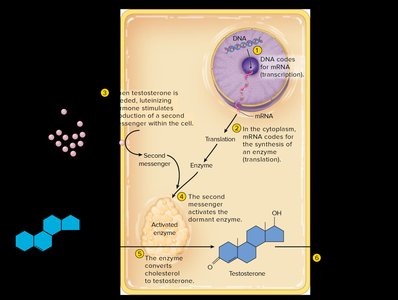
Genes indirectly control the synthesis of nonprotein molecules (e.g., steroids, phospholipids) by encoding enzymes that catalyze their production.
Example: Testosterone synthesis from cholesterol is regulated by gene-encoded enzymes.
DNA Replication and the Cell Cycle
DNA Replication
Before cell division, DNA is precisely duplicated to ensure each daughter cell receives a complete genome.
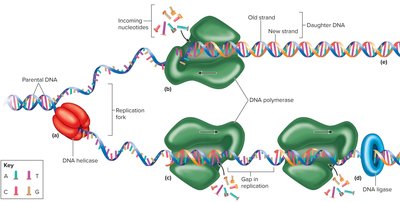
Steps: Unwinding from histones, unzipping by helicase, complementary strand synthesis by DNA polymerase, and joining segments by DNA ligase (semiconservative replication).
Accuracy: DNA polymerase proofreads, resulting in very low error rates. Mutations can arise from replication errors or environmental factors.
The Cell Cycle
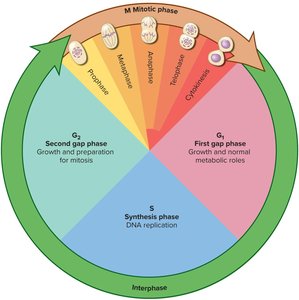
The cell cycle describes the sequence of events from one cell division to the next, including interphase and mitosis.
Interphase: G1 (growth), S (DNA synthesis), G2 (preparation for mitosis).
Mitotic Phase: Prophase, metaphase, anaphase, telophase, and cytokinesis.
G0 Phase: Cells that exit the cycle and cease dividing.
Mitosis
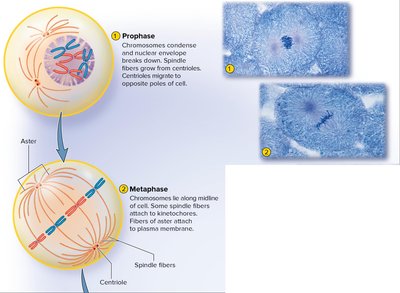
Mitosis produces two genetically identical daughter cells for growth, repair, and maintenance.
Prophase: Chromosomes condense, spindle fibers form, nuclear envelope dissolves.
Metaphase: Chromosomes align at the cell equator.
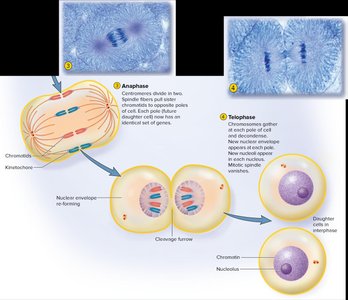
Anaphase: Sister chromatids separate and move to opposite poles.
Telophase: Chromosomes decondense, nuclear envelopes reform.
Cytokinesis: Cytoplasm divides, forming two cells.
Regulation of Cell Division
Cell division is tightly regulated by internal and external signals to ensure proper growth and tissue maintenance.
Triggers for Division: Adequate cytoplasm, DNA replication, nutrients, growth factors, and space.
Inhibitors: Contact inhibition, lack of nutrients or growth factors.
Molecular Control: Cyclins and cyclin-dependent kinases (Cdks) regulate checkpoints (G1, G2/M, metaphase-anaphase).
Chromosomes and Heredity
The Karyotype
Humans have 46 chromosomes arranged in 23 pairs (22 autosomes and 1 pair of sex chromosomes). Somatic cells are diploid (2n); gametes are haploid (n).
Genes, Alleles, and Inheritance
Locus: Position of a gene on a chromosome.
Alleles: Different forms of a gene; can be dominant or recessive.
Genotype: Genetic makeup; Phenotype: Observable traits.
Punnett Square: Diagram to predict genetic outcomes.
Inheritance Patterns: Multiple alleles, codominance, incomplete dominance, polygenic inheritance, pleiotropy, and sex linkage.
Gene Expression and Environmental Effects
Gene Expression: When a gene is turned on and produces a trait.
Environmental Influence: Some traits require environmental factors for expression (e.g., diet and eye pigment).
Epigenetics: Heritable changes in gene expression without altering DNA sequence (e.g., DNA methylation).
Cancer and Genetics
Malignant Tumors: Rapidly growing, invasive, and metastatic.
Oncogenes: Mutated genes that drive uncontrolled cell division.
Tumor Suppressor Genes: Normally inhibit cancer; mutations can remove this control.
Carcinogens: Environmental agents causing mutations (e.g., radiation, chemicals, viruses).
Key Equations and Concepts
Law of Complementary Base Pairing: , in DNA.
Semiconservative Replication: Each new DNA molecule contains one old and one new strand.
Genetic Code:
