 Back
BackHomeostasis and Neural Physiology: Key Concepts and Control Systems
Study Guide - Smart Notes
 Tailored notes based on your materials, expanded with key definitions, examples, and context.
The Synapse and Neural Physiology
Refractory Periods in Neurons
The refractory period is a critical concept in neural physiology, describing the time following an action potential during which a neuron is less excitable. There are two main types:
Absolute Refractory Period: The period during which no new action potential can be initiated, regardless of stimulus strength. This is due to inactivation of voltage-gated sodium channels.
Relative Refractory Period: The period following the absolute refractory period when a stronger-than-normal stimulus is required to initiate another action potential. This occurs as potassium channels remain open, and the membrane is hyperpolarized.
Factors Affecting Refractory Periods:
State of sodium and potassium channels
Membrane potential
Ion concentration gradients
Saltatory Conduction and Myelination
Saltatory conduction is the process by which action potentials jump from one node of Ranvier to the next along a myelinated axon, greatly increasing conduction speed. Key components include:
Nodes of Ranvier: Gaps in the myelin sheath where voltage-gated sodium channels are concentrated, allowing action potentials to regenerate.
Myelination: The process by which Schwann cells (in the peripheral nervous system) and oligodendrocytes (in the central nervous system) wrap axons in myelin, an insulating layer that prevents ion leakage.
Application Questions:
What would happen if sodium or potassium concentrations were equalized? (No action potential could be generated.)
What if sodium permeability was blocked? (Action potentials would not occur.)
What would happen if myelination was insufficient? (Conduction velocity would decrease, leading to neurological deficits.)
Body Organization
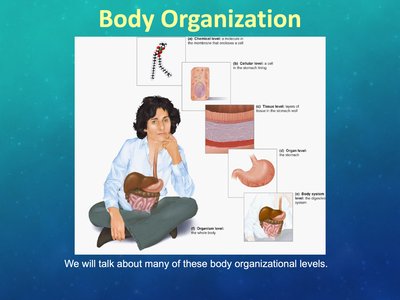
Levels of Body Organization
The human body is organized into hierarchical levels, each with increasing complexity:
Chemical Level: Atoms and molecules (e.g., DNA, proteins)
Cellular Level: Cells, the basic units of life
Tissue Level: Groups of similar cells performing a common function
Organ Level: Structures composed of two or more tissue types
Organ System Level: Groups of organs working together (e.g., digestive system)
Organism Level: The complete living being
Homeostasis
Concept of Homeostasis
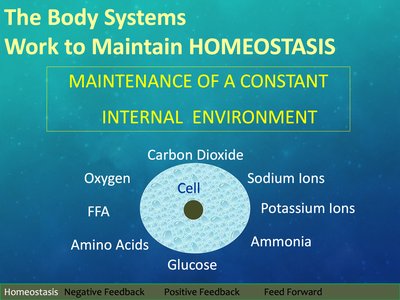
Homeostasis refers to the maintenance of a stable internal environment within the body, despite changes in the external environment. It is essential for normal physiological function and survival.
Regulates variables such as temperature, pH, glucose, and ion concentrations
Involves multiple organ systems working together
Negative Feedback Mechanisms
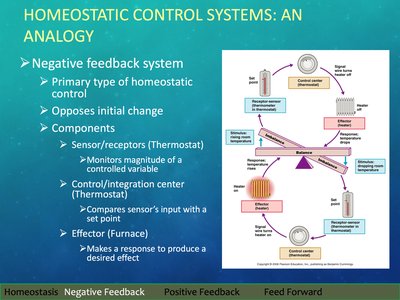
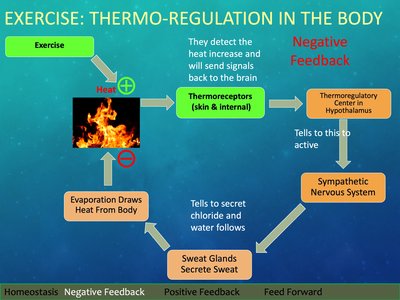
Negative feedback is the primary mechanism for maintaining homeostasis. It works by detecting a change and initiating responses that reverse the change, bringing the system back to its set point.
Sensor/Receptor: Detects changes in a variable
Control Center: Compares the detected value to the set point
Effector: Produces a response to correct the deviation
Examples of Negative Feedback
Blood Pressure Regulation: Increased blood pressure triggers signals to the brain, which slows the heart rate and dilates blood vessels to lower pressure.
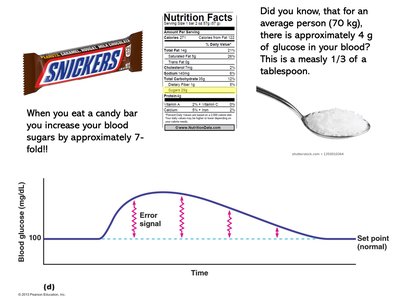
Blood Glucose Regulation: High blood glucose stimulates insulin release, promoting glucose uptake and storage.
Erythropoiesis: Low oxygen levels stimulate erythropoietin release, increasing red blood cell production.
Positive Feedback Mechanisms
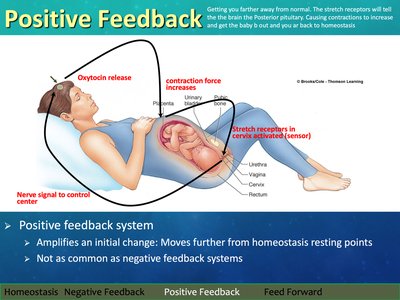
Positive feedback amplifies an initial change, moving the system further from its starting state. It is less common than negative feedback and usually occurs in specific physiological processes.
Example: During childbirth, uterine contractions cause the release of oxytocin, which increases contraction strength, leading to more oxytocin release until delivery is complete.
Nerve Conduction: Increased Na+ permeability leads to further Na+ entry, propagating the action potential.
Blood Clotting: Activation of clotting factors accelerates the clotting process (hemostasis).
Feedforward Mechanisms
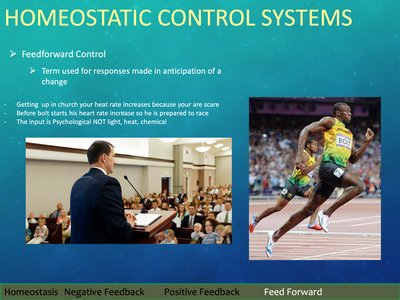
Feedforward control refers to anticipatory responses made before a change occurs. This mechanism prepares the body for an expected event.
Example: Heart rate increases in anticipation of exercise or stress, even before physical activity begins.
Summary Table: Types of Homeostatic Control
Type of Control | Definition | Example |
|---|---|---|
Negative Feedback | Opposes initial change to restore set point | Blood glucose regulation |
Positive Feedback | Amplifies initial change | Childbirth contractions, blood clotting |
Feedforward | Anticipatory response before change occurs | Increased heart rate before exercise |
Application and Example Questions
What would happen if sodium or potassium concentrations were equalized across the membrane?
What if sodium permeability was blocked?
What would happen if myelination was insufficient?
Why do we sweat? (Mechanistic and physiological explanation: to regulate body temperature via negative feedback.)
Key Terms
Homeostasis
Negative Feedback
Positive Feedback
Feedforward Control
Refractory Period
Saltatory Conduction
Myelination
Nodes of Ranvier
Additional info: Feedforward and feedback mechanisms are foundational for understanding physiological regulation and are frequently tested in introductory physiology courses.
