 Back
BackHormones and Endocrine Regulation: Structure, Function, and Feedback
Study Guide - Smart Notes
 Tailored notes based on your materials, expanded with key definitions, examples, and context.
Hormones: Classification and Chemical Structure
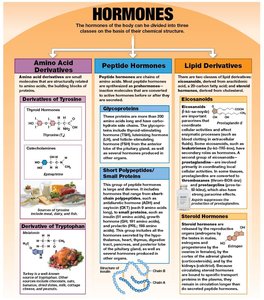
Amino Acid Derivatives
Amino acid derivative hormones are synthesized from individual amino acids, primarily tyrosine and tryptophan. These hormones play crucial roles in regulating metabolism, growth, and other physiological functions.
Derivatives of Tyrosine: Includes thyroid hormones (such as thyroxine, T4) and catecholamines (epinephrine, norepinephrine, dopamine). These hormones are involved in metabolic regulation and the stress response.
Derivatives of Tryptophan: Includes melatonin, which regulates circadian rhythms and sleep cycles.
Key Point: Amino acid derivatives are generally water-soluble and act via cell surface receptors.
Example: Epinephrine increases heart rate and blood pressure during the fight-or-flight response.
Peptide Hormones
Peptide hormones are chains of amino acids ranging from small peptides to large proteins. They are synthesized as precursors and processed into active hormones.
Glycoproteins: Large proteins with carbohydrate side chains, such as TSH (thyroid-stimulating hormone), LH (luteinizing hormone), and FSH (follicle-stimulating hormone).
Short Polypeptides/Small Proteins: Includes hormones like ADH (antidiuretic hormone), oxytocin, insulin, glucagon, and growth hormone. These regulate water balance, glucose metabolism, and growth.
Key Point: Peptide hormones are water-soluble and act via membrane receptors, often triggering second messenger pathways.
Example: Insulin lowers blood glucose by promoting cellular uptake.
Lipid Derivatives
Lipid derivative hormones are synthesized from lipids, mainly cholesterol and arachidonic acid. They are generally hydrophobic and act via intracellular receptors.
Eicosanoids: Derived from arachidonic acid, includes prostaglandins, leukotrienes, and thromboxanes. These regulate inflammation, immunity, and blood clotting.
Steroid Hormones: Derived from cholesterol, includes corticosteroids (from adrenal cortex) and sex hormones (androgens, estrogens, progestins). These regulate metabolism, salt balance, and reproductive functions.
Key Point: Lipid derivatives are fat-soluble and typically act via nuclear receptors to alter gene expression.
Example: Cortisol increases blood glucose and suppresses immune responses.
Hormone Regulation: Upregulation and Downregulation
Receptor Regulation
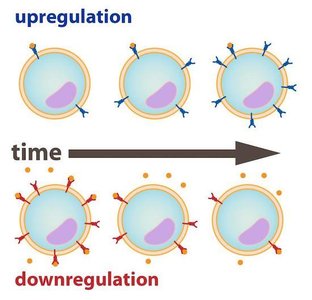
Cells adjust their sensitivity to hormones by changing the number of receptors on their surface. This process is known as upregulation (increase in receptor number) and downregulation (decrease in receptor number).
Upregulation: Occurs when hormone levels are low, increasing cell sensitivity.
Downregulation: Occurs when hormone levels are high, decreasing cell sensitivity to prevent overstimulation.
Key Point: Receptor regulation is essential for maintaining homeostasis and preventing excessive or insufficient hormone action.
Example: Chronic high insulin levels can lead to downregulation of insulin receptors, contributing to insulin resistance.
Endocrine Regulation: Feedback and Multiple Organ Involvement
Typical Pattern of Regulation
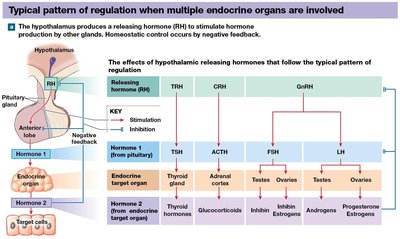
The endocrine system often involves multiple organs and uses feedback mechanisms to maintain homeostasis. The hypothalamus produces releasing hormones (RH) that stimulate the anterior pituitary, which then releases hormones affecting target endocrine organs.
Releasing Hormones (RH): Produced by the hypothalamus, stimulate the pituitary gland.
Pituitary Hormones: Include TSH, ACTH, FSH, LH, which stimulate thyroid, adrenal cortex, and gonads.
Target Organ Hormones: Include thyroid hormones, glucocorticoids, estrogens, and androgens.
Negative Feedback: Target organ hormones inhibit further release of RH and pituitary hormones, maintaining balance.
Key Point: This multi-step regulation ensures precise control of hormone levels and physiological responses.
Example: Increased thyroid hormone levels inhibit TRH and TSH release, stabilizing metabolism.
Summary Table: Hormone Classes and Examples
Class | Examples | Solubility | Receptor Type |
|---|---|---|---|
Amino Acid Derivatives | Thyroxine, Epinephrine, Melatonin | Water-soluble | Membrane |
Peptide Hormones | Insulin, ADH, TSH | Water-soluble | Membrane |
Lipid Derivatives | Cortisol, Estrogen, Prostaglandins | Fat-soluble | Intracellular |
Key Equations
Hormone-Receptor Binding:
Negative Feedback Loop:
Additional info: Expanded explanations and examples were added for clarity and completeness.
