Back
Infection, Infectious Diseases, and Epidemiology: Classification and Hospital-Associated Infections
Study Guide - Smart Notes
 Tailored notes based on your materials, expanded with key definitions, examples, and context.
Classification of Diseases
Communicable and Noncommunicable Diseases
Diseases can be classified based on how they are transmitted and behave within a population. Understanding these categories is essential for epidemiology and public health.
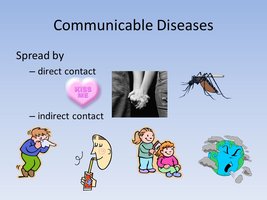
Communicable diseases: These are diseases that can be spread from one person to another, either directly (physical contact, droplets) or indirectly (contaminated surfaces, vectors).
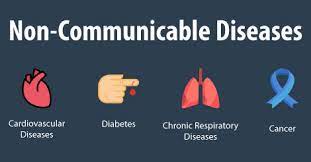
Noncommunicable diseases: These diseases are not transmitted from person to person. They often result from genetic, physiological, environmental, and behavioral factors.
Examples of communicable diseases: Chicken pox, measles, tuberculosis, genital herpes, COVID-19.
Examples of noncommunicable diseases: Cardiovascular diseases, diabetes, chronic respiratory diseases, cancer.
Introduction of Outside Microbes and Disruption of Microbiota
Noncommunicable infectious diseases can occur when microbes are introduced from the environment (e.g., tetanus from rusty nails) or when the normal microbiota is disrupted, leading to opportunistic infections such as yeast infections.

Classification by Severity and Duration
Acute vs. Chronic Diseases
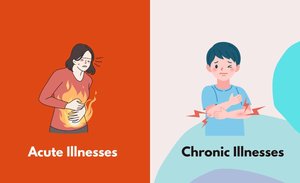
Diseases can also be classified by how quickly they develop and how long they last:
Acute disease: Develops rapidly and lasts a short time (e.g., influenza, cholera, COVID-19).
Chronic disease: Develops slowly and may persist for a long time, often for life (e.g., tuberculosis, chronic hepatitis, HIV).
Classification by Extent of Host Involvement
Local, Systemic, and Focal Infections
The extent to which a host is affected by an infection can vary:
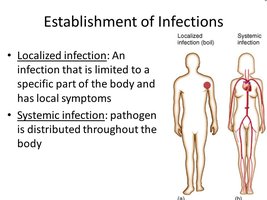
Local infection: Confined to a small area of the body (e.g., boils, abscesses).
Systemic infection: Spread throughout the body, often via the bloodstream (e.g., measles).
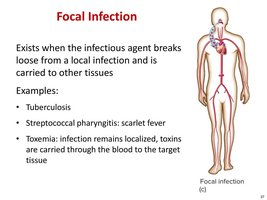
Focal infection: Begins as a local infection but spreads to other tissues, often via the bloodstream (e.g., streptococcal pharyngitis leading to scarlet fever, periodontitis leading to endocarditis).
Classification by Frequency of Occurrence
Endemic, Epidemic, and Pandemic Diseases
Diseases can also be classified based on how frequently they occur in a population:
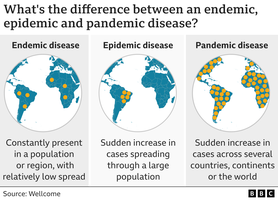
Endemic disease: Constantly present in a population or region, with relatively low spread.
Epidemic disease: Sudden increase in cases spreading through a large population.
Pandemic disease: Sudden increase in cases across several countries, continents, or the world.
Hospital-Associated Infections (HAIs)
Definition and Major Types
Hospital-associated infections (HAIs) are infections acquired while receiving treatment in a hospital or healthcare facility. They are a significant concern due to their impact on patient outcomes and healthcare costs.
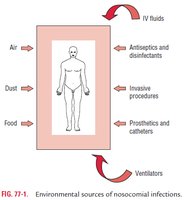
Exogenous HAIs: Caused by pathogens from external sources such as other patients, staff, the environment, or contaminated equipment (e.g., catheters, bedpans, surfaces, food, water, air).
Endogenous HAIs: Caused by the patient's own microbiota, often following surgical procedures or manipulation by instruments.
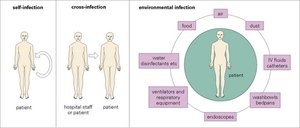
Factors Contributing to HAIs
Several factors contribute to the development of HAIs, including the presence of microorganisms in the hospital environment, immunocompromised patients, and transmission of pathogens between staff and patients.
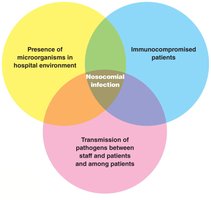
Strategies to Prevent HAIs
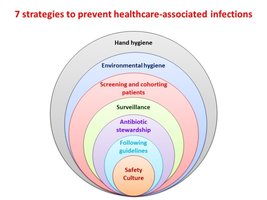
Effective strategies are essential to prevent and control HAIs. The seven key strategies include:
Hand hygiene: The most important and cost-effective method.
Environmental hygiene: Regular cleaning of surfaces and equipment.
Screening and cohorting patients: Early detection and isolation of patients with multidrug-resistant organisms.
Surveillance: Monitoring infection rates to detect outbreaks early.
Antibiotic stewardship: Appropriate use of antibiotics to reduce resistance.
Following guidelines: Adhering to protocols from organizations like WHO and CDC.
Safety culture: Promoting a culture of safety and quality care for patients.