 Back
BackIntroduction to Anatomy and Physiology: Foundational Concepts and Terminology
Study Guide - Smart Notes
 Tailored notes based on your materials, expanded with key definitions, examples, and context.
What is Anatomy and Physiology?
Definitions and Scope
Anatomy is the study of the structure of body parts and their relationships to one another, while physiology is the study of the function of the body and how its parts work together to sustain life. These two disciplines are closely related and often studied together as anatomy & physiology (A&P).
Anatomy: Focuses on the physical structures (e.g., bones, muscles, organs).
Physiology: Focuses on how those structures function (e.g., how muscles contract, how the heart pumps blood).
Principle of Complementarity: Structure and function are interdependent; understanding one requires knowledge of the other.
Example: The structure of the heart valves ensures that blood flows in only one direction, which is essential for proper heart function.
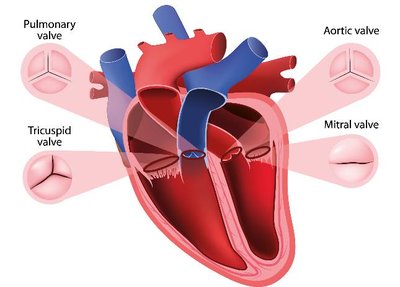
Additional info: Anatomy can be further divided into gross (macroscopic) and microscopic anatomy, while physiology includes subfields like cellular, systemic, and pathological physiology.
Levels of Organization
Hierarchy from Smallest to Largest
The human body is organized into a hierarchy of structural levels, each building on the previous one:
Chemical Level: Atoms and molecules (e.g., DNA, proteins).
Cellular Level: Cells are the basic units of life.
Tissue Level: Groups of similar cells performing a common function.
Organ Level: Structures composed of two or more tissue types (e.g., heart, liver).
Organ System Level: Groups of organs working together (e.g., digestive system).
Organism Level: The complete living being.
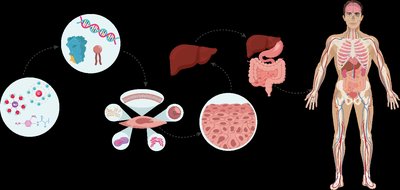
Example: Statins work at the molecular level to inhibit cholesterol synthesis, but their effects are seen at the organ and organism levels.
Variation in Anatomy and Physiology
Normal and Pathological Variation
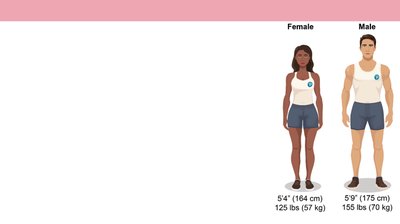
There is significant variation in human anatomy and physiology. Textbooks often present a 'reference body'—a healthy young adult of average size—to standardize learning, but real individuals may differ in structure and function.
Reference Body: Used for consistency in teaching; typically a healthy adult of average height and weight.
Anatomical Variation: Common and usually does not affect function, but extreme variation can lead to pathology.
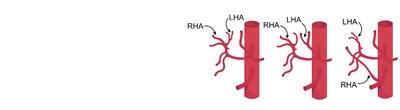
Example: Situs inversus is a condition where organs are mirrored from their normal positions; this is a variation of anatomy, not necessarily physiology if function is preserved.
Introduction to Organ Systems
Overview of Major Organ Systems
The body is organized into organ systems, each with specific functions but all highly integrated.
Protection and Support: Integumentary, skeletal, and muscular systems.
Communication and Integration: Nervous and endocrine systems.
Transport and Immunity: Cardiovascular and lymphatic systems.
Exchange of Materials: Respiratory, digestive, and urinary systems.
Reproduction: Male and female reproductive systems.

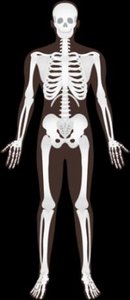
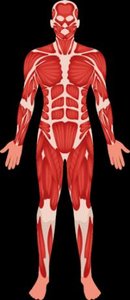
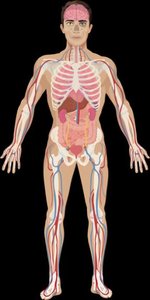
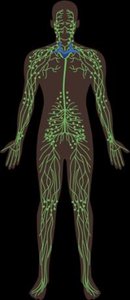
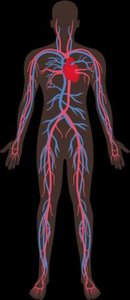
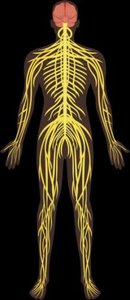
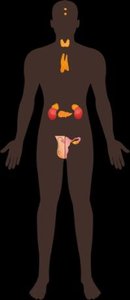
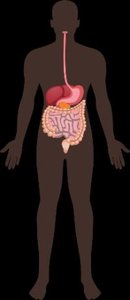
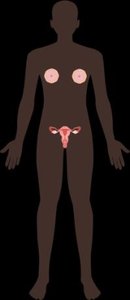
Additional info: Many organs serve multiple systems (e.g., the pancreas is both digestive and endocrine).
Homeostasis
Maintaining Internal Stability
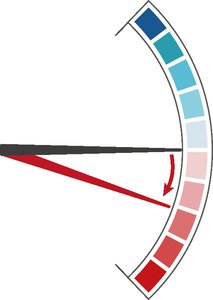
Homeostasis is the maintenance of a stable internal environment within narrow limits, despite external changes. It is essential for survival and is regulated by feedback mechanisms.
Set Point: The ideal value for a physiological variable (e.g., body temperature, blood glucose).
Dynamic Equilibrium: Internal conditions fluctuate within a normal range.
Examples of Homeostatic Variables:
Variable | Normal Range | Pathology (if out of range) |
|---|---|---|
Blood pH | 7.35–7.45 | Acidosis/Alkalosis |
Body Temperature | 36–37.5°C (97–99.5°F) | Hypo-/Hyperthermia |
Blood Glucose | 70–90 mg/dL (fasting) | Hypo-/Hyperglycemia |
Feedback Loops
Negative and Positive Feedback
Homeostasis is maintained by feedback loops that detect changes and initiate responses.
Negative Feedback: Opposes the original stimulus, returning the variable to the set point. Most homeostatic mechanisms are negative feedback.
Positive Feedback: Enhances the original stimulus, moving the variable further from the set point. Used in specific cases (e.g., blood clotting, labor).
Components of a Negative Feedback Loop:
Receptor: Detects change.
Control Center: Processes information and determines response.
Effector: Carries out the response to restore balance.


Example: When body temperature rises, sweat glands (effectors) produce sweat to cool the body. When it falls, muscles shiver to generate heat.
Example of Positive Feedback: During labor, pressure on the cervix causes the release of oxytocin, which increases contractions, leading to more pressure and more oxytocin until delivery.
Anatomical Position and Directional Terms
Standard Reference for Describing the Body
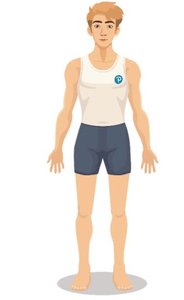
The anatomical position is the universally accepted starting point for describing body parts and positions:
Body upright, facing forward
Feet shoulder-width apart, toes forward
Arms at sides, palms facing forward
Directional Terms: Used to describe the location of one body part relative to another.
Superior/Inferior: Toward the head/toward the feet
Anterior/Posterior: Toward the front/toward the back
Medial/Lateral: Toward the midline/away from the midline
Proximal/Distal: Closer to/farther from the point of attachment (used for limbs)
Superficial/Deep: Closer to/farther from the body surface
Additional info: Terms like ipsilateral (same side) and contralateral (opposite side) are also used.
Anatomical Planes and Sections
Dividing the Body for Study
Anatomical planes are imaginary lines used to divide the body for anatomical study or medical imaging:
Frontal (Coronal) Plane: Divides body into anterior and posterior parts.
Sagittal Plane: Divides body into right and left parts (midsagittal = equal halves).
Transverse Plane: Divides body into superior and inferior parts.
Oblique Plane: Divides body at an angle.
Sections are actual cuts made along these planes to view internal structures.
Body Cavities
Major Body Cavities and Their Subdivisions
The body contains internal spaces called cavities that house organs and protect them:
Dorsal (Posterior) Cavity: Contains the cranial cavity (brain) and vertebral cavity (spinal cord).
Ventral (Anterior) Cavity: Contains the thoracic cavity (heart, lungs) and abdominopelvic cavity (digestive, urinary, reproductive organs).
The thoracic cavity is divided into pleural cavities (lungs), the pericardial cavity (heart), and the mediastinum (space between lungs). The abdominopelvic cavity is divided into the abdominal cavity (digestive organs) and pelvic cavity (bladder, reproductive organs).
Abdominopelvic Quadrants and Regions
Dividing the Abdomen for Clinical Reference
The abdomen is divided for clinical and anatomical reference:
Quadrants: Right Upper (RUQ), Left Upper (LUQ), Right Lower (RLQ), Left Lower (LLQ)
Regions: Nine regions (e.g., epigastric, umbilical, hypogastric, hypochondriac, lumbar, inguinal)
Example: Pain in the RLQ may indicate appendicitis; the hypogastric region contains the bladder.
Summary Table: Directional Terms
Term | Definition | Example |
|---|---|---|
Superior | Above | The nose is superior to the mouth. |
Inferior | Below | The stomach is inferior to the heart. |
Anterior (Ventral) | Front | The sternum is anterior to the spine. |
Posterior (Dorsal) | Back | The heart is posterior to the sternum. |
Medial | Toward midline | The heart is medial to the lungs. |
Lateral | Away from midline | The arms are lateral to the chest. |
Proximal | Closer to attachment | The elbow is proximal to the wrist. |
Distal | Farther from attachment | The fingers are distal to the elbow. |
Superficial | Closer to surface | The skin is superficial to muscles. |
Deep | Farther from surface | The bones are deep to the skin. |
Key Equations and Concepts
Homeostasis Equation (Conceptual):
Blood Glucose Regulation (Negative Feedback):
Labor (Positive Feedback):
Additional info: Mastery of anatomical terminology and feedback mechanisms is foundational for all further study in anatomy and physiology.
