 Back
Introduction to Anatomy, Cells, Tissues, and Early Embryology: ANP College Study Notes
Study Guide - Smart Notes
 Tailored notes based on your materials, expanded with key definitions, examples, and context.
Foundations: An Introduction to Anatomy
Basic Concepts in Anatomy
Anatomy is the study of the structure of the human body, including its location, organization, and relationship between body parts. Precise vocabulary is essential for clear communication in clinical and academic settings. - Anatomical landmarks are reference points on the body used to describe locations and regions. - Anatomical directions (e.g., superior, inferior, anterior, posterior) and planes (sagittal, transverse, frontal) help describe the orientation and sectioning of the body. 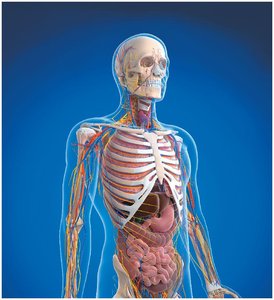
Types of Anatomical Studies
Anatomy can be studied at different scales and through various methods: - Gross Anatomy: Study of structures visible to the naked eye (surface, regional, systemic anatomy). - Microscopic Anatomy: Study of structures not visible without magnification (cytology, histology). - Developmental Anatomy: Examines structural changes over time, including embryology. - Clinical, Surgical, Radiographic, and Cross-sectional Anatomy: Specialized approaches for medical practice and research. 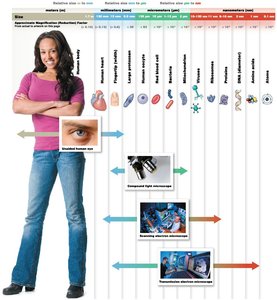
Levels of Organization
The human body is organized hierarchically from simple to complex: - Chemical/Molecular Level: Atoms and molecules form the basis of life. - Cellular Level: Cells are the smallest living units, containing organelles. - Tissue Level: Groups of similar cells performing specific functions (epithelial, connective, muscle, nervous). - Organ Level: Combination of tissues forming organs. - Organ System Level: Groups of organs working together (e.g., digestive, cardiovascular systems). - Organism Level: All organ systems functioning together. 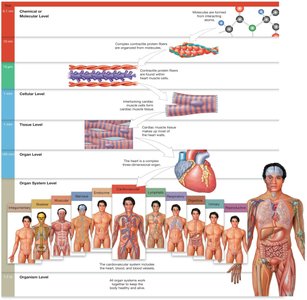
Elemental and Molecular Composition
The body is composed primarily of hydrogen, oxygen, carbon, and nitrogen, with water as the major molecular component. 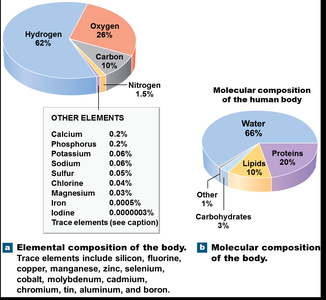
Features of Living Organisms
- Responsiveness: Ability to respond to changes. - Growth and Differentiation: Increase in size and specialization of cells. - Reproduction: Production of new generations. - Movement: Internal (e.g., blood flow) and external (e.g., walking). - Metabolism and Excretion: Chemical reactions, absorption, respiration, and waste removal.
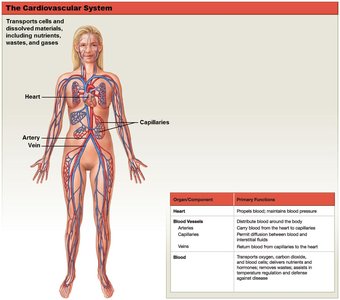
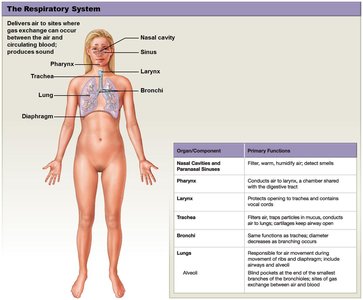
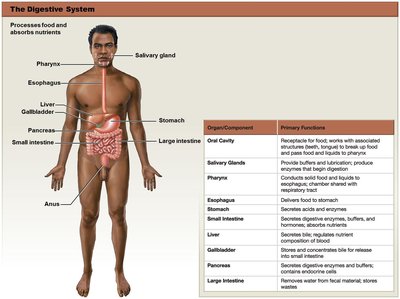
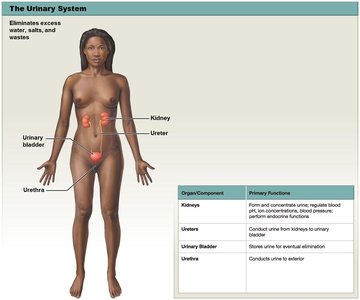
Overview of Organ Systems
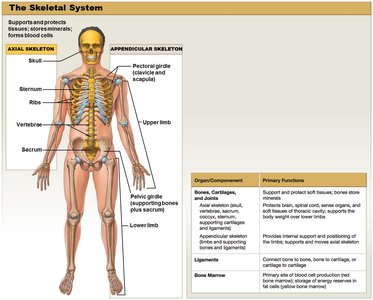
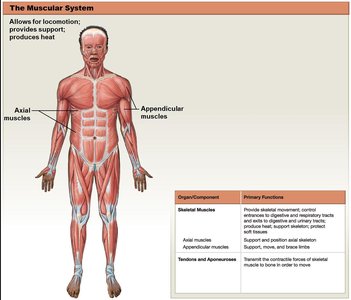
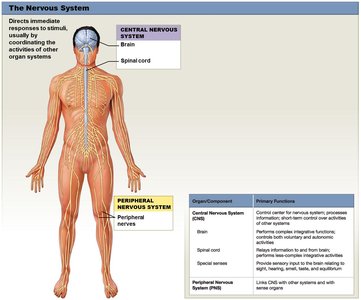
The human body consists of 11 organ systems, each with specialized functions. 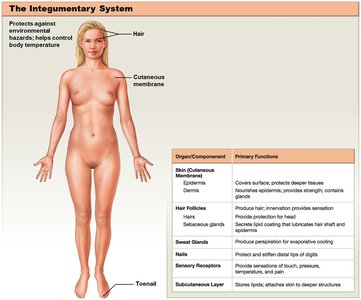
Importance of Precise Vocabulary
Anatomical terms are based on Latin and Greek, providing clarity in communication.
Anatomical Landmarks, Regions, and Quadrants
- Superficial anatomy uses regional terms for specific areas. - Abdominopelvic quadrants: RUQ, LUQ, RLQ, LLQ. - Abdominopelvic regions: Nine regions (e.g., right hypochondriac, epigastric, left iliac).
Anatomical Directions and Planes
- Directional terms: Superior, inferior, anterior, posterior, medial, lateral, superficial, deep, proximal, distal, cranial, caudal. - Sectional planes: Sagittal, midsagittal, parasagittal, transverse, frontal.
Anatomical Body Cavities
- Posterior (dorsal) cavity: Cranial and spinal cavities. - Anterior (ventral) cavity: Thoracic, abdominal, pelvic, and peritoneal cavities.
Foundations: The Cell
Introduction to Cells
Cells are the basic building blocks of life, produced by division of preexisting cells. - Sex cells: Sperm (male), oocytes (female). - Somatic cells: All other cells.
Cellular Anatomy
- Cytoplasm: Intracellular fluid and organelles. - Plasma membrane: Physical barrier, regulates exchange, sensitivity, communication, adhesion, structural support. - Phospholipid bilayer: Hydrophilic heads, hydrophobic tails, glycolipids, glycoproteins, sterols, proteins.
Membrane Proteins
- Peripheral proteins: Attached to membrane surface. - Integral proteins: Embedded, may form channels (including gated channels).
Centrioles, Cilia, and Flagella
- Centrioles: Organize mitotic spindle during cell division. - Cilia and Flagella: Movement and transport.
Mitochondria
- Mitochondria: Powerhouse of the cell, involved in energy production, fusion, fission, and disease. - Mitochondrial diseases: Affect high-energy cells (muscle, nerve, liver, brain), not red blood cells. - Mitochondrial replacement therapy: Prevents transmission of mitochondrial disease.
Endoplasmic Reticulum and Golgi Apparatus
- ER: Synthesis, storage, transport of proteins and lipids. - Golgi apparatus: Modifies, packages, and distributes proteins.
Lysosomes
- Lysosomes: Cellular repair, breakdown of waste, disease implications (e.g., Alzheimer's). 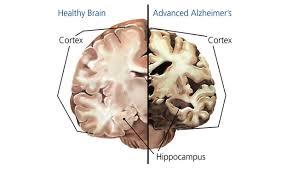
Foundations: Tissues and Early Embryology
Types of Tissues
The body contains four primary tissue types: - Epithelial tissue: Covers surfaces, lines cavities, forms glands. - Connective tissue: Supports, protects, transports, stores energy. - Muscle tissue: Movement, support, heat production. - Nervous tissue: Conducts electrical impulses, coordinates functions.
Epithelial Tissue
- Characteristics: Cellularity, polarity, attachment, avascularity. - Functions: Protection, permeability, sensation, secretion. - Types: Simple, stratified, pseudostratified, transitional. - Glandular epithelia: Unicellular (goblet, mucus cells), multicellular glands.
Connective Tissue
- Functions: Fixed and wandering cells, fluid and supportive types (cartilage, bone).
Muscle Tissue
- Types: Skeletal, cardiac, smooth.
Nervous Tissue
- Neurons: Conduct impulses, limited repair. - Neuroglia: Support, supply nutrients, communication.
Membranes
- Mucous membrane: Lines passageways open to external environment. - Serous membrane: Lines body cavities, reduces friction. - Cutaneous membrane: Skin. - Synovial membrane: Lines joints, secretes synovial fluid.
Integration of Tissues in Organs
Organs are composed of multiple tissue types working together.
Human Development: Early Embryology
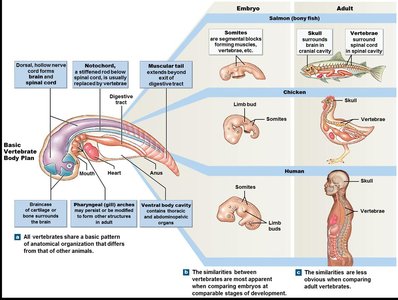
- Fertilization: Union of sperm and oocyte. - Blastocyst formation and implantation: Early stages of development. - Gastrulation: Formation of primary germ layers. - Neurulation and notochord formation: Establishes body plan. - Organogenesis and fetal development: Formation of organs and systems. 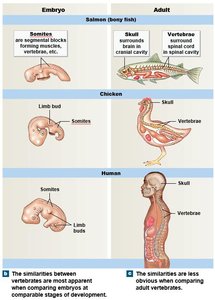
Case Studies and Clinical Applications
- Injury Severity Score (ISS): Used to assess trauma severity based on regional anatomy. - Proximal vs. Distal: Proximal is closer to the body's center; distal is farther away. - Abdominopelvic regions and quadrants: Used for diagnosis and surgical planning.
Summary Table: Levels of Organization
Level | Description |
|---|---|
Chemical/Molecular | Atoms and molecules form the basis of life |
Cellular | Smallest living unit; contains organelles |
Tissue | Groups of similar cells performing specific functions |
Organ | Combination of tissues forming organs |
Organ System | Groups of organs working together |
Organism | All organ systems functioning together |
Summary Table: Abdominopelvic Regions
Region | Main Organs |
|---|---|
Right Hypochondriac | Liver, gallbladder |
Epigastric | Stomach, liver, pancreas |
Left Hypochondriac | Stomach, spleen |
Right Lumbar | Ascending colon, small intestine |
Umbilical | Small intestine, transverse colon |
Left Lumbar | Descending colon, small intestine |
Right Iliac | Appendix, cecum |
Hypogastric | Bladder, small intestine |
Left Iliac | Descending colon, sigmoid colon |
Summary Table: Directional Terms
Term | Definition |
|---|---|
Superior | Above |
Inferior | Below |
Anterior (Ventral) | Front |
Posterior (Dorsal) | Back |
Medial | Toward midline |
Lateral | Away from midline |
Proximal | Closer to point of attachment |
Distal | Farther from point of attachment |
Key Equations
Injury Severity Score (ISS): Where A, B, and C are the scores of the three most severely injured body regions.
Additional info:
- Academic context was added to clarify the relationship between anatomical structure and physiological function, and to expand on tissue types and embryological development. - Case studies were summarized for clinical relevance.
