 Back
BackIntroduction to Human Physiology and the Diabetes Epidemic
Study Guide - Smart Notes
 Tailored notes based on your materials, expanded with key definitions, examples, and context.
Introduction to Physiology
Overview of Human Physiology
Physiology is the study of the functions and mechanisms occurring in living organisms. In human physiology, the focus is on understanding how the body’s systems interact to maintain life and health. Despite the complexity of the human body, its functions can be explained by a set of unifying principles, such as the specialization of cells and the integration of organ systems.
Cells are the smallest living units, specialized for different functions.
Organs are composed of multiple tissue types working together for specific functions.
Organ systems are groups of organs that perform related functions essential for survival.
Major Cell Types and Tissues
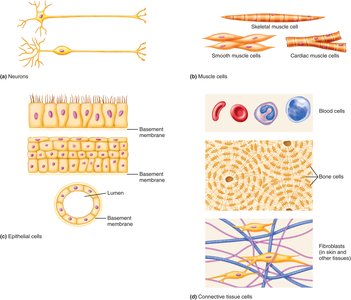
The human body contains over 200 types of cells, classified into four major groups based on function:
Neurons: Specialized for transmitting electrical signals (nervous tissue).
Muscle cells: Specialized for contraction and movement (muscle tissue).
Epithelial cells: Form barriers and are involved in absorption, secretion, and protection (epithelial tissue).
Connective tissue cells: Provide support, connect, and anchor body parts (connective tissue).
Glands: Exocrine and Endocrine
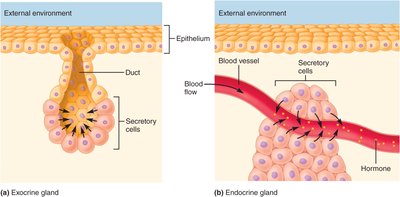
Some epithelial cells form glands, which are specialized for secretion:
Exocrine glands: Secrete products into ducts leading to the external environment (e.g., sweat glands).
Endocrine glands: Secrete hormones directly into the bloodstream (e.g., pituitary gland).
Organization of Organ Systems
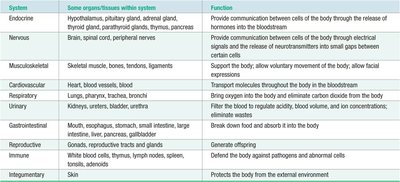
Organ systems are collections of organs that work together to perform vital functions. Examples include the cardiovascular, respiratory, gastrointestinal, and endocrine systems.
System | Some organs/tissues within system | Function |
|---|---|---|
Endocrine | Hypothalamus, pituitary gland, adrenal gland, etc. | Communication via hormones |
Nervous | Brain, spinal cord, peripheral nerves | Electrical signal communication |
Musculoskeletal | Skeletal muscle, bones, tendons, ligaments | Support and movement |
Cardiovascular | Heart, blood vessels, blood | Transport of molecules |
Respiratory | Lungs, airways | Gas exchange |
Urinary | Kidneys, ureters, bladder, urethra | Filtration and excretion |
Gastrointestinal | Mouth, stomach, intestines, etc. | Digestion and absorption |
Reproductive | Gonads, reproductive ducts | Generation of offspring |
Immune | White blood cells, lymph nodes | Defense against pathogens |
Integumentary | Skin | Protection |
Body Fluid Compartments and Homeostasis
Body Fluid Compartments
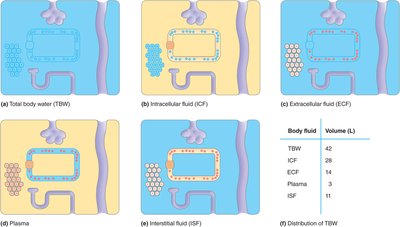
The body’s water is distributed in distinct compartments separated by selectively permeable membranes:
Total Body Water (TBW): All water within the body (~60% of body weight).
Intracellular Fluid (ICF): Fluid inside cells (about 2/3 of TBW).
Extracellular Fluid (ECF): Fluid outside cells (about 1/3 of TBW), including plasma and interstitial fluid (ISF).
Homeostasis
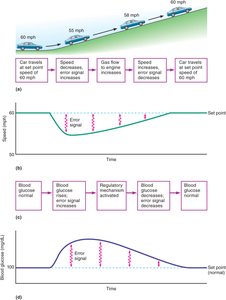
Homeostasis is the maintenance of relatively constant conditions in the internal environment, essential for cell survival. Most organ systems function to maintain homeostasis, adjusting to changes in the external or internal environment through regulatory mechanisms.
Regulated variables: Temperature, blood glucose, ion concentrations, etc.
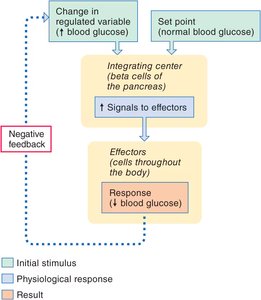
Negative feedback: The primary mechanism for maintaining homeostasis; a change in a regulated variable triggers a response that opposes the change.
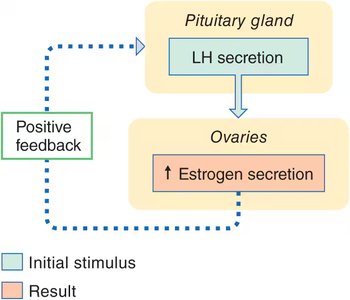
Positive feedback: Less common; amplifies a change (e.g., LH surge in ovulation).
The Diabetes Epidemic
Definition and Impact
Diabetes mellitus is a metabolic disease characterized by high blood glucose levels and affects every system in the body. The term "diabetes" means "siphon" (referring to excessive urine flow), and "mellitus" means "honey" (referring to sweet urine due to glucose).
Symptoms include excessive thirst, frequent urination, fatigue, and complications affecting the eyes, kidneys, nerves, and cardiovascular system.
Prevalence of Diabetes
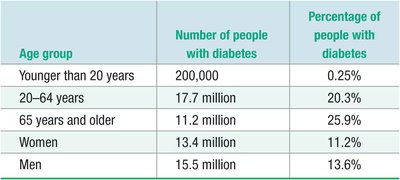
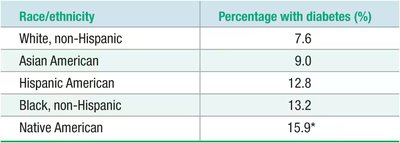
Diabetes prevalence increases with age and varies by sex and ethnicity. The disease is more common in older adults and certain ethnic groups.
Age group | Number of people with diabetes | Percentage of people with diabetes |
|---|---|---|
Younger than 20 years | 200,000 | 0.25% |
20–64 years | 17.7 million | 20.3% |
65 years and older | 11.2 million | 25.9% |
Women | 13.4 million | 11.2% |
Men | 15.5 million | 13.6% |
Race/ethnicity | Percentage with diabetes (%) |
|---|---|
White, non-Hispanic | 7.6 |
Asian American | 9.0 |
Hispanic American | 12.8 |
Black, non-Hispanic | 13.2 |
Native American | 15.9 |
Global Trends
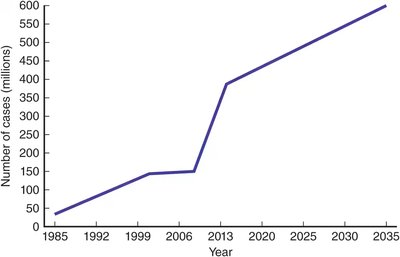
The number of diabetes cases worldwide has increased dramatically, from 30 million in 1985 to a projected 600 million by 2035.
Obesity and Diabetes
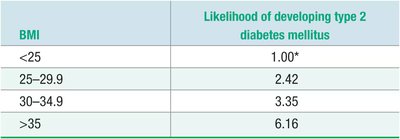
Obesity is the leading risk factor for type 2 diabetes mellitus. Body mass index (BMI) is used to classify weight status:
BMI 25–29.9: Overweight
BMI 30–39: Obese
BMI >39: Severely obese
The likelihood of developing type 2 diabetes increases with higher BMI:
BMI | Likelihood of developing type 2 diabetes mellitus |
|---|---|
<25 | 1.00 |
25–29.9 | 2.42 |
30–34.9 | 3.35 |
>35 | 6.16 |
Classification of Diabetes
Type 1 Diabetes Mellitus (DM): Autoimmune destruction of pancreatic beta cells; requires insulin therapy; usually develops in childhood.
Type 2 DM: Insulin resistance in target cells; associated with obesity and adult onset; most common form.
Gestational Diabetes: Occurs during pregnancy due to hormone-induced insulin resistance; increases risk of developing type 2 DM later.
Diabetes Insipidus: Unrelated to blood glucose; involves problems with antidiuretic hormone (ADH) and water regulation.
Diagnosis of Diabetes Mellitus
Fasting plasma glucose test: Normal = 60–100 mg/dL; Prediabetes = 100–125 mg/dL; Diabetes = >125 mg/dL.
Oral glucose tolerance test: Normal = <139 mg/dL (2 hours post-glucose); Prediabetes = 140–199 mg/dL; Diabetes = >200 mg/dL.
Symptoms and Complications
Elevated blood glucose and glucose in urine
Dehydration, fatigue, lethargy, and risk of coma
Long-term complications: Eye, kidney, nerve, and cardiovascular diseases
Treatment of Diabetes Mellitus
Maintaining blood glucose within 70–120 mg/dL reduces complications.
Monitoring includes frequent blood glucose testing and hemoglobin A1c measurement (reflects average glucose over 2–3 months).
Type 1 DM: Requires insulin therapy.
Type 2 DM: May require insulin, oral medications (e.g., sulfonylureas, meglitinides, thiazolidinediones, biguanides), and lifestyle changes.
Homeostasis and Diabetes
Diabetes mellitus is a prime example of disrupted homeostasis, specifically in the regulation of blood glucose. The negative feedback system involving insulin is impaired, leading to chronic hyperglycemia and widespread physiological consequences.
