 Back
BackLymphatic System and Immunity: Structure, Function, and Defense Mechanisms
Study Guide - Smart Notes
 Tailored notes based on your materials, expanded with key definitions, examples, and context.
The Lymphatic System
Overview and Functions
The lymphatic system is a vital component of the circulatory and immune systems, responsible for maintaining fluid balance, supporting immune function, and absorbing dietary fats. It consists of lymph, lymphatic vessels, lymphoid tissues, and organs.
Immune System Support: Transports and houses lymphocytes and other immune cells, helping defend against foreign substances and pathogens.
Cardiovascular Support: Returns excess interstitial fluid to the blood, maintaining fluid balance, blood volume, and blood pressure.
Fat Absorption: Specialized lymphatic capillaries called lacteals in the small intestine absorb dietary fats.
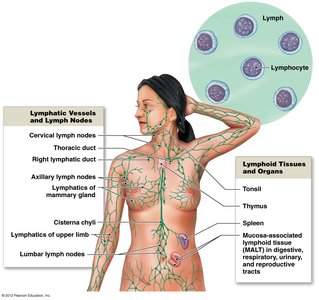
Lymph and Lymphatic Vessels
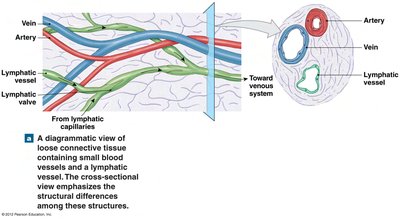
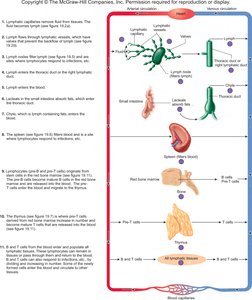
Lymph is a fluid similar to plasma that leaks out of capillaries during exchange and is collected by lymphatic vessels. These vessels transport lymph from peripheral tissues back to the venous system.
Lymphatic Capillaries: Begin as blind-ended sacs, highly permeable due to loosely joined endothelial cells forming one-way mini-valves.
Lymphatic Vessels: Progressively larger vessels with one-way valves, aided by skeletal muscle and respiratory pumps, and arterial pulsation.
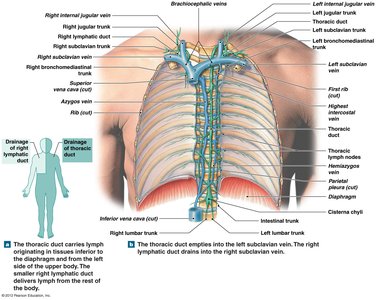
Lymphatic Ducts: All lymph is eventually delivered to two large ducts in the thoracic region:
Right Lymphatic Duct: Drains lymph from the right side superior to the diaphragm into the right subclavian vein.
Thoracic Duct: Drains lymph from the rest of the body into the left subclavian vein.
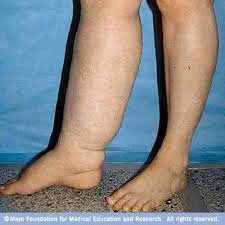
Lymphedema: Swelling due to obstruction of lymphatic drainage, leading to increased interstitial fluid.
Lymphoid Cells and Structures
Lymphocytes and Other Immune Cells
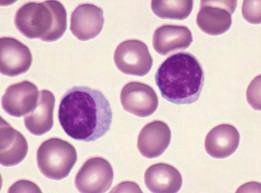
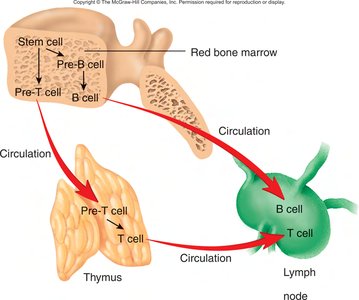
Lymphocytes are the primary cells of the lymphatic system, responsible for immune responses. They are produced in the bone marrow and may mature in the thymus.
B Lymphocytes (B cells): Responsible for humoral immunity by producing antibodies.
T Lymphocytes (T cells): Responsible for cell-mediated immunity, managing immune responses and directly attacking infected or abnormal cells.
Natural Killer (NK) Cells: Provide immunological surveillance, targeting virus-infected and tumor cells non-specifically.
Primary and Secondary Lymphatic Structures
Lymphatic structures are classified based on their role in lymphocyte development and immune response.
Primary Lymphatic Structures: Sites where lymphocytes form and mature (bone marrow and thymus).
Secondary Lymphatic Structures: Sites where immune responses are initiated (lymph nodes, spleen, tonsils, MALT).
Red Bone Marrow
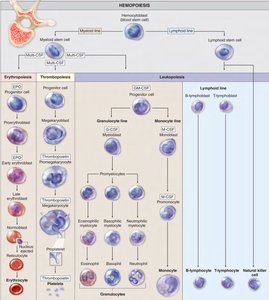
Located within spongy bone, red bone marrow is the site of hemopoiesis (blood cell formation), producing all lymphocytes. T-lymphocytes complete maturation in the thymus.
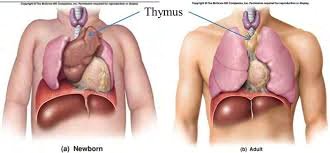
Thymus
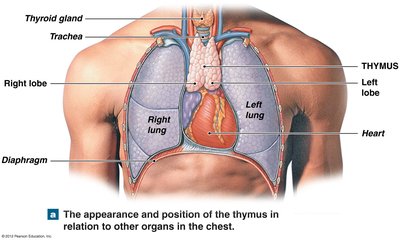
The thymus is the site of T cell maturation, especially important early in life. It is protected by a blood-thymus barrier to prevent premature activation of T cells by pathogens. The thymus shrinks after puberty.
Secondary Lymphoid Structures
Lymph Nodes: Encapsulated organs that filter lymph, house macrophages, B cells, T cells, and dendritic cells. They are clustered in the neck, armpit, and groin.
Spleen: The largest lymphoid organ, filters blood, removes old red blood cells, stores platelets, and initiates immune responses to blood-borne antigens.
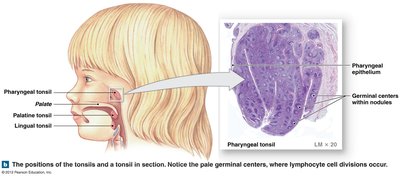
Tonsils: Located in the pharynx, trap and destroy pathogens entering through food or air, and generate immune memory.
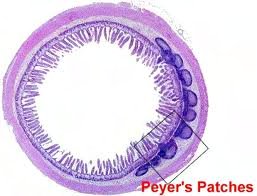
MALT (Mucosa-Associated Lymphoid Tissue): Includes Peyer's patches in the small intestine, which destroy bacteria and generate memory lymphocytes.
Immune System Function and Body Defenses
Overview of Immune Defenses
The immune system protects the body from infectious agents, toxins, and abnormal cells. It is divided into innate (nonspecific) and adaptive (specific) defenses.
Innate Immunity: Present at birth, provides immediate, non-specific defense against pathogens. Includes physical barriers, phagocytes, NK cells, antimicrobial proteins, inflammation, and fever.
Adaptive Immunity: Develops after exposure to specific antigens, involves B and T lymphocytes, and provides memory for faster, stronger responses upon re-exposure.
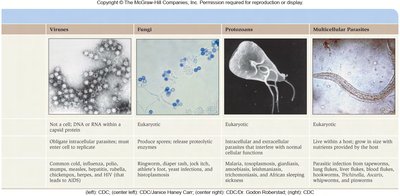
Physical Barriers (Innate Immunity)
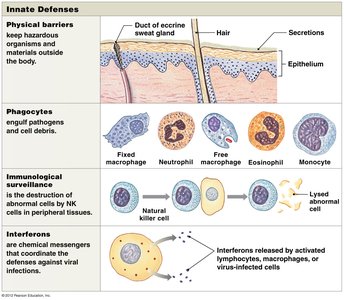
Physical barriers are the first line of defense, preventing entry of pathogens into the body.
Skin: Tightly joined epithelial cells, keratinized, slough off to remove microbes.
Secretions: Sweat, sebum, saliva (contains lysozyme), and stomach acid inhibit microbial growth.
Mucous Membranes: Line body cavities open to the exterior, trap microbes, and contain antimicrobial agents.
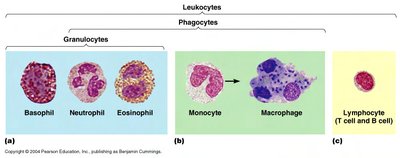
Phagocytes
Phagocytes are the second line of defense, removing cellular debris and microorganisms.
Macrophages: Derived from monocytes, can be fixed (permanent residents) or free (wandering).
Neutrophils: First responders to infection, can release defensins and toxic chemicals.
Antigen Presentation: Macrophages present antigens to lymphocytes to initiate adaptive responses.
Natural Killer (NK) Cells
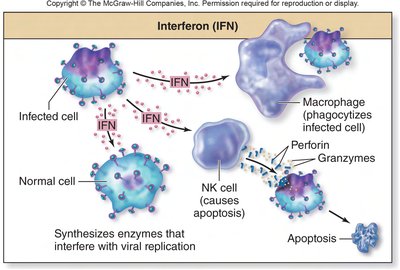
NK cells provide immunological surveillance, targeting virus-infected and tumor cells by recognizing abnormal surface markers and releasing perforins to induce cell death.
Antimicrobial Proteins
Interferons (IFN): Cytokines released by virus-infected cells to protect neighboring cells and activate macrophages and NK cells.
Complement System: Plasma proteins that enhance both innate and adaptive immunity by promoting phagocytosis, inflammation, and direct lysis of pathogens.
Inflammation and Fever
Inflammation is a local, non-specific response to tissue damage, characterized by redness, heat, swelling, and pain. Fever is a systemic response to infection, raising body temperature to inhibit pathogens and speed up immune responses.
Mast Cells and Basophils: Release histamine and other chemicals to promote inflammation.
Phagocyte Recruitment: Neutrophils and monocytes migrate to the site of injury to eliminate pathogens and debris.
Fever: Induced by pyrogens, increases metabolic rate and immune cell activity, but can be harmful if too high.
Adaptive (Specific) Immunity
Characteristics and Types
Adaptive immunity targets specific pathogens, requires prior exposure, and provides immunological memory. It is systemic and self-tolerant.
Cell-Mediated Immunity: T cells directly attack infected or abnormal cells.
Humoral (Antibody-Mediated) Immunity: B cells produce antibodies that neutralize pathogens in body fluids.
Antigen Presentation and Recognition
Antigens are non-self substances that trigger adaptive immune responses. Major histocompatibility complex (MHC) molecules present antigenic fragments to T cells.
MHC I: Present on all nucleated cells, display self or foreign antigens to CD8+ T cells.
MHC II: Present on antigen-presenting cells (APCs) like macrophages, dendritic cells, and B cells, display antigens to CD4+ T cells.
T Cell Maturation and Activation
T cells mature in the thymus, undergoing positive and negative selection to ensure self-tolerance and immunocompetence. Upon activation, T cells differentiate into helper, cytotoxic, memory, or regulatory T cells.
B Cell Activation and Antibody Production
B cells recognize specific antigens, present them on MHC II, and are fully activated with help from helper T cells. Activated B cells differentiate into plasma cells (antibody-secreting) and memory B cells.
Antibodies (Immunoglobulins)
Antibodies are proteins that bind specific antigens, neutralizing pathogens and marking them for destruction. There are five major classes:
IgM: First antibody produced, effective in agglutination and complement activation.
IgG: Most abundant, crosses placenta, provides long-term immunity.
IgA: Found in secretions, protects mucosal surfaces.
IgE: Involved in allergic responses and defense against parasites.
IgD: Functions as a B cell receptor.
Immunological Memory
Primary exposure to an antigen leads to a slow, initial response and memory cell formation. Secondary exposure results in a rapid, robust response due to memory cells, forming the basis for effective vaccination.
Disorders of Immunity
Hypersensitivity (Allergies): Exaggerated immune response to harmless antigens, often mediated by IgE and mast cells.
HIV/AIDS: HIV destroys CD4+ helper T cells, leading to immunodeficiency and increased susceptibility to infections.
Autoimmune Disorders: Immune system attacks self-tissues, as seen in Graves' disease, rheumatoid arthritis, type 1 diabetes, lupus, and myasthenia gravis.
