 Back
BackMetabolism and Regulation of Body Temperature: Macronutrients, Micronutrients, and Hormonal Control
Study Guide - Smart Notes
 Tailored notes based on your materials, expanded with key definitions, examples, and context.
Micronutrients: Vitamins and Minerals
Vitamins
Vitamins are essential organic compounds required in minute amounts for normal physiological function, growth, and maintenance of health. They often serve as coenzymes in metabolic reactions, particularly those involved in energy production.
Fat-soluble vitamins: A, D, E, K; absorbed with dietary lipids and can be stored in the body (except K). Excessive intake may lead to toxicity, especially vitamin A.
Water-soluble vitamins: B-complex, C; absorbed with water (except B12) and are not significantly stored in the body.
Most vitamins must be obtained from the diet, with exceptions such as vitamin D (synthesized in skin), some B vitamins and vitamin K (produced by intestinal bacteria), and carotene (provitamin for vitamin A).
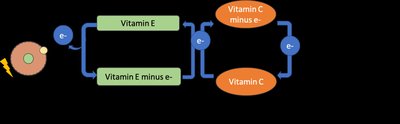
Antioxidant Vitamins: Vitamins A, C, and E act as antioxidants, neutralizing free radicals (highly reactive molecules with unpaired electrons) and protecting tissues from oxidative damage, chronic diseases, and cancer.
Minerals
Minerals are inorganic elements required for various physiological processes, including bone formation, nerve function, and fluid balance.
Major minerals: Calcium, phosphorus, potassium, sulfur, sodium, chloride, magnesium.
Trace minerals: Iron, iodine, manganese, copper, zinc, cobalt, fluorine, selenium, chromium.
Minerals constitute about 4% of body weight, with calcium and phosphorus making up most of this as bone salts.
Key roles: Iron in hemoglobin, sodium and chloride in osmolarity and water balance, iodine in thyroid hormone synthesis.

Water
Water is vital for life, serving as a medium for nutrient transport, waste removal, chemical reactions, lubrication, shock absorption, and temperature regulation.
Acts as a solvent for minerals, vitamins, amino acids, and glucose.
Participates in metabolic reactions and helps regulate body temperature.

Metabolism of Energy-Containing Nutrients
Overview of Metabolic Pathways
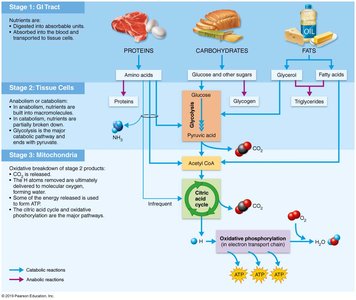
Metabolism encompasses all chemical reactions in the body, divided into anabolic (building up) and catabolic (breaking down) processes. Energy metabolism involves the breakdown of carbohydrates, fats, and proteins to produce ATP.
Stage 1: Digestion – Nutrients are broken down into absorbable units in the GI tract.
Stage 2: Cellular Processing – Absorbed nutrients are converted to intermediates (e.g., pyruvate, acetyl-CoA).
Stage 3: Mitochondrial Oxidation – Intermediates enter the citric acid cycle and electron transport chain to generate ATP.
Carbohydrate Metabolism
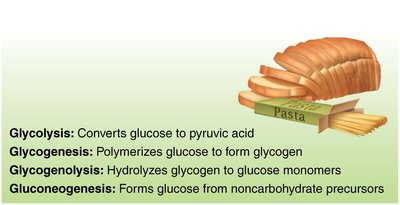
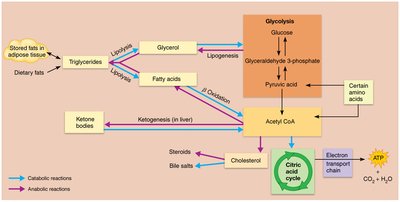
Carbohydrates are a primary energy source. Their metabolism includes glycolysis, glycogenesis, glycogenolysis, and gluconeogenesis.
Glycolysis: Converts glucose to pyruvic acid.
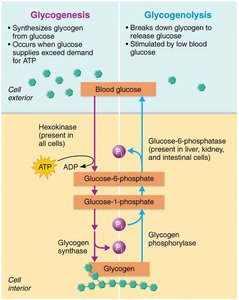
Glycogenesis: Forms glycogen from glucose for storage.
Glycogenolysis: Breaks down glycogen to release glucose.
Gluconeogenesis: Synthesizes glucose from noncarbohydrate precursors (e.g., amino acids, glycerol).
Lipid Metabolism
Lipids are metabolized for energy, membrane synthesis, and hormone production. Key processes include β-oxidation, ketogenesis, and lipogenesis.
β-oxidation: Fatty acids are broken down in mitochondria to generate acetyl-CoA.
Ketogenesis: Excess acetyl-CoA is converted to ketone bodies in the liver.
Lipogenesis: Formation of triglycerides from acetyl-CoA and glycerol.
"Fats burn in the flame of carbohydrates" – efficient fat metabolism requires adequate carbohydrate availability.
Protein and Amino Acid Metabolism
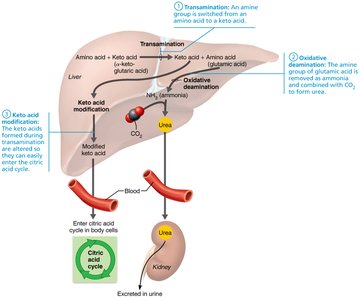
Amino acids are primarily used for protein synthesis but can be catabolized for energy or converted to glucose during fasting.
Transamination: Transfer of amino groups to form nonessential amino acids.
Deamination: Removal of amino groups, producing ammonia (converted to urea) and keto acids.
Keto acids: Can enter the citric acid cycle or be used for gluconeogenesis.
Interconversion of Nutrients
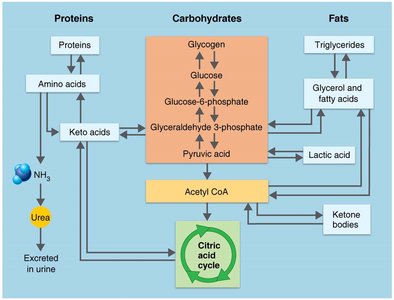
Carbohydrates, fats, and proteins can be interconverted through metabolic pathways to meet energy and biosynthetic needs.
Absorptive and Postabsorptive States
Absorptive State
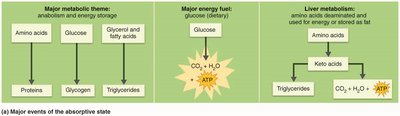
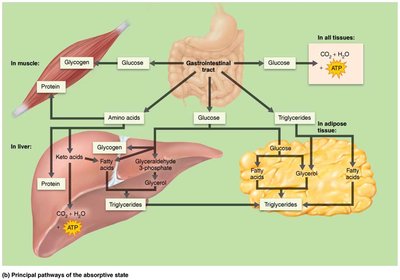
The absorptive state occurs during and shortly after eating, when nutrients are being absorbed and blood glucose is elevated. Anabolic processes predominate, and insulin is the key regulatory hormone.
Glucose is the main energy source.
Excess nutrients are stored as glycogen or fat.
Insulin promotes glucose uptake, glycogen synthesis, fat storage, and protein synthesis.
Insulin: The Key Anabolic Hormone
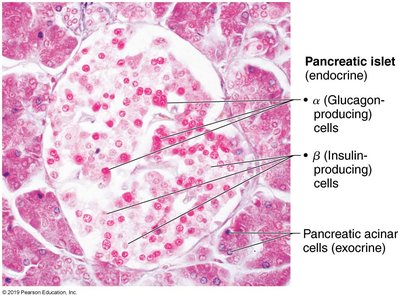
Insulin, produced by β cells of the pancreatic islets, is released in response to elevated blood glucose and amino acids. It facilitates glucose uptake (especially in muscle and adipose tissue), stimulates glycogen and fat synthesis, and promotes protein synthesis.
Insulin is not required for glucose entry into liver, kidney, brain, or intestinal epithelial cells.
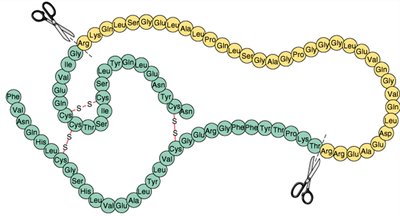
Structure: 51 amino acids, two chains linked by disulfide bonds; synthesized as proinsulin.
Glucose Transporters
Different tissues express different glucose transporters (GLUTs):
GLUT-4: Insulin-dependent, found in muscle and adipose tissue.
GLUT-2: Insulin-independent, found in liver and pancreatic β cells.
GLUT-1: Insulin-independent, found in most other cells including neurons.
Postabsorptive State
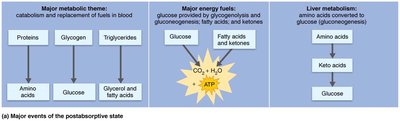
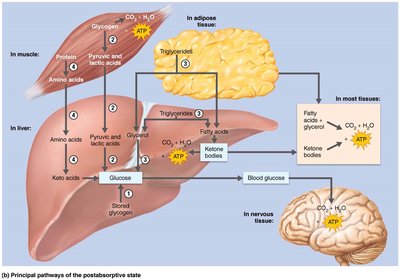
The postabsorptive state occurs when the GI tract is empty and the body relies on stored nutrients. The main goal is to maintain blood glucose for the brain.
Glycogenolysis in liver and muscle provides glucose.
Lipolysis in adipose tissue releases fatty acids and glycerol.
Gluconeogenesis in the liver produces glucose from noncarbohydrate sources.
Protein catabolism is a last resort during prolonged fasting.
Hormonal and Neural Regulation
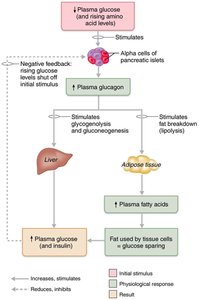
Regulation of the absorptive and postabsorptive states involves insulin, glucagon, the sympathetic nervous system, and adrenal hormones.
Glucagon: Produced by α cells of the pancreas; stimulates glycogenolysis, gluconeogenesis, and lipolysis during low blood glucose.
Sympathetic nervous system: Stimulates lipolysis and glycogenolysis during stress or hypoglycemia.
Adrenal hormones: Epinephrine and cortisol enhance glucose and fat mobilization.

Diabetes Mellitus
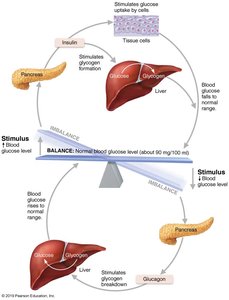
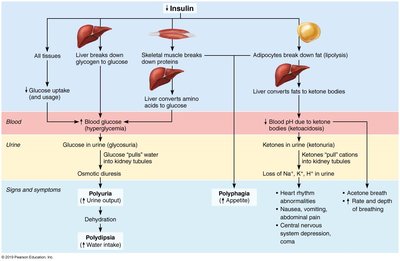
Diabetes mellitus is a metabolic disorder characterized by chronic hyperglycemia due to insufficient insulin production, insulin resistance, or both. It leads to altered metabolism of carbohydrates, fats, and proteins, and long-term complications affecting the kidneys, eyes, nerves, heart, and blood vessels.
Type 1 (IDDM): Autoimmune destruction of β cells; requires insulin therapy.
Type 2 (NIDDM): Insulin resistance and eventual β cell dysfunction; managed with lifestyle changes and medications.
Additional info: This guide covers the metabolic roles of macronutrients and micronutrients, the hormonal regulation of metabolism, and the pathophysiology of diabetes mellitus, integrating key concepts from chapters on metabolism, endocrine regulation, and homeostasis.
