Back
Metabolism, Energy Balance, and Regulation in the Human Body
Study Guide - Smart Notes
 Tailored notes based on your materials, expanded with key definitions, examples, and context.
Protein Metabolism
Degradation of Amino Acids
Proteins in the body are constantly broken down and replaced, as they are not stored for future use. Amino acids derived from dietary proteins or tissue breakdown are either recycled into new proteins or converted into other compounds. When dietary protein intake exceeds the body's needs, amino acids are oxidized for energy or converted to fat for storage.
Deamination: The first step in amino acid breakdown, where the amine group (NH2) is removed. The resulting molecule is converted into pyruvic acid or a keto acid intermediate of the citric acid cycle.
Three Key Events:
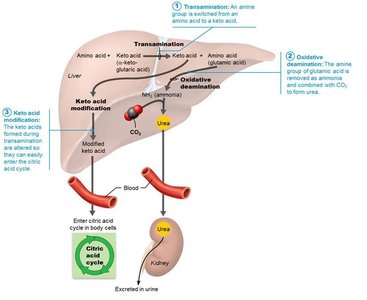
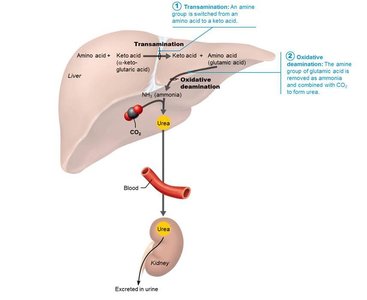
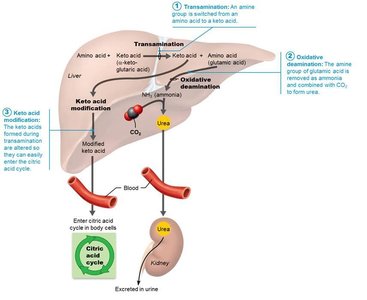
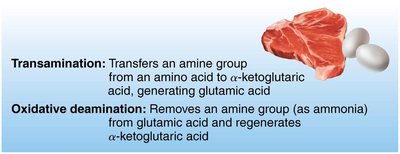
Transamination: The amine group is transferred from an amino acid to α-ketoglutaric acid, forming glutamic acid and a keto acid. This reaction is reversible.
Oxidative Deamination: In the liver, the amine group of glutamic acid is removed as ammonia (NH3), which combines with CO2 to form urea. Urea is released into the blood and excreted in urine, helping to rid the body of toxic ammonia.
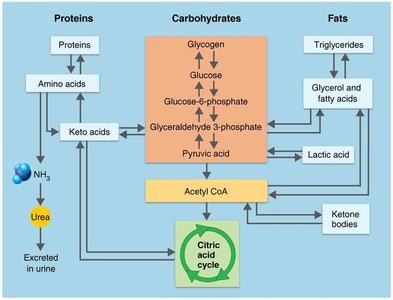
Keto Acid Modification: Keto acids formed from transamination are altered to produce metabolites (e.g., pyruvic acid, acetyl CoA, α-ketoglutaric acid, oxaloacetic acid) that can enter the citric acid cycle. Glycolysis reactions are reversible, allowing pyruvic acid metabolites to be reconverted to glucose, contributing to gluconeogenesis.
Protein Synthesis
Amino acids are the most important anabolic nutrients, forming all proteins and most functional molecules. Protein synthesis occurs on ribosomes and is hormonally controlled (e.g., by growth hormone, thyroid hormone, sex hormones). Synthesis requires a complete set of amino acids, with essential amino acids obtained from the diet. Over a lifetime, humans synthesize hundreds of kilograms of protein, depending on body size.
Metabolic States of the Body
Catabolic-Anabolic Steady State
The body maintains a dynamic steady state in which organic molecules are continuously broken down and rebuilt. Nutrient pools (amino acids, carbohydrates, fats) are interconvertible, with conversion directed by the liver, adipose tissue, and skeletal muscle.
Amino Acid Pool: The body's total supply of free amino acids, used for resynthesizing proteins, forming amino acid derivatives, and gluconeogenesis.
Carbohydrate and Fat Pools: Carbohydrates and fats are easily interconverted and oxidized directly for energy. Excess carbohydrates and fats can be stored, but amino acids are not stored as proteins.
Absorptive State
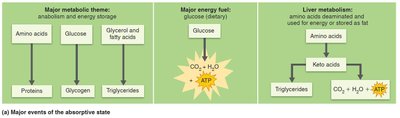
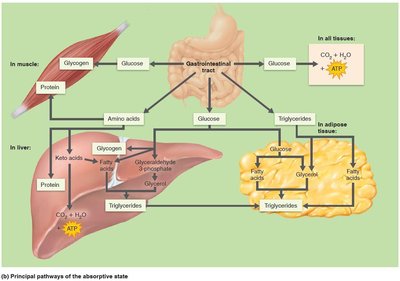
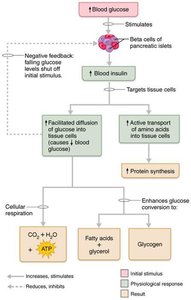
The absorptive (fed) state lasts about four hours after eating, during which anabolism exceeds catabolism and excess nutrients are stored as fat. Glucose is the major cellular energy fuel, and can be converted to glycogen or fat in the liver. Triglycerides are hydrolyzed and used as energy sources or stored. Amino acids are used for protein synthesis or converted to fat if in excess.
Hormonal Control: Insulin is the primary hormone controlling the absorptive state, facilitating glucose uptake and storage, protein synthesis, and inhibiting gluconeogenesis.
Postabsorptive State
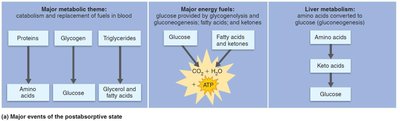
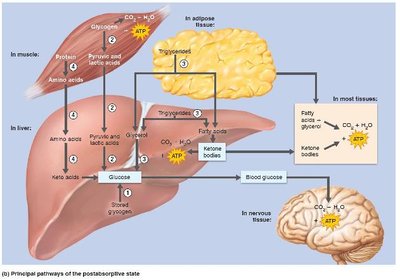
The postabsorptive (fasting) state occurs when the GI tract is empty and energy sources are supplied by breakdown of body reserves. Catabolism exceeds anabolism, and the goal is to maintain blood glucose by making glucose available and promoting fat use for energy (glucose sparing).
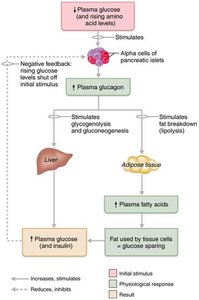
Sources of Blood Glucose: Glycogenolysis in liver and muscle, lipolysis in adipose tissue and liver, catabolism of cellular protein during prolonged fasting.
Hormonal and Neural Controls: The sympathetic nervous system and hormones (e.g., glucagon, epinephrine) regulate the postabsorptive state. Glucagon stimulates glycogenolysis, gluconeogenesis, and lipolysis.
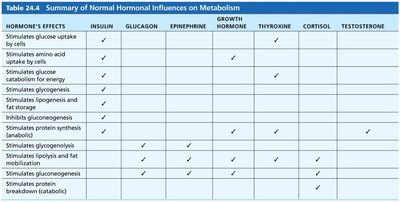
Hormonal Influences on Metabolism
Multiple hormones influence metabolism, including insulin, glucagon, epinephrine, growth hormone, thyroxine, cortisol, and testosterone. Their effects include stimulation of glucose uptake, protein synthesis, glycogenolysis, lipolysis, and gluconeogenesis.
Hormone | Glucose Uptake | Protein Synthesis | Glycogenolysis | Lipolysis | Gluconeogenesis |
|---|---|---|---|---|---|
Insulin | ✓ | ✓ | |||
Glucagon | ✓ | ✓ | ✓ | ||
Epinephrine | ✓ | ✓ | ✓ | ||
Growth Hormone | ✓ | ✓ | ✓ | ||
Thyroxine | ✓ | ||||
Cortisol | ✓ | ✓ | |||
Testosterone | ✓ |
Metabolic Role of the Liver
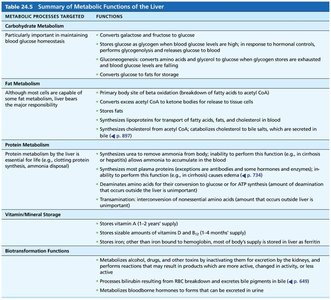
The liver is central to metabolism, processing nearly every class of nutrient, regulating plasma cholesterol, storing vitamins and minerals, and metabolizing alcohol, drugs, hormones, and bilirubin.
Metabolic Process | Functions |
|---|---|
Carbohydrate Metabolism | Converts galactose and fructose to glucose; stores glucose as glycogen; releases glucose as needed; converts glucose to fat for storage. |
Fat Metabolism | Primary site for beta oxidation; generates ketone bodies; synthesizes lipoproteins, cholesterol, and bile salts. |
Protein Metabolism | Synthesizes plasma proteins; converts ammonia to urea; forms amino acid derivatives. |
Vitamin/Mineral Storage | Stores vitamins A, D, B12, and iron. |
Biotransformation | Metabolizes alcohol, drugs, hormones, and bilirubin. |
Cholesterol Metabolism and Regulation
Cholesterol Transport and Lipoproteins
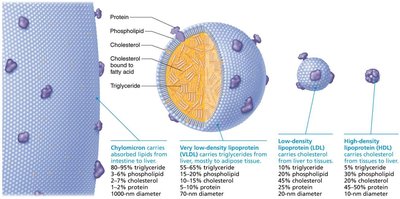
Cholesterol is not used for energy but is essential for bile salts, steroid hormones, vitamin D, and plasma membranes. Lipoproteins transport cholesterol and triglycerides through the blood, regulating lipid entry and exit at target cells. The higher the percentage of lipids, the lower the density.
HDLs (High-Density Lipoproteins): Highest protein content; transport excess cholesterol from tissues to liver.
LDLs (Low-Density Lipoproteins): Highest cholesterol content; transport cholesterol to tissues.
VLDLs (Very Low-Density Lipoproteins): Mostly triglycerides; transport triglycerides from liver to tissues.
Chylomicrons: Lowest density; consist almost entirely of triglycerides.
Regulation of Blood Cholesterol Levels
Recommended Levels: Total cholesterol < 200 mg/dl; HDL > 60 mg/dl; LDL < 100 mg/dl.
Dietary Effects: Saturated fats increase cholesterol synthesis and inhibit excretion; unsaturated fats enhance excretion. Trans fats increase LDL and reduce HDL. Omega-3 fatty acids lower cholesterol and have cardiovascular benefits.
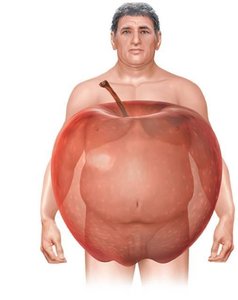
Other Factors: Stress and smoking lower HDL; exercise and estrogen increase HDL and decrease LDL. Body shape ("apple" vs. "pear") affects cholesterol risk.
Energy Balance and Regulation of Food Intake
Energy Balance
Energy intake from food must equal total energy output for weight stability. Energy output includes heat loss, work (driven by ATP), and storage as fat or glycogen. Nearly all energy from food is eventually converted to heat, which maintains body temperature and allows metabolic reactions.
Obesity and Body Mass Index (BMI)
BMI is used to determine obesity based on weight relative to height:
Formula:
Overweight: BMI 25–30
Obese: BMI > 30
Obesity increases risk of atherosclerosis, diabetes, hypertension, heart disease, and osteoarthritis.
Regulation of Food Intake
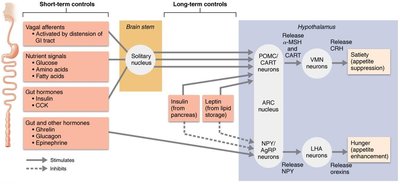
Feeding behavior is regulated by hypothalamic centers, neural signals from the digestive tract, bloodborne signals, hormones, and psychological factors. Short-term regulation involves neural and nutrient signals, gut hormones, and ghrelin. Long-term regulation is mediated by leptin, which suppresses appetite and protects against weight loss during nutritional deprivation.
Metabolic Rate and Body Temperature Regulation
Metabolic Rate
Metabolic rate is the total heat produced by chemical reactions and mechanical work. It can be measured directly (calorimeter) or indirectly (respirometer). Basal metabolic rate (BMR) reflects energy needed for essential activities and is influenced by age, gender, temperature, stress, and thyroxine.
Regulation of Body Temperature
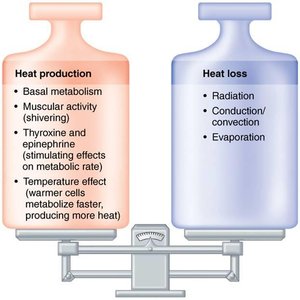
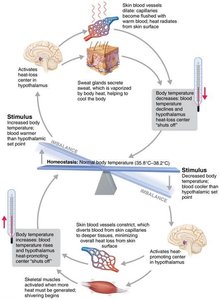
Body temperature is maintained by balancing heat production and heat loss. At rest, organs generate most heat; during exercise, skeletal muscles contribute significantly. Normal body temperature is 37°C (98.6°F), optimal for enzyme activity. Heat transfer occurs via radiation, conduction, convection, and evaporation.

Mechanisms of Body Temperature Regulation
The hypothalamus integrates thermoregulatory responses, receiving input from peripheral and central thermoreceptors. Heat-promoting mechanisms include vasoconstriction, shivering, increased metabolic rate, and behavioral modifications. Heat-loss mechanisms include vasodilation, enhanced sweating, and voluntary measures.
Developmental Aspects and Clinical Imbalances
Developmental Aspects
Nutrition and metabolism are critical during early development. Lack of calories, proteins, or vitamins in utero and early childhood can lead to mental deficits. Metabolic rate declines with age, and medications or excessive alcohol can affect nutrition and metabolism.
Clinical Imbalances
Phenylketonuria (PKU): Inability to metabolize phenylalanine, leading to neurotoxicity and brain damage.
Galactosemia: Deficit of enzymes converting galactose to glucose, causing mental deficits.
Glycogen Storage Disease: Enzyme deficiency leads to glycogen buildup in liver and muscle.
Metabolic Syndrome: Cluster of risk factors (increased waist circumference, blood pressure, glucose, triglycerides, decreased HDL) that increase risk of heart disease and diabetes.