 Back
BackMetabolism, Nutrition, and Energetics: Study Guide for Anatomy & Physiology II
Study Guide - Smart Notes
 Tailored notes based on your materials, expanded with key definitions, examples, and context.
Metabolism and Nutrient Pool
Introduction to Metabolism
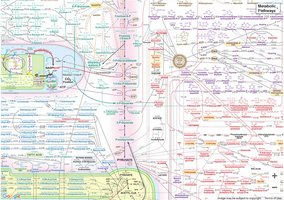
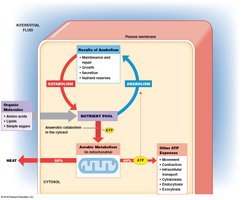
Metabolism encompasses all chemical reactions occurring within an organism or cell, essential for maintaining life. It includes both the breakdown and synthesis of organic molecules.
Catabolism: Breakdown of organic substances to release energy.
Anabolism: Synthesis of new organic molecules for growth, repair, and maintenance.
Metabolic turnover: Continuous replacement of organic molecules.
Organic molecules: Compounds containing carbon.
Nutrient Pool
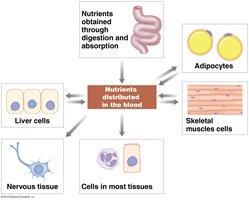
The nutrient pool refers to the accessible reserve of organic substrates used for metabolic turnover or energy production. Nutrients are absorbed from the GI tract, and when insufficient, energy reserves are mobilized from the liver, adipose tissue, and skeletal muscle.
Liver: Stores triglycerides (fatty acids) and glycogen (glucose).
Adipose tissue: Stores triglycerides.
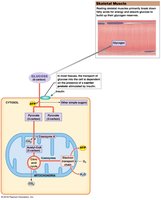
Skeletal muscle: Stores glycogen and proteins (amino acids).
Cellular Metabolism and Pathways
Anaerobic and Aerobic Metabolism
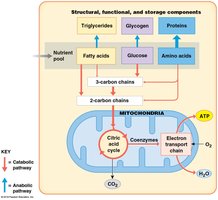
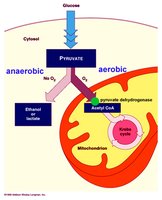
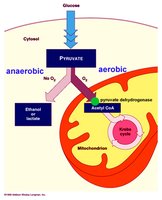
Cellular metabolism involves metabolic pathways that can be anaerobic (without oxygen) or aerobic (with oxygen).
Anaerobic metabolism: Occurs in the cytoplasm, does not require oxygen.
Aerobic metabolism: Occurs in mitochondria, requires oxygen.
Glycolysis
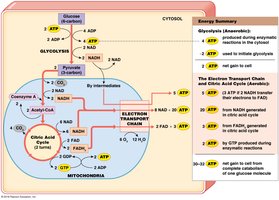
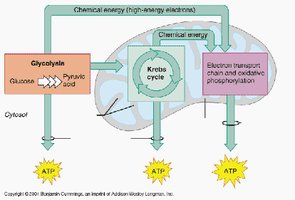
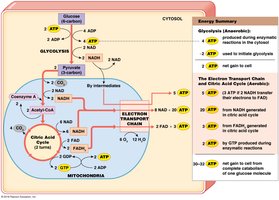
Glycolysis is an anaerobic process that takes place in the cytoplasm. It uses one glucose molecule to produce a net of 2 ATP, 2 NADH, and 2 pyruvate.
ATP: Adenosine triphosphate, the cell's energy currency.
NADH: Electron carrier used in later stages of metabolism.
Pyruvate: End product of glycolysis, can enter aerobic or anaerobic pathways.
Citric Acid Cycle (Krebs Cycle)
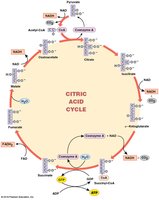
The citric acid cycle is an aerobic process occurring in mitochondria. Pyruvate is converted to acetyl-CoA, which enters the cycle. Each cycle produces a net of 1 ATP per pyruvate (2 ATP per glucose).
Acetyl-CoA: Entry molecule for the citric acid cycle.
ATP: Energy produced in the cycle.
Oxidative Phosphorylation and Electron Transport Chain (ETC)
The ETC is the final stage of aerobic metabolism, requiring oxygen and generating approximately 32 ATP per glucose. It is responsible for more than 90% of ATP used by body cells. 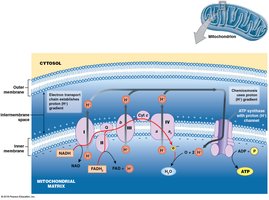
Overall ATP Yield
1 molecule of glucose generates 30–32 molecules of ATP.
Nutrient Metabolism
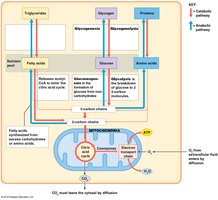
Glucose Metabolism
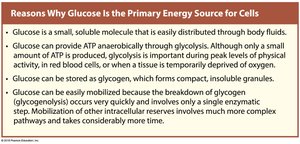
Glycogenesis: Formation of glycogen from glucose.
Glycogenolysis: Breakdown of glycogen into glucose.
Gluconeogenesis: Formation of glucose from non-carbohydrate sources.
Forms and Storage of Biomolecules
Lipids: Stored as triglycerides in adipose tissue.
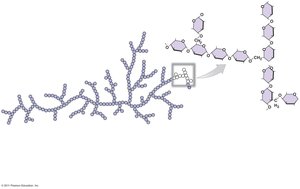
Carbohydrates: Stored as glycogen in liver and muscle.
Proteins: Stored as structural and functional proteins in muscle and other tissues.
Digestive Process Overview
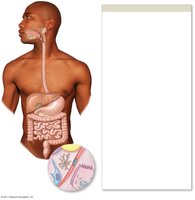
Digestive Tract Functions
The digestive tract processes food through mechanical and chemical digestion, absorption, and elimination.
Oral cavity: Mechanical processing and chemical digestion of carbohydrates and lipids.
Stomach: Acidic chemical digestion.
Duodenum: Enzymatic breakdown of all organic molecules.
Jejunum & Ileum: Nutrient absorption.
Large intestine: Water reabsorption, nutrient and vitamin production by bacteria, feces elimination.
Carbohydrate Digestion and Absorption
Carbohydrate Digestion
Carbohydrates are the preferred substrate for catabolism and ATP production during rest. Digestion occurs in several stages:
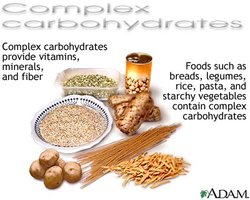
Mouth: Salivary amylase digests complex carbohydrates.
Stomach: Enzyme is denatured.
Duodenum: Pancreatic alpha-amylase continues digestion.
Jejunum: Enzymes finish digestion to monosaccharides.
Large intestine: Indigestible carbs are metabolized by colonic bacteria.
Forms of Carbohydrates
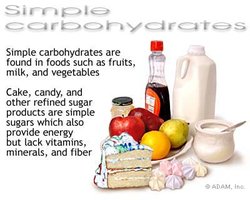
Monosaccharides: Glucose, fructose, galactose.
Disaccharides: Maltose, sucrose, lactose.
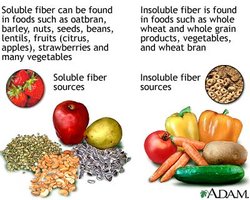
Polysaccharides: Glycogen, starch, fiber.
Lactose Intolerance
Lactose intolerance is caused by insufficient production of lactase enzyme, leading to symptoms such as bloating, gas, cramps, and diarrhea after consuming lactose-containing foods.
Treatments: Avoid lactose, take enzyme supplements, consume lactose-free products.
Carbohydrate Absorption and Transport
Carbohydrates are absorbed into small intestine epithelial cells, enter villi capillaries, travel to the liver, and are released as glucose or stored as glycogen. 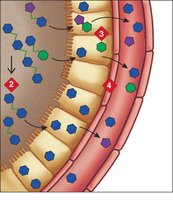
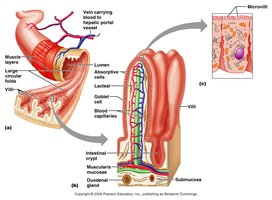
Hepatic Portal Vein
The hepatic portal vein carries blood from intestines and spleen to the liver, where nutrients are processed before entering systemic circulation. 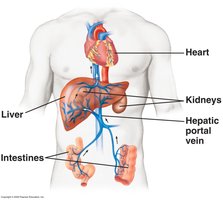
Lipid Digestion and Absorption
Lipid Digestion
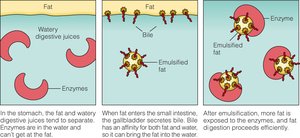
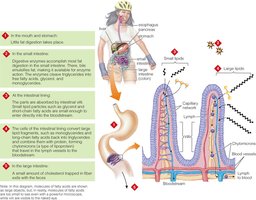
Lipid digestion begins in the mouth with lingual lipase, continues in the stomach, and is completed in the duodenum with bile salts and pancreatic lipase.
Bile salts: Emulsify lipids into smaller droplets.
Pancreatic lipase: Digests triglycerides.
Micelles: Formed for absorption.
Lipid Absorption and Transport
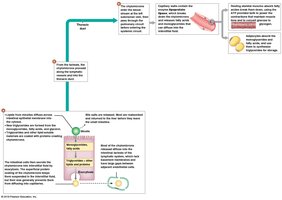
Lipids from micelles diffuse into small intestine epithelial cells, are repackaged as triglycerides in chylomicrons, released via exocytosis, and transported through lymphatic vessels to the bloodstream. Lipoprotein lipase breaks down chylomicrons, releasing digested lipids into tissues. 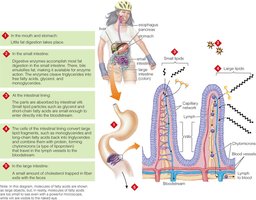
Cholesterol and Lipoproteins
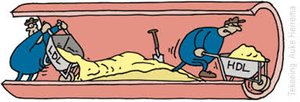
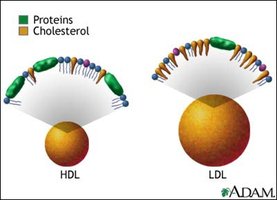
Low-density lipoproteins (LDL): "Bad" cholesterol; carries cholesterol from liver to tissues.
High-density lipoproteins (HDL): "Good" cholesterol; carries cholesterol from tissues to liver for breakdown.
Protein Digestion and Absorption
Protein Digestion
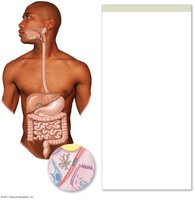
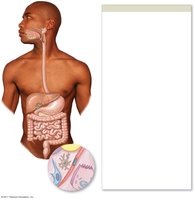
Protein digestion involves mechanical processing in the mouth, denaturation and enzymatic breakdown in the stomach, and further enzymatic digestion in the duodenum.
Pepsin: Stomach enzyme that attacks peptide bonds.
Pancreatic enzymes: Digest proteins into amino acids.
Protein Absorption
Amino acids are absorbed into small intestine epithelial cells and transported to capillaries. 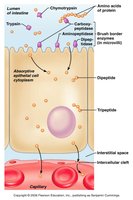
Absorptive and Postabsorptive States
Absorptive State
The absorptive state occurs after a meal, lasting about 4 hours, during which nutrient absorption is regulated primarily by insulin.
Postabsorptive State
The postabsorptive state occurs when nutrient absorption is not happening, and the body relies on energy reserves, regulated by hormones such as glucagon.
Vitamins and Balanced Diet
Vitamins
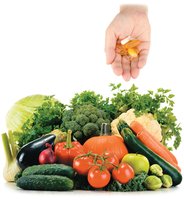
Vitamins are organic compounds required in small amounts for essential metabolic activities.
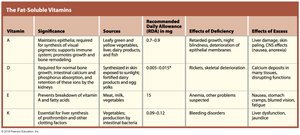
Fat-soluble vitamins: A, D, E, K
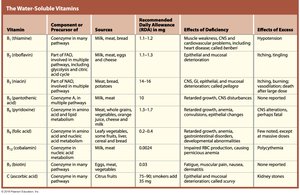
Water-soluble vitamins: B vitamins and C
A Balanced Diet
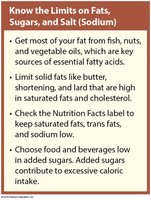
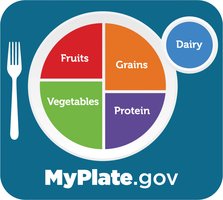
A balanced diet contains all ingredients required for homeostasis, including substrates for ATP production, essential amino acids, fatty acids, vitamins, electrolytes, and water. 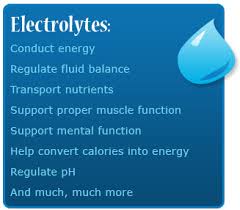
Caloric Value and Energetics
Calorie Definition
A calorie is a measurement of food energy in the form of heat.
Proteins: 4 cal/g
Carbohydrates: 4 cal/g
Lipids: 9 cal/g
Basal Metabolic Rate (BMR)
BMR is the minimum resting energy expenditure of an awake, alert person, averaging 70 cal/hr or 1680 cal/day. It is affected by weight, size, and activity level.
Eating and Metabolic Disorders
Eating Disorders
Anorexia nervosa: Self-induced starvation or loss of appetite; weight commonly 30% below normal.
Bulimia: Binge eating followed by purging; more common than anorexia.
Metabolic Disorders
Obesity: Being more than 20% over ideal weight; linked to diabetes and hypertension.
High cholesterol: Low HDL and high LDL are risk factors.
Protein deficiency disease (Kwashiorkor): Caused by insufficient protein intake, leading to edema.
Malnutrition: Unhealthy state due to inadequate or excessive nutrient absorption.
Control of Appetite
Appetite Regulation
Appetite is controlled by two areas of the hypothalamus:
Feeding center: Stimulates hunger.
Satiety center: Stimulates satisfaction/fullness.
Leptin
Leptin is a hormone secreted by adipose tissue that signals satiety and regulates appetite and energy output.
Feeding Behaviors
Feeding behaviors are influenced by neural signals from the GI tract, hormones, body temperature, and psychological factors.
Key Equations
ATP Yield from Glucose
Caloric Value
Basal Metabolic Rate
Tables
Fat-Soluble Vitamins
Vitamin | Significance | Sources | Recommended Daily Allowance (RDA) in mg | Effects of Deficiency | Effects of Excess |
|---|---|---|---|---|---|
A | Maintains epithelial, required for synthesis of visual pigments | Leafy green and yellow vegetables | 0.7–0.9 | Retarded growth, night blindness | Blurred vision, dizziness |
D | For normal bone growth | Synthesized in skin, fortified dairy products, egg yolks | 0.005–0.015 | Rickets, skeletal deterioration | Calcium deposits in tissues |
E | Antioxidant | Vegetables, seeds | 10 | Anemia, other problems | Nausea, stomach cramps, fatigue |
K | For liver synthesis of prothrombin | Vegetables, produced by intestinal bacteria | 0.08–0.12 | Bleeding disorders | None |
Water-Soluble Vitamins
Vitamin | Component or Precursor of | Sources | RDA in mg | Effects of Deficiency | Effects of Excess |
|---|---|---|---|---|---|
B1 (thiamine) | Coenzyme in many pathways | Milk, meat, bread | 1.1–1.2 | Muscle weakness, CNS and GI disturbances | Hypotension |
B2 (riboflavin) | Part of FAD, involved in multiple pathways | Milk, meat, eggs | 1.3–1.6 | Epithelial and mucosal deterioration | Itching, tingling |
B3 (niacin) | Part of NAD, involved in multiple pathways | Milk, bread, potatoes | 13–17 | CNS, GI, epithelial deterioration | Vasodilation, liver dysfunction |
B5 (pantothenic acid) | Coenzyme A | Meat, milk, eggs | 4–7 | Retarded growth, CNS disturbances | Rare, may cause diarrhea |
B6 (pyridoxine) | Coenzyme in amino acid metabolism | Meat, whole grains | 1.3–1.7 | Retarded growth, anemia | None |
B7 (biotin) | Coenzyme in many pathways | Eggs, meat, vegetables | 0.03–0.06 | Fatigue, muscular pain | Rare, may cause nausea |
B9 (folic acid) | Coenzyme in nucleic acid metabolism | Leafy vegetables | 0.4 | Retarded growth, anemia | None |
B12 (cobalamin) | Coenzyme in nucleic acid metabolism | Meat, milk | 0.002 | Pernicious anemia | None |
C (ascorbic acid) | Coenzyme in many pathways | Citrus fruits | 75–90 | Scurvy | Kidney stones |
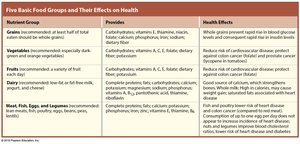
Five Basic Food Groups and Their Effects on Health
Nutrient Group | Provides | Health Effects |
|---|---|---|
Grains | Carbohydrates, vitamins, minerals | Whole grains prevent rapid rise in blood glucose |
Vegetables | Carbohydrates, vitamins, minerals | Reduce risk of cardiovascular disease |
Fruits | Carbohydrates, vitamins, minerals | Reduce risk of cardiovascular disease |
Dairy | Calcium, protein, vitamins | Support bone health |
Meat, Fish, Eggs, Legumes | Protein, vitamins, minerals | Support muscle and tissue health |
Summary
This study guide covers the essential concepts of metabolism, nutrient processing, digestion, absorption, and the importance of a balanced diet, as well as metabolic and eating disorders. It provides a comprehensive overview suitable for exam preparation in Anatomy & Physiology II.
