 Back
BackChapter 9
Study Guide - Smart Notes
 Tailored notes based on your materials, expanded with key definitions, examples, and context.
Microbiological Laboratory Safety
Introduction to Laboratory Safety
Laboratory safety is essential for protecting personnel, the environment, and the community from biological, chemical, physical, and radiological hazards. This section outlines the main safety issues, regulatory agencies, and the importance of biosafety in laboratory settings.
Biosafety involves the safe handling of biological agents such as bacteria, viruses, fungi, and their toxins, which can cause mild to severe health effects.
Regulatory agencies include OSHA (Occupational Safety and Health Administration), CDC (Centers for Disease Control and Prevention), WHO (World Health Organization), and HHS (U.S. Department of Health and Human Services).
Laboratory safety also encompasses chemical, radiation, noise, and thermal hazards, as well as the use of appropriate safety equipment and personal protective equipment (PPE).
Biosafety Levels (BSLs)
Overview of Biosafety Levels
Biosafety levels (BSLs) are a series of protections designated for laboratory work with infectious agents. The levels range from BSL-1 (lowest risk) to BSL-4 (highest risk), each with specific containment and procedural requirements.
BSL-1: For work with well-characterized agents not known to consistently cause disease in healthy adults.
BSL-2: For agents that pose moderate hazards to personnel and the environment.
BSL-3: For agents that may cause serious or potentially lethal disease through inhalation.
BSL-4: For dangerous and exotic agents with a high risk of life-threatening disease, often with no available treatment or vaccine.
Risk Groups (RGs)
The National Institutes of Health (NIH) introduced the concept of "Risk Groups" (RGs), classifying agents into four groups based on their pathogenicity, mode of transmission, and availability of preventive measures or treatments.
Examples of Organisms by Biosafety Level
BSL Level | Examples of Organisms |
|---|---|
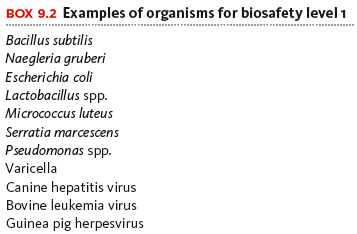
BSL-1 | Bacillus subtilis, Naegleria gruberi, Escherichia coli, Lactobacillus spp., Micrococcus luteus, Serratia marcescens, Pseudomonas spp., Varicella, Canine hepatitis virus, Bovine leukemia virus, Guinea pig herpesvirus |
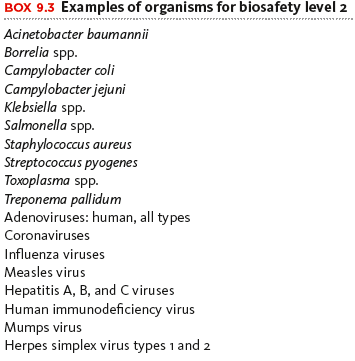
BSL-2 | Acinetobacter baumannii, Borrelia spp., Campylobacter coli, Campylobacter jejuni, Klebsiella spp., Salmonella spp., Staphylococcus aureus, Streptococcus pyogenes, Toxoplasma spp., Treponema pallidum, Adenoviruses, Coronaviruses, Influenza viruses, Measles virus, Hepatitis A/B/C viruses, HIV, Mumps virus, Herpes simplex virus types 1 and 2 |
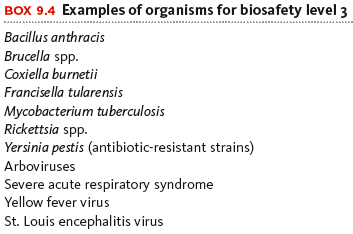
BSL-3 | Bacillus anthracis, Brucella spp., Coxiella burnetii, Francisella tularensis, Mycobacterium tuberculosis, Rickettsia spp., Yersinia pestis (antibiotic-resistant strains), Arboviruses, Severe acute respiratory syndrome, Yellow fever virus, St. Louis encephalitis virus |
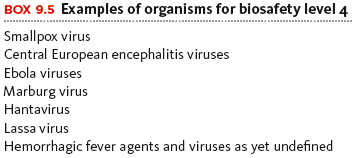
BSL-4 | Smallpox virus, Central European encephalitis viruses, Ebola viruses, Marburg virus, Hantavirus, Lassa virus, Hemorrhagic fever agents and undefined viruses |
Containment and Safety Practices by BSL
BSL-1: Standard microbiological practices; no special primary or secondary barriers required.
BSL-2: Limited access, biohazard warning signs, "sharps" precautions, biosafety manual, and physical containment devices.
BSL-3: Controlled access, decontamination of all waste, protective clothing, and all work done in biosafety cabinets or other containment devices.
BSL-4: Isolated facilities, specialized ventilation, personnel must change clothes before entering, shower upon exit, and all materials decontaminated before leaving the facility.
Chemical Safety in the Laboratory
Safe Handling of Chemicals
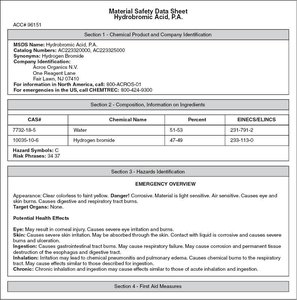
Laboratories must follow strict guidelines for the safe use, storage, and disposal of chemicals. The NIOSH Pocket Guide to Chemical Hazards and Material Safety Data Sheets (MSDS) provide essential information for chemical safety.
MSDSs include chemical name, formula, properties, incompatibilities, personal protection, first aid, exposure routes, and target organs.
OSHA and NIOSH provide labeling guidelines and require a chemical hygiene plan for all laboratories.
Radiation Safety
Types and Hazards of Radiation
Laboratory personnel may be exposed to ionizing (e.g., radioactive chemicals) or nonionizing (e.g., UV light) radiation. Proper shielding and monitoring are essential to minimize exposure and prevent radiation sickness.
Radiation exposure can cause damage to bone marrow, gastrointestinal organs, central nervous system, and may be fatal without treatment.
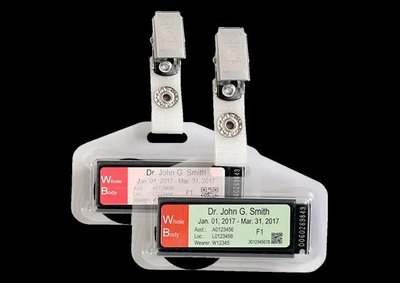
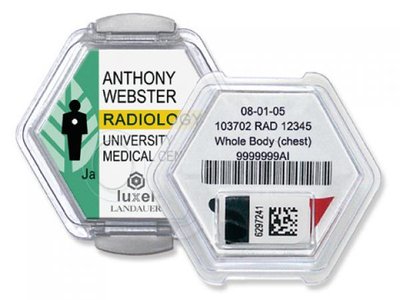
Personnel must use appropriate shielding and wear monitoring devices to track exposure.
Physical Hazards in the Laboratory
Noise and Thermal Hazards
Laboratory equipment can generate damaging noise levels and extreme temperatures, both of which require protective measures.
Hearing protection is necessary for noisy environments; damage is often cumulative and irreversible.
Protective gear, such as gloves and lab coats, should be used when handling hot or cold items.
Laboratory Safety Equipment
Fire Extinguishers
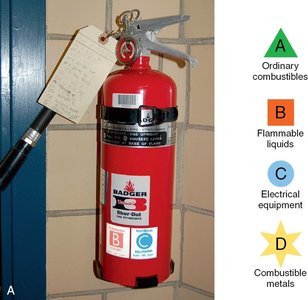
Fire extinguishers are classified by the type of fire they are designed to extinguish. Laboratories must have appropriate extinguishers for the hazards present.
Type | Class of Fire |
|---|---|
A | Ordinary combustibles (wood, paper, cloth) |
B | Flammable liquids (grease, gasoline, oil) |
C | Electrical fires |
D | Flammable metals (magnesium, sodium, lithium) |
K | Grease and cooking fires |
Multipurpose | Effective against A, B, and C fires |

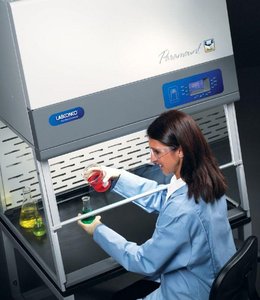
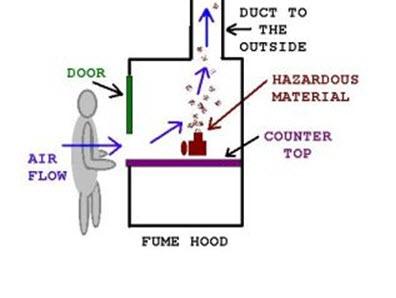
Fume Hoods and Biosafety Cabinets
Fume hoods and biosafety cabinets are essential for minimizing exposure to hazardous chemicals and biological agents. They provide ventilation and containment for safe laboratory work.
General purpose hoods: Used for chemical fumes.
Radioisotope hoods: For volatile radioactive materials.
Biosafety cabinets: For biohazardous agents.
Perchloric acid hoods: For procedures using perchloric acid.
Autoclaves
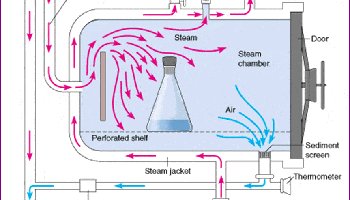
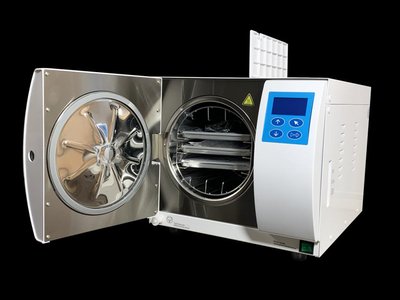
Autoclaves are used to sterilize laboratory equipment and waste by using high-pressure saturated steam. Proper use is critical for effective sterilization and safety.
All items must be compatible with autoclave conditions.
Regular maintenance and validation are required.
Showers and Eyewashes
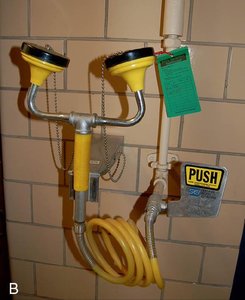
Emergency showers and eyewash stations are required in laboratories to provide immediate decontamination in case of chemical spills or splashes.
Personnel must know the location and proper use of these stations.

Waste Disposal
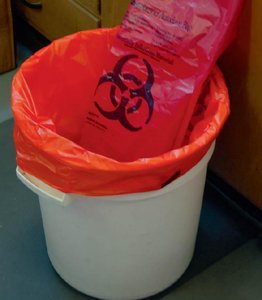
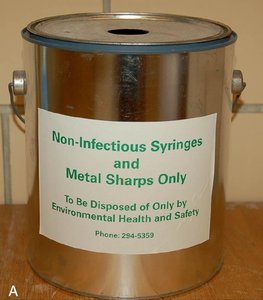
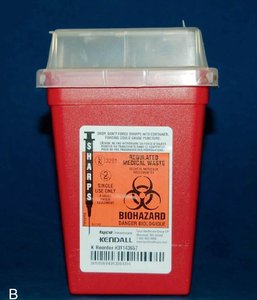
Proper disposal of laboratory waste is essential for safety and environmental protection. Different types of waste require specific containers and procedures.
Broken glass: Collected in designated containers.
Biohazardous waste: Placed in labeled biohazard bags or containers.
Sharps: Disposed of in puncture-resistant sharps containers.

Personal Protective Equipment (PPE)
Types and Uses of PPE
Personal protective equipment is essential for minimizing exposure to laboratory hazards. The selection of PPE depends on the specific risks present in the laboratory environment.
Gloves: Latex or non-latex; protect hands from chemicals and biological agents.
Respiratory protection: Masks and respirators for airborne hazards.
Clothing: Laboratory coats must be worn at all times in the lab.
Eye protection: Safety goggles or face shields are mandatory; regular glasses are not sufficient.
Safety in Healthcare Facilities
Physicians’ Offices and Clinics
Healthcare facilities must have documented safety procedures, including training for blood-borne pathogens, infection control, and safe management of medical devices and medications.
Regulatory compliance and record keeping are essential for patient and worker safety.
Hospital Safety
Hospitals have complex safety requirements, including industrial hygiene, hazard communication, waste disposal, disaster preparation, and risk management. OSHA regulations apply to all hospital operations.
Nursing Homes and Personal Care Facilities
Nursing homes have high rates of injury and illness among healthcare workers. Ergonomic guidelines, infection control, and prevention of antibiotic-resistant infections (e.g., MRSA) are critical concerns.
Emergency Response
Laboratory Emergency Procedures
All laboratory personnel must be familiar with emergency procedures, including hazardous waste operations, chemical and biological spill response, and the use of personal protective equipment. Regular training and drills are required to ensure preparedness.
