 Back
Nutrition and Metabolism: Macronutrients, Micronutrients, and Cellular Energy Pathways
Study Guide - Smart Notes
 Tailored notes based on your materials, expanded with key definitions, examples, and context.
Nutrition and Metabolism
Introduction to Nutrients
Nutrients are substances in food essential for growth, maintenance, and repair of the body. They are classified as macronutrients (carbohydrates, lipids, proteins), micronutrients (vitamins, minerals), and water. Essential nutrients must be obtained from the diet because the body cannot synthesize them.
Macronutrients: Carbohydrates, lipids, and proteins; provide energy and structural materials.
Micronutrients: Vitamins and minerals; required in small amounts for specific physiological functions.
Water: Vital for all biochemical reactions and considered a nutrient.
Energy value is measured in kilocalories (kcal), where one dietary "Calorie" equals 1 kcal.
Dietary Guidelines
The USDA's MyPlate provides a visual guide for balanced eating, emphasizing appropriate portions of fruits, vegetables, grains, protein, and dairy.
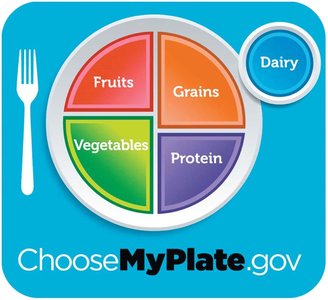
Eat a variety of foods from all groups.
Prioritize whole grains, fruits, and vegetables.
Limit intake of processed foods and added sugars.
Macronutrients
Carbohydrates
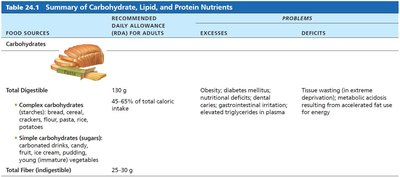
Carbohydrates are the primary energy source for most cells, especially neurons and red blood cells. They are classified as complex (starches, fibers) or simple (sugars).
Sources: Grains, vegetables, fruits, sugars, milk.
Uses: Glucose is used to produce ATP; excess is stored as glycogen or fat.
Dietary Recommendation: 45–65% of total calories, mainly from complex carbohydrates.
Health: Excess simple sugars can lead to obesity and metabolic disorders.
Food Sources | Recommended Daily Allowance | Excesses | Deficits |
|---|---|---|---|
Complex carbs: bread, cereal, pasta, rice, potatoes; Simple carbs: sugar, fruit, honey | 130 g; 45–65% of total caloric intake | Obesity, diabetes, nutritional deficits | Tissue wasting, metabolic acidosis |
Lipids
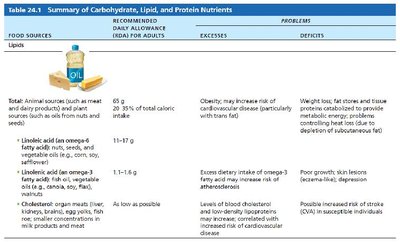
Lipids provide energy, insulation, and are essential for cell membranes and hormone synthesis. They include triglycerides, phospholipids, and cholesterol.
Sources: Animal fats, dairy, oils, nuts, seeds.
Essential Fatty Acids: Linoleic (omega-6) and linolenic (omega-3) acids must be obtained from the diet.
Uses: Energy storage, cell membrane structure, precursor for hormones.
Dietary Recommendation: 20–35% of total caloric intake; saturated fats <10%.
Health: Excess leads to obesity, cardiovascular disease; deficiency affects growth and skin health.
Food Sources | Recommended Daily Allowance | Excesses | Deficits |
|---|---|---|---|
Animal/plant oils, nuts, seeds | 65 g; 20–35% of total caloric intake | Obesity, cardiovascular risk | Weight loss, poor growth |
Proteins
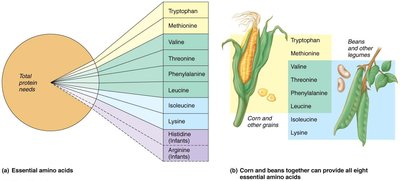
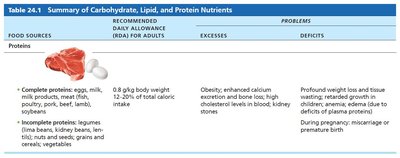
Proteins are required for tissue structure, enzymes, and hormones. Complete proteins contain all essential amino acids; incomplete proteins lack one or more.
Sources: Animal products (meat, eggs, dairy), soybeans, legumes, nuts, grains.
Uses: Structural (muscle, collagen), functional (enzymes, hormones).
Dietary Recommendation: 0.8 g/kg body weight; 12–20% of total caloric intake.
Health: Excess can strain kidneys; deficiency leads to tissue wasting and impaired growth.
Food Sources | Recommended Daily Allowance | Excesses | Deficits |
|---|---|---|---|
Meat, eggs, dairy, legumes, grains | 0.8 g/kg body weight; 12–20% of total caloric intake | Obesity, kidney stones | Weight loss, edema, impaired growth |
Micronutrients
Vitamins
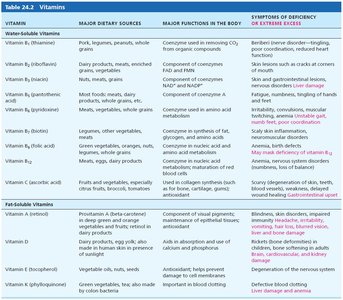
Vitamins are organic compounds that function mainly as coenzymes. They are classified as water-soluble (B complex, C) or fat-soluble (A, D, E, K).
Water-soluble: Not stored; excess excreted (e.g., B vitamins, vitamin C).
Fat-soluble: Stored in body (except K); excess can be toxic (e.g., vitamins A, D, E, K).
Sources: Fruits, vegetables, dairy, meats, grains.
Functions: Antioxidants, vision, bone health, blood clotting, metabolism.
Minerals
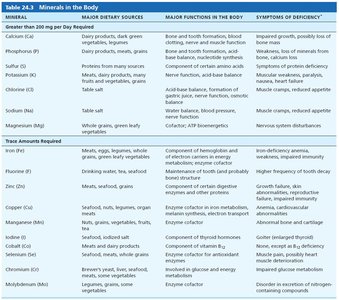
Minerals are inorganic elements required for various physiological processes, including bone formation, nerve function, and fluid balance.
Major minerals: Calcium, phosphorus, potassium, sulfur, sodium, chlorine, magnesium.
Trace minerals: Iron, iodine, zinc, etc.
Sources: Vegetables, dairy, meats, grains.
Functions: Bone structure, oxygen transport, enzyme function, electrolyte balance.
Metabolism
Overview of Metabolism
Metabolism is the sum of all biochemical reactions in the body. It includes anabolism (building molecules) and catabolism (breaking down molecules for energy).
Anabolism: Synthesis of large molecules from smaller ones (e.g., protein synthesis).
Catabolism: Breakdown of complex molecules into simpler ones (e.g., glycolysis).
Stages of Metabolism
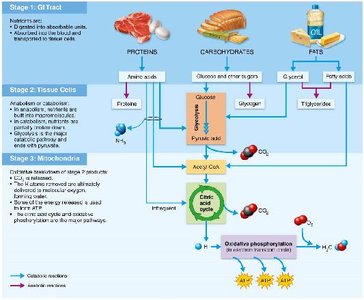
Metabolism of nutrients occurs in three stages:
Digestion, absorption, and transport to tissues.
Cellular processing (synthesis or breakdown in cytoplasm).
Oxidative breakdown in mitochondria to produce ATP.
Oxidation-Reduction and Coenzymes
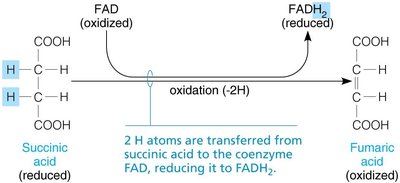
Oxidation-reduction (redox) reactions transfer energy via electrons. Coenzymes such as NAD+ and FAD are essential for these reactions.
Oxidation: Loss of electrons or hydrogen.
Reduction: Gain of electrons or hydrogen.
Key enzymes: Dehydrogenases (remove H), oxidases (transfer O).
ATP Synthesis Mechanisms
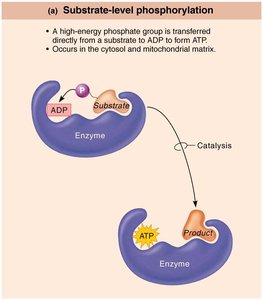
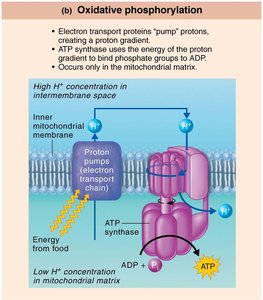
ATP is synthesized by two main mechanisms:
Substrate-level phosphorylation: Direct transfer of phosphate to ADP from a substrate.
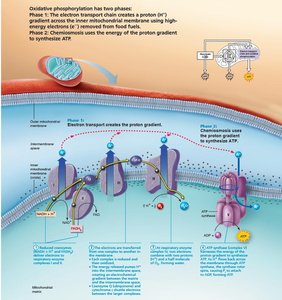
Oxidative phosphorylation: Indirect formation of ATP via electron transport chain and chemiosmosis.
Carbohydrate Metabolism
Glucose Catabolism
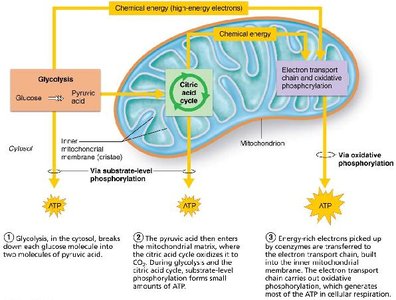
Glucose is the primary fuel for ATP production. Its complete oxidation involves glycolysis, the citric acid (Krebs) cycle, and the electron transport chain (ETC).
Overall reaction:
Pathways: Glycolysis (cytosol), Krebs cycle (mitochondria), ETC (mitochondria).
Glycolysis
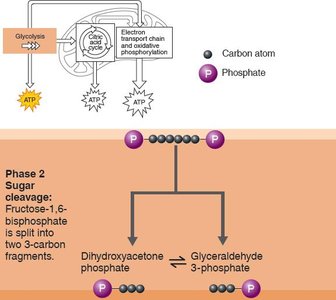
Glycolysis is a 10-step anaerobic pathway in the cytosol that breaks glucose into two pyruvic acid molecules. It consists of three phases:
Sugar activation: Glucose is phosphorylated twice, using 2 ATP.
Sugar cleavage: Fructose-1,6-bisphosphate splits into two 3-carbon fragments.
Sugar oxidation and ATP formation: Fragments are oxidized, producing NADH and ATP.
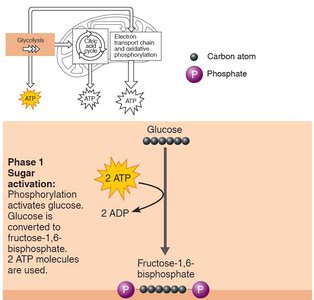
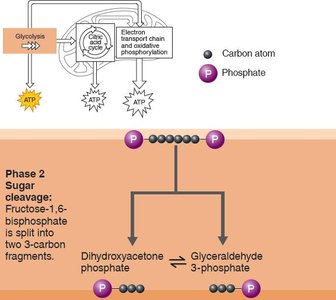
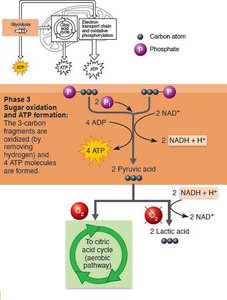
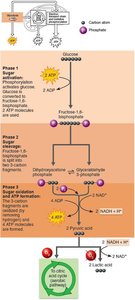
Net products: 2 pyruvic acid, 2 NADH, 2 ATP (net gain).
Fate of pyruvic acid: With O2, enters mitochondria; without O2, converted to lactic acid.
Krebs (Citric Acid) Cycle
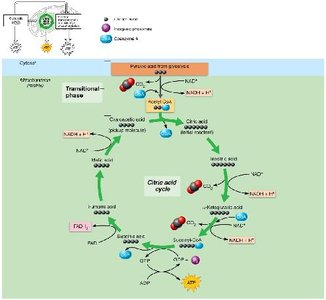
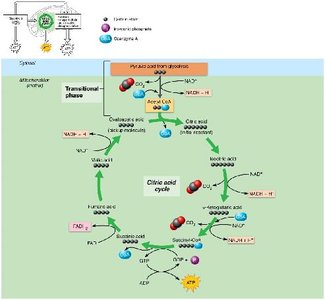
The Krebs cycle occurs in the mitochondrial matrix and completes the oxidation of glucose derivatives. Each turn produces CO2, NADH, FADH2, and ATP.
Transitional phase: Pyruvic acid is converted to acetyl CoA.
Cycle products (per glucose): 6 CO2, 8 NADH, 2 FADH2, 2 ATP.
Electron Transport Chain and Oxidative Phosphorylation
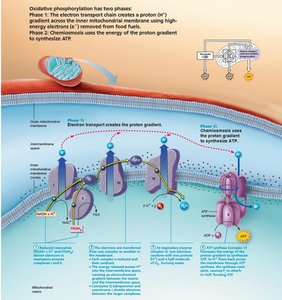
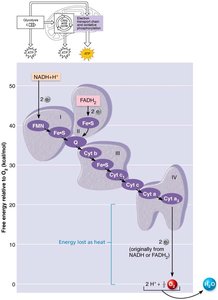
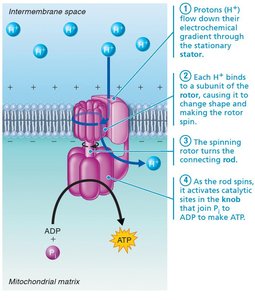
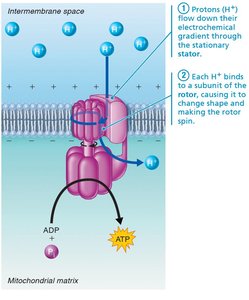
The ETC uses electrons from NADH and FADH2 to create a proton gradient, driving ATP synthesis via chemiosmosis. Oxygen is the final electron acceptor, forming water.
ETC: Series of protein complexes in the inner mitochondrial membrane.
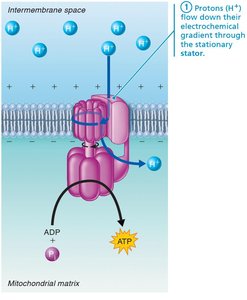
ATP synthase: Enzyme that synthesizes ATP as protons flow back into the matrix.
Summary of ATP Yield
Substrate-level phosphorylation: 4 ATP (2 from glycolysis, 2 from Krebs cycle).
Oxidative phosphorylation: 28 ATP (from NADH and FADH2).
Total: ~30 ATP per glucose (after accounting for transport costs).
Glycogenesis, Glycogenolysis, and Gluconeogenesis
Glycogenesis: Formation of glycogen from excess glucose (mainly in liver and muscle).
Glycogenolysis: Breakdown of glycogen to glucose when blood sugar is low.
Gluconeogenesis: Synthesis of glucose from non-carbohydrate sources (e.g., amino acids, glycerol) in the liver.
Lipid Metabolism
Lipid Catabolism and Anabolism
Lipids yield more energy per gram than carbohydrates or proteins. Triglycerides are broken down into fatty acids and glycerol, which are oxidized for energy or used in gluconeogenesis.
Beta oxidation: Fatty acids are broken into acetyl CoA units, which enter the Krebs cycle.
Lipogenesis: Synthesis of triglycerides from excess acetyl CoA.
Lipolysis: Breakdown of stored fats for energy.
Keton bodies: Produced from excess acetyl CoA during prolonged fasting or diabetes; can lead to ketoacidosis.
Conclusion
Understanding the roles of nutrients and the metabolic pathways that process them is essential for maintaining health and supporting cellular function. Proper nutrition and efficient metabolism are foundational to all physiological processes in the human body.
