 Back
BackNutrition and Metabolism: Study Notes for Anatomy & Physiology
Study Guide - Smart Notes
 Tailored notes based on your materials, expanded with key definitions, examples, and context.
Nutrition and Metabolism
Introduction to Nutrition and Metabolism
Nutrition and metabolism are fundamental concepts in Anatomy & Physiology, focusing on how the body acquires, processes, and utilizes nutrients for energy and maintenance. Proper nutrition involves a balance of macronutrients and micronutrients, while metabolism encompasses all chemical reactions that sustain life.
Nutrition: Key Concepts
Nutrition refers to the foods we eat and the nutrients they contain.
Proper nutrition requires a balance of carbohydrates, fats, proteins, and essential vitamins and minerals.
Malnutrition is a deficiency or imbalance in nutrient consumption.
Metabolism: Definitions and Processes
Metabolism is the process of using nutrient molecules as energy sources and building blocks for body molecules.
Catabolism breaks down food molecules, releasing stored energy (requires oxygen).
Anabolism builds nutrient molecules into complex compounds.
Metabolism is the sum of catabolism and anabolism, representing ongoing remodeling and maintenance in the body.
Macronutrients and Micronutrients
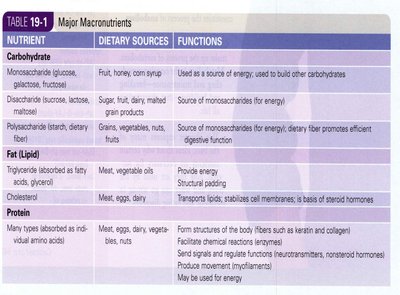
Major Macronutrients
The three primary macronutrients are carbohydrates, lipids (fats), and proteins. Micronutrients include vitamins and minerals, which are required in smaller amounts.
Nutrient | Dietary Sources | Functions |
|---|---|---|
Carbohydrate | Fruit, honey, sugar, grains, vegetables | Energy source, builds other carbohydrates, digestive function |
Fat (Lipid) | Meat, vegetable oils, dairy | Energy, structural padding, basis of steroid hormones |
Protein | Meat, eggs, dairy, vegetables | Body structure, chemical reactions, neurotransmitters, hormones, energy |
Carbohydrate Metabolism
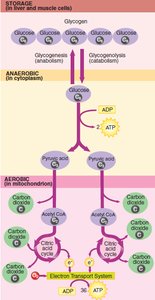
Carbohydrates are the preferred energy nutrient. Glucose metabolism involves three main chemical reactions: glycolysis, citric acid cycle (Krebs cycle), and electron transport system (ETS).
Glycolysis: Occurs in the cytoplasm, anaerobic, converts glucose to pyruvic acid and then acetyl CoA, yields small energy (ATP).
Citric Acid Cycle: Occurs in mitochondria, aerobic, converts acetyl CoA to CO2, yields energy in high-energy electrons.
Electron Transport System: Transfers electrons to produce ATP.
ATP: Cellular Energy Currency
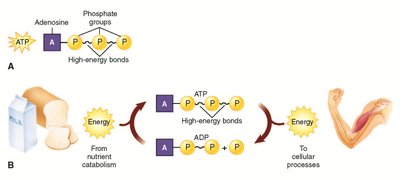
Adenosine triphosphate (ATP) is the molecule that stores and transfers energy within cells. Energy from nutrient catabolism is used to form ATP, which is then used for cellular processes.
ATP consists of adenosine and three phosphate groups with high-energy bonds.
Energy is released when ATP is converted to ADP (adenosine diphosphate).
Blood Glucose Regulation
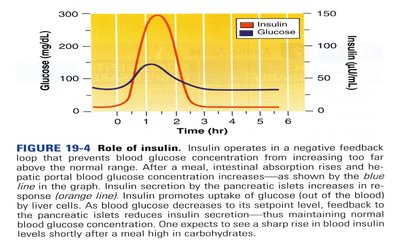
Blood glucose levels are tightly regulated, typically between 80–110 mg/100 mL during fasting. Insulin lowers blood glucose by promoting its uptake into cells and increasing glucose catabolism.
Insulin secretion increases after meals, reducing blood glucose.
Glucose is stored as glycogen in liver and muscle cells.
Fat and Protein Metabolism
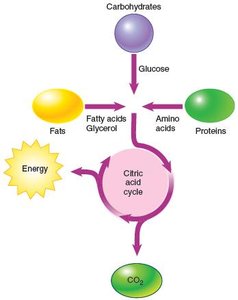
Fats are primarily used for energy and can be converted to glucose. Excess fat is stored as adipose tissue. Proteins are catabolized for energy only after carbohydrate and fat stores are depleted.
Gluconeogenesis: Conversion of amino acids to glucose.
Proteins are essential for body structure and function.
Amino Acids: Essential and Nonessential
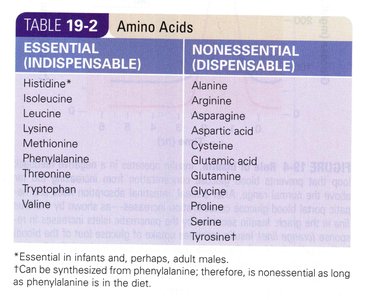
The body requires 20 types of amino acids. Essential amino acids must be obtained from the diet, while nonessential amino acids can be synthesized by the body.
Essential (Indispensable) | Nonessential (Dispensable) |
|---|---|
Histidine, Isoleucine, Leucine, Lysine, Methionine, Phenylalanine, Threonine, Tryptophan, Valine | Alanine, Arginine, Asparagine, Aspartic acid, Cysteine, Glutamic acid, Glutamine, Glycine, Proline, Serine, Tyrosine |
Vitamins and Minerals
Vitamins
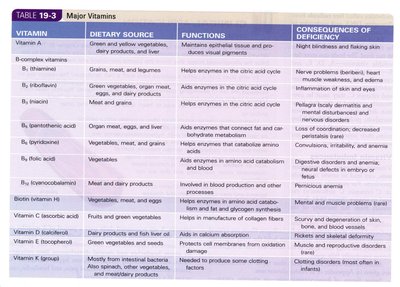
Vitamins are organic molecules required in small amounts for normal metabolism. Deficiency (avitaminosis) or excess (hypervitaminosis) can cause metabolic problems.
Most vitamins act as cofactors for enzymes.
Vitamin A: Vision, Vitamin D: Calcium homeostasis, Vitamin E: Antioxidant.
Vitamin | Dietary Source | Functions | Deficiency Consequences |
|---|---|---|---|
Vitamin A | Green/yellow vegetables, dairy | Maintains epithelial tissue | Night blindness, skin issues |
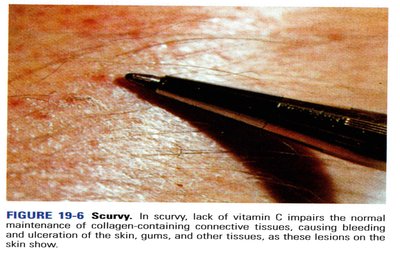
Vitamin C | Citrus fruits, vegetables | Collagen formation | Scurvy |
B vitamins | Grains, meats, eggs | Enzyme function | Various neurological and metabolic disorders |
Minerals
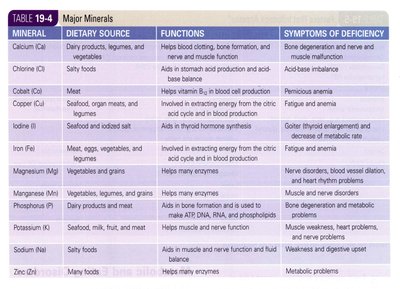
Minerals are inorganic molecules required for normal body function, including nerve conduction and enzyme activity.
Mineral | Dietary Source | Functions | Deficiency Symptoms |
|---|---|---|---|
Calcium | Dairy, legumes, vegetables | Bone formation, nerve function | Bone degeneration |
Iron | Meat, eggs, vegetables | Oxygen transport | Anemia |
Sodium | Salty foods | Nerve function | Weakness, metabolic issues |
Regulation of Food Intake and Metabolic Rate
Regulating Food Intake
Food intake is regulated by the appetite and satiety centers in the hypothalamus. Various factors stimulate or inhibit appetite.
Factors That Stimulate Appetite | Factors That Inhibit Appetite | Source |
|---|---|---|
Endogenous opioid peptides, emotions, food sensations, cortisol, ghrelin | Alpha-MSH, CART, CRH, emotions, food sensations, insulin, glucose | Hypothalamus, GI tract, liver, pancreas |
Metabolic Rates
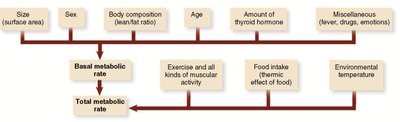
Basal metabolic rate (BMR) is the rate of metabolism under basal conditions. Total metabolic rate (TMR) is the total energy used per day. Factors affecting BMR and TMR include size, sex, body composition, age, thyroid hormone, and environmental temperature.
Metabolic and Eating Disorders
Metabolic Conditions
Disruption of normal metabolism can result from genetic conditions, hormonal imbalances, or complications of other diseases.
Inborn errors of metabolism: Genetic enzyme deficiencies.
Hormonal imbalances: Affect metabolic processes.
Eating Disorders
Anorexia nervosa: Chronic refusal to eat, often due to fear of obesity.
Bulimia: Alternating periods of food craving and self-denial, sometimes with self-induced vomiting.
Obesity: Excessive fat accumulation, may be a symptom of an eating disorder.
Protein-Calorie Malnutrition (PCM)
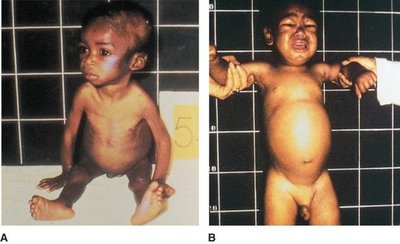
PCM results from a deficiency of calories and proteins. Marasmus is caused by overall lack of calories and protein, while kwashiorkor is caused by lack of protein with sufficient calories.
Marasmus: Tissue wasting, fluid and electrolyte imbalance.
Kwashiorkor: Ascites, flaking dermatitis.
Body Temperature Regulation
Thermoregulation
The hypothalamus regulates body temperature through blood flow to the skin and heat loss mechanisms: radiation, conduction, convection, and evaporation.
Radiation: Heat waves from blood and skin.
Conduction: Transfer of heat to the skin and environment.
Convection: Transfer of heat to cooler air.
Evaporation: Heat absorbed by sweat vaporization.
Abnormal Body Temperature
Fever: High body temperature due to systemic inflammation.
Malignant hyperthermia: Inherited condition causing hyperthermia and muscle rigidity.
Heat exhaustion: Fluid loss during overheating, may cause cramps.
Heatstroke: Failure of thermoregulatory mechanisms in warm environments.
Hypothermia: Reduced body temperature in cold environments.
Frostbite: Local tissue damage from extreme cold.

Energy Measurement in Nutrition
Measuring Energy
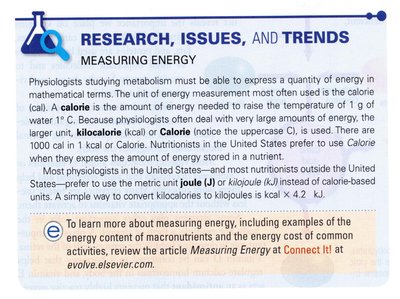
Energy in nutrition is measured in calories (cal) or kilocalories (kcal). One calorie is the energy needed to raise the temperature of 1 g of water by 1°C. Nutritionists often use kilocalories or joules (J).
1 kcal = 1000 cal
1 kcal ≈ 4.2 kJ
Clinical and Science Applications
Cholesterol
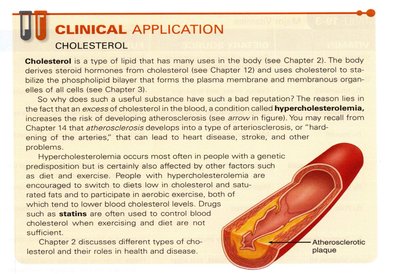
Cholesterol is a lipid used to form steroid hormones and stabilize cell membranes. Excess cholesterol (hypercholesterolemia) increases the risk of atherosclerosis, leading to heart disease and stroke.
Food Science
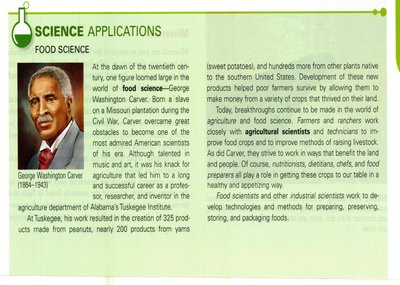
Food science involves the study of agricultural and industrial methods for producing, preserving, storing, and packaging foods. Innovations in food science have improved nutrition and food safety.
Review Questions
Which series of chemical reactions that break down glucose is anaerobic and takes place in the cytoplasm? Answer: Glycolysis
Identify the hormone that significantly lowers the blood glucose level. Answer: Insulin
An excess amount of cholesterol in the blood results in a condition called: Answer: Hypercholesterolemia
A vitamin C deficiency can lead to: Answer: Scurvy
The _____ rate is the rate at which food is catabolized under basal conditions. Answer: Basal metabolic rate
Which metabolic eating disorder is characterized by chronic refusal to eat, often because of an abnormal fear of becoming obese? Answer: Anorexia nervosa
Which condition related to body temperature is characterized by the inability to maintain a normal body temperature in extremely cold environments? Answer: Hypothermia
