 Back
BackNutrition and Metabolism: Study Notes for Anatomy & Physiology
Study Guide - Smart Notes
 Tailored notes based on your materials, expanded with key definitions, examples, and context.
Nutrition and Metabolism
Introduction to Nutrition and Metabolism
Nutrition and metabolism are fundamental concepts in Anatomy & Physiology, focusing on how the body obtains and utilizes nutrients for energy, growth, and maintenance. Proper nutrition involves a balance of macronutrients and micronutrients, while metabolism encompasses all chemical reactions that sustain life.
Nutrition: Definitions and Concepts
Key Terms
Nutrition: The study of nutrients in food, how the body uses them, and the relationship between diet, health, and disease.
Malnutrition: A deficiency or imbalance in nutrient intake.
Macronutrients: Nutrients required in large amounts (carbohydrates, fats, proteins).
Micronutrients: Nutrients required in small amounts (vitamins, minerals).
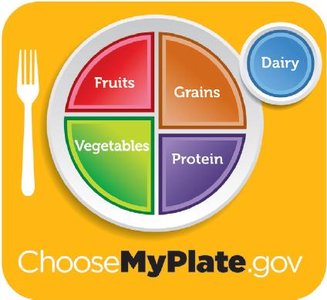
Major Macronutrients
Macronutrients provide energy and are essential for body structure and function. Each has unique dietary sources and physiological roles.
Nutrient | Dietary Sources | Functions |
|---|---|---|
Carbohydrate | Fruits, honey, grains, vegetables | Primary energy source; builds other carbohydrates |
Fat (Lipid) | Meat, vegetable oils, dairy | Energy storage, cell membrane structure, steroid hormone synthesis |
Protein | Meat, eggs, dairy, vegetables | Builds body structures, enzymes, hormones; energy source if needed |
Metabolism: Overview and Pathways
Definitions
Metabolism: The sum of all chemical reactions in the body, including catabolism and anabolism.
Catabolism: Breakdown of molecules to release energy.
Anabolism: Synthesis of complex molecules from simpler ones.
Carbohydrate Metabolism
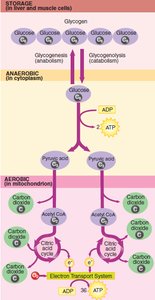
Carbohydrates are the body's preferred energy source. Glucose metabolism occurs in three main stages:
Glycolysis: Anaerobic breakdown of glucose to pyruvic acid in the cytoplasm, yielding 2 ATP.
Citric Acid Cycle (Krebs Cycle): Aerobic process in mitochondria converting acetyl CoA to CO2 and high-energy electrons.
Electron Transport System (ETS): Uses electrons to generate most ATP (about 32-34 ATP per glucose).
ATP: The Energy Currency
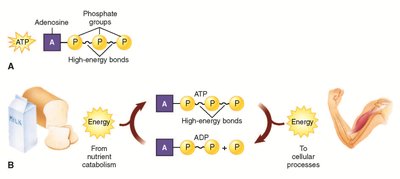
Adenosine triphosphate (ATP) stores and transfers energy for cellular processes. Energy from nutrient catabolism is used to synthesize ATP, which is then used for cellular work.
Blood Glucose Regulation
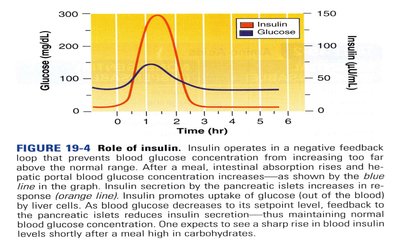
Blood glucose levels are tightly regulated, primarily by the hormone insulin, which lowers blood glucose by promoting cellular uptake and storage as glycogen. Normal fasting blood glucose is 80–110 mg/100 mL.
Fat and Protein Metabolism
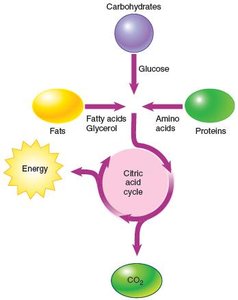
Fat Metabolism: Fats are catabolized for energy and can be converted to glucose. Excess fat is stored as adipose tissue.
Protein Metabolism: Proteins are used for energy only when carbohydrates and fats are insufficient. Gluconeogenesis converts amino acids to glucose.
Amino Acids: Essential and Nonessential
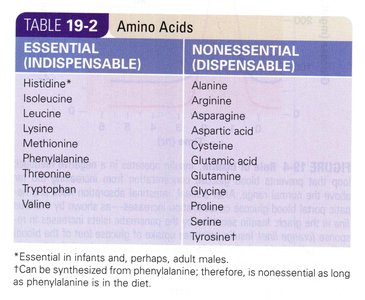
The body requires 20 amino acids; some are essential (must be obtained from diet), others are nonessential (can be synthesized by the body).
Essential (Indispensable) | Nonessential (Dispensable) |
|---|---|
Histidine, Isoleucine, Leucine, Lysine, Methionine, Phenylalanine, Threonine, Tryptophan, Valine | Alanine, Arginine, Asparagine, Aspartic acid, Cysteine, Glutamic acid, Glutamine, Glycine, Proline, Serine, Tyrosine |
Vitamins and Minerals
Vitamins
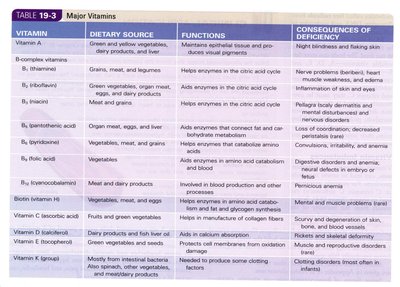
Vitamins are organic compounds required in small amounts for normal metabolism. Deficiency (avitaminosis) or excess (hypervitaminosis) can cause disease. Many vitamins act as coenzymes.
Vitamin | Dietary Source | Function | Deficiency Consequence |
|---|---|---|---|
Vitamin A | Green/yellow vegetables, dairy | Maintains epithelial tissue, vision | Night blindness |
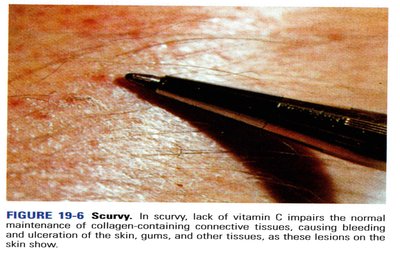
Vitamin C | Citrus fruits, vegetables | Collagen synthesis, antioxidant | Scurvy |
Vitamin D | Dairy, sunlight | Calcium absorption | Rickets |
Minerals
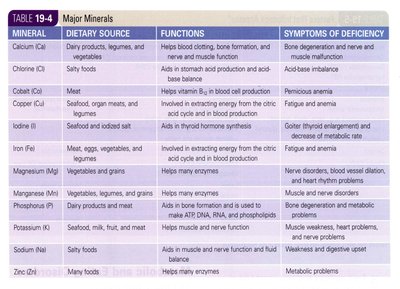
Minerals are inorganic elements essential for various physiological functions, including nerve conduction, bone structure, and enzyme activity.
Mineral | Dietary Source | Function | Deficiency Symptoms |
|---|---|---|---|
Calcium | Dairy, legumes, vegetables | Bone formation, nerve/muscle function | Bone degeneration |
Iron | Meat, eggs, vegetables | Oxygen transport (hemoglobin) | Anemia |
Regulation of Food Intake and Metabolic Rate
Appetite Regulation
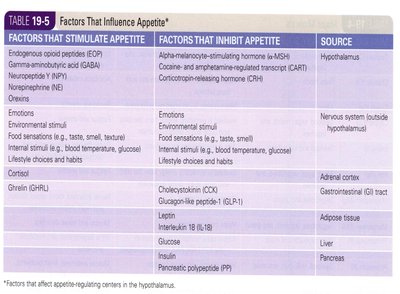
Food intake is regulated by the hypothalamus, which contains appetite and satiety centers. Various hormones and neural signals stimulate or inhibit appetite.
Stimulate Appetite | Inhibit Appetite | Source |
|---|---|---|
Endogenous opioid peptides, Ghrelin | Leptin, Insulin, Cholecystokinin | Hypothalamus, GI tract, pancreas |
Basal and Total Metabolic Rate
Basal metabolic rate (BMR) is the energy expended at rest in a neutral environment. Total metabolic rate (TMR) includes BMR plus energy used for activity and digestion. Factors affecting metabolic rate include age, sex, body composition, thyroid hormone levels, and temperature.
Metabolic and Eating Disorders
Common Disorders
Anorexia nervosa: Chronic refusal to eat, often due to fear of obesity.
Bulimia: Cycles of overeating followed by self-induced vomiting or fasting.
Obesity: Excessive body fat, may be related to metabolic or eating disorders.
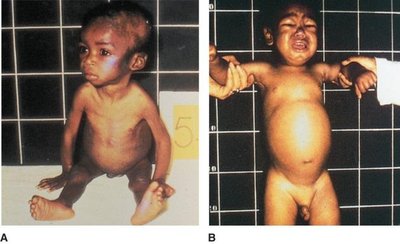
Protein-Calorie Malnutrition (PCM): Includes marasmus (overall deficiency) and kwashiorkor (protein deficiency with adequate calories).
Body Temperature Regulation
Thermoregulation
The hypothalamus maintains body temperature through mechanisms such as radiation, conduction, convection, and evaporation. Abnormal temperatures can result in fever, heat exhaustion, heatstroke, hypothermia, or frostbite.

Sample Review Questions
Which series of chemical reactions that break down glucose is anaerobic and takes place in the cytoplasm? Answer: Glycolysis
Identify the hormone that significantly lowers the blood glucose level. Answer: Insulin
An excess amount of cholesterol in the blood results in a condition called: Answer: Hypercholesterolemia
A vitamin C deficiency can lead to: Answer: Scurvy
The _____ rate is the rate at which food is catabolized under basal conditions. Answer: Basal metabolic rate
Which metabolic eating disorder is characterized by chronic refusal to eat, often because of an abnormal fear of becoming obese? Answer: Anorexia nervosa
Which condition related to body temperature is characterized by the inability to maintain a normal body temperature in extremely cold environments? Answer: Hypothermia
