 Back
BackOsseous Tissue: Structure and Function of Bone
Study Guide - Smart Notes
 Tailored notes based on your materials, expanded with key definitions, examples, and context.
Osseous Tissue: Bone Structure and Function
Functions of the Skeletal System
The skeletal system provides essential support and protection for the body, facilitates movement, and serves as a reservoir for minerals and lipids. It also plays a critical role in blood cell production.
Support: Acts as the structural framework for the attachment of tissues and organs.
Leverage: Bones serve as levers to change the position of the body.
Protection: Shields vital organs (e.g., skull protects the brain, rib cage protects the heart and lungs).
Storage of Minerals and Lipids: Stores calcium and lipids (in yellow bone marrow).
Blood Cell Production: Red bone marrow produces red blood cells (RBCs), white blood cells (WBCs), and platelets.
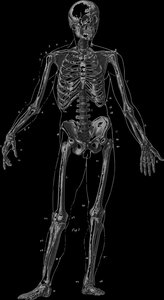
Bone Shape & Structure
Bones are classified by their shapes and internal structures, which are adapted to their functions.
Long Bones: Characterized by a shaft (diaphysis) and two ends (epiphyses). Example: femur.
Flat Bones: Thin, often curved, and provide protection. Example: skull.
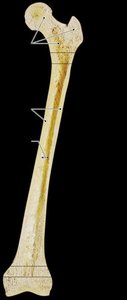
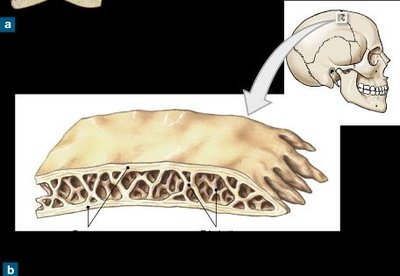
Bone Structure: Compact vs. Spongy Bone
Bones consist of two main types of osseous tissue: compact bone and spongy bone, each with distinct structural and functional properties.
Compact Bone (Cortical Bone): Dense, solid outer layer providing strength and protection. Contains osteons as its functional unit.
Spongy Bone (Trabecular Bone): Inner layer with a web-like structure, containing trabeculae and red bone marrow. Supports and absorbs shock.
Yellow Bone Marrow: Found in the medullary cavity of long bones; consists mainly of adipose tissue.
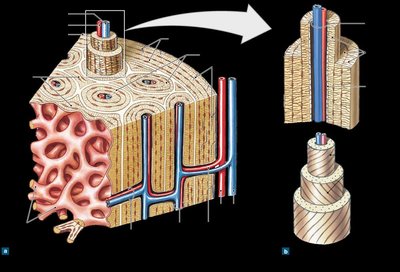
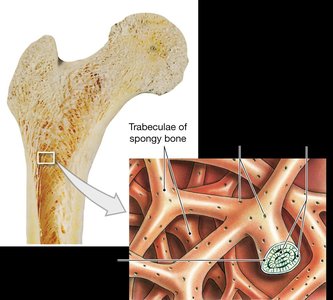
Comparison Table: Compact vs. Spongy Bone
Feature | Compact Bone | Spongy Bone |
|---|---|---|
Density | High | Low |
Functional Unit | Osteon | Trabeculae |
Location | Outer layer | Inner layer, epiphyses |
Marrow | Usually yellow | Red bone marrow |
Force Resistance | Bending, twisting | Shock absorption, multidirectional forces |
Coordinated Function of Compact & Spongy Bone
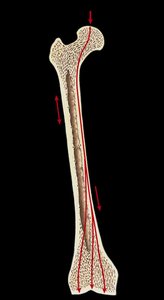
Compact and spongy bone work together to provide structural integrity and flexibility. For example, in the femur, compact bone resists weight-bearing stress, while spongy bone absorbs shock and distributes force.
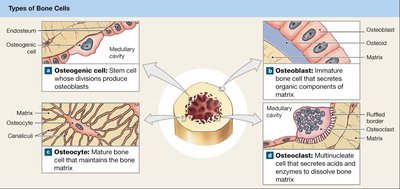
Types of Bone Cells
Bone tissue contains four main types of cells, each with specialized functions in bone formation, maintenance, and remodeling.
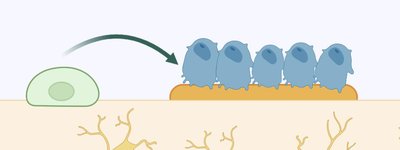
Osteogenic Cells: Stem cells found in the periosteum and endosteum; differentiate into osteoblasts.
Osteoblasts: "Builders" that produce new bone matrix (osteogenesis).
Osteocytes: Mature bone cells that maintain the bone matrix; communicate via canaliculi.
Osteoclasts: "Demolition crew" that break down bone matrix (osteolysis); derived from hematopoietic stem cells.
Bone Cell Development Pathway
Mesenchymal stem cell → Osteogenic cell → Osteoblast → Osteocyte
Hematopoietic stem cell → Osteoclast
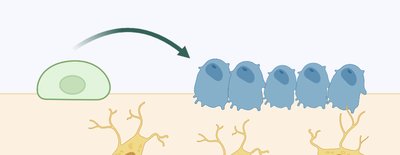
Bone Remodeling: Osteogenesis & Osteolysis
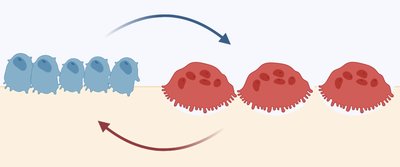
Bone remodeling is a continuous process involving the formation (osteogenesis) and resorption (osteolysis) of bone tissue. This dynamic balance maintains bone strength and health.
Osteogenesis (Ossification): Building new bone matrix, primarily by osteoblasts. Osteoid is the organic part of the matrix, mainly collagen, before mineralization.
Osteolysis: Breaking down bone matrix, primarily by osteoclasts. This process is tightly regulated and usually followed by osteogenesis.
Bone Matrix Composition: 2/3 hydroxyapatite (calcium and phosphate crystals), 1/3 collagen fibers, <2% cells.
Equation for Hydroxyapatite:
In healthy bone, osteogenesis and osteolysis occur simultaneously in different regions, allowing for continuous remodeling and adaptation to stress.
Key Points for Study
Classifications of bones based on shape
Main structural segments of long bones (epiphysis, diaphysis, etc.)
Structural features and differences between compact and spongy bone
Components of an osteon (compact bone)
Definition and function of trabeculae (spongy bone)
The four types of bone cells, their developmental origins, and their functions in osteogenesis and osteolysis
