 Back
BackNurs 1012 - Ch.28
Study Guide - Smart Notes
 Tailored notes based on your materials, expanded with key definitions, examples, and context.
Chapter 28: Pregnancy and Human Development
Introduction
This chapter explores the physiological processes from fertilization to birth, including embryonic and fetal development, maternal adaptations, labor, and lactation. Understanding these processes is essential for students of anatomy and physiology, as they integrate concepts from cellular biology, endocrinology, and organ system physiology.
Fertilization
Definition and Overview
Fertilization is the process by which sperm and oocyte chromosomes combine to form a zygote.
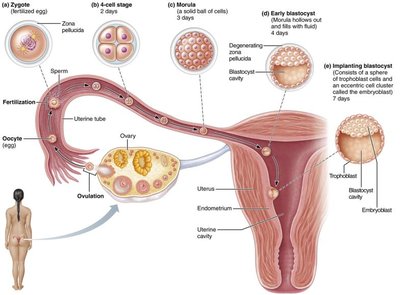
Occurs in the uterine tube, typically within 24-48 hours after ovulation.
Sperm can survive up to a week in the female reproductive tract, but the oocyte is viable for only 12-24 hours.
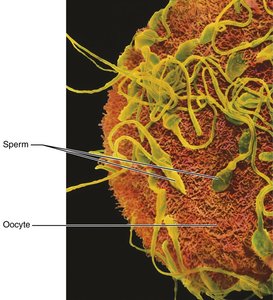
Sperm Transport and Capacitation
Millions of sperm are lost or destroyed before reaching the oocyte.
Capacitation is the process by which sperm become capable of fertilizing the oocyte, involving removal of proteins and cholesterol from the acrosome membrane.
Sperm follow chemical signals to the oocyte using olfactory receptors.
Penetration of the Oocyte
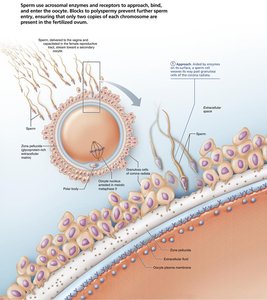
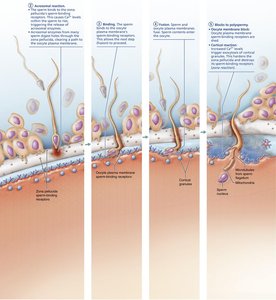
Sperm must breach the corona radiata and zona pellucida surrounding the oocyte.
Binding to zona pellucida receptors triggers the acrosomal reaction, releasing hydrolytic enzymes that digest the zona pellucida.
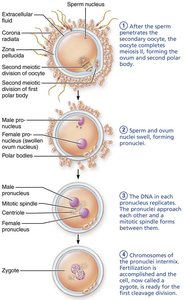
Once a sperm penetrates, the oocyte completes meiosis II, forming the ovum and a second polar body.
Blocks to Polyspermy
After the first sperm fuses with the oocyte membrane, the oocyte sheds other sperm receptors, preventing additional sperm entry (membrane block).
This ensures only one set of chromosomes enters the oocyte, maintaining the correct chromosome number.
Formation of the Zygote
Male and female pronuclei fuse, restoring the diploid chromosome number and forming the zygote.
Mitotic divisions begin, starting embryonic development.
Implantation and Placenta Formation
Cleavage and Blastocyst Formation
Cleavage is a series of rapid mitotic divisions of the zygote.
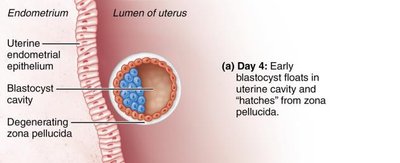
By 72 hours, a morula (solid ball of 16+ cells) forms; by day 4, a blastocyst (fluid-filled ball) reaches the uterus.
Implantation Process
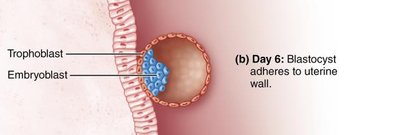
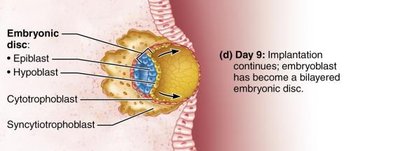
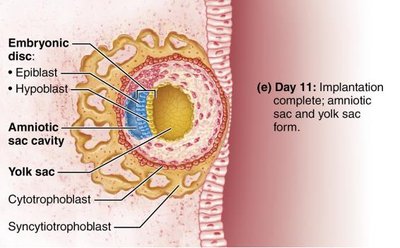
The blastocyst floats in the uterine cavity for 2-3 days before adhering to the endometrium (day 6-7 post-ovulation).
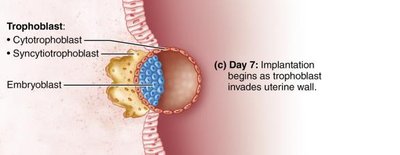
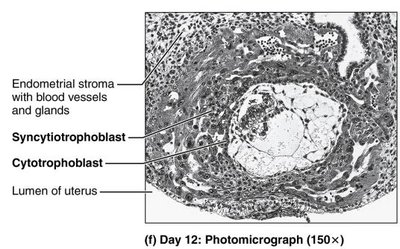
Trophoblast cells (outer layer) adhere to the endometrium and initiate an inflammatory-like response, leading to invasion and digestion of the uterine wall.
Implantation is completed by day 12 after ovulation.
Placenta Formation and Function
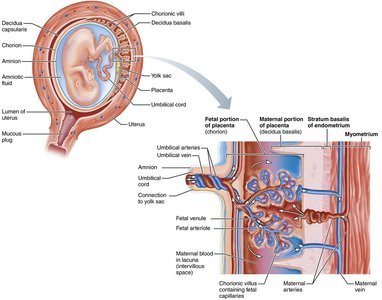
The placenta forms from both embryonic (chorion, chorionic villi) and maternal (endometrium) tissues.
By the third month, the placenta is fully formed and functions as a nutritive, respiratory, excretory, and endocrine organ.
Maternal and embryonic blood do not mix; exchange occurs across placental barriers.
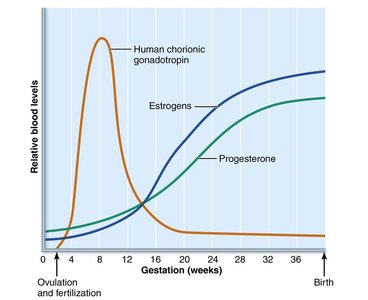
The placenta secretes hormones such as hCG, estrogens, progesterone, human placental lactogen, and relaxin.
Hormonal Regulation During Pregnancy
hCG maintains the corpus luteum, preventing menstruation and supporting early pregnancy.
Estrogen and progesterone levels rise, supporting uterine growth and mammary gland preparation.
Embryonic and Fetal Development
Gastrulation and Germ Layer Formation
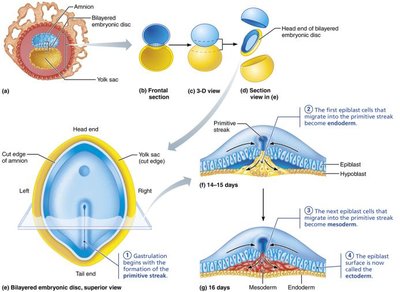
During gastrulation, three primary germ layers form: ectoderm (nervous system, epidermis), mesoderm (muscles, bones, connective tissue), and endoderm (epithelial linings of digestive, respiratory, and urogenital systems).
Organogenesis (formation of organs) occurs during weeks 3-8.
Extraembryonic Membranes
Amnion: Innermost membrane, forms the amniotic sac filled with fluid for protection and temperature regulation.
Yolk sac: Source of early blood cells and part of the gut.
Allantois: Forms the structural base for the umbilical cord and part of the urinary bladder.
Chorion: Outermost membrane, contributes to placenta formation.
Fetal Circulation
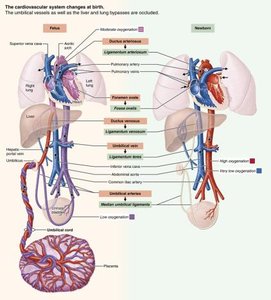
Unique vascular modifications include the umbilical arteries and vein, ductus venosus (bypasses liver), foramen ovale (bypasses pulmonary circulation), and ductus arteriosus (bypasses pulmonary trunk to aorta).
Major Events of Fetal Development
By week 8, all major organs are formed; bones begin to ossify, muscles contract, kidneys and gonads develop.
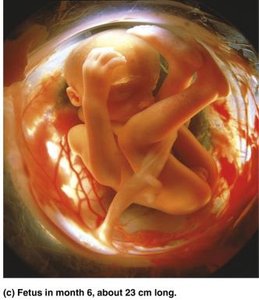
The fetal period (week 9 to birth) is characterized by rapid growth and maturation of organ systems.
Maternal Adaptations to Pregnancy
Reproductive and Other Organ System Changes
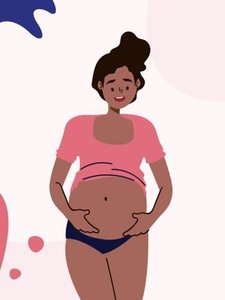
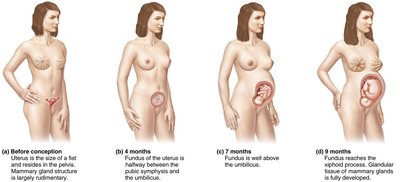
Reproductive organs become more vascular; breasts enlarge and areolae darken.
Uterus expands, ribs flare, and lordosis develops to accommodate the growing fetus.
Relaxin hormone increases pelvic flexibility for childbirth.

Gastrointestinal, Urinary, Respiratory, and Cardiovascular Changes
GI: Morning sickness, heartburn, and constipation are common due to hormonal and anatomical changes.
Urinary: Increased urine production and frequency due to higher metabolism and fetal waste removal.
Respiratory: Estrogen-induced nasal congestion and increased respiratory rate.
Cardiovascular: Blood volume and cardiac output increase; venous return from lower limbs may be impaired, causing edema and varicose veins.
Teratogens
Substances or factors that cause congenital abnormalities if they cross the placenta (e.g., alcohol, nicotine, certain drugs, infections).
Fetal alcohol syndrome and rubella are examples of teratogenic effects.
Labor and Birth (Parturition)
Initiation of Labor
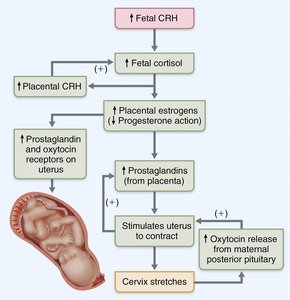
Labor is triggered by hormonal changes, including increased fetal CRH and cortisol, rising placental estrogens, and increased prostaglandin and oxytocin sensitivity.
Positive feedback loops amplify uterine contractions and cervical dilation.
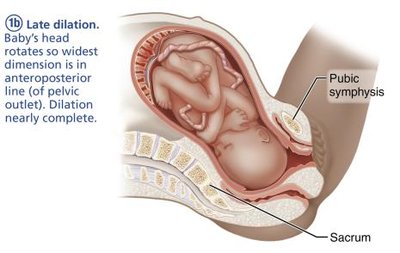
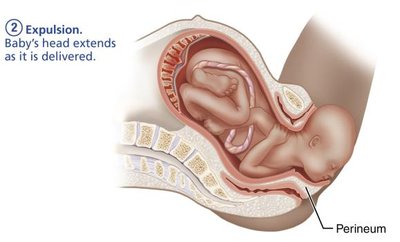
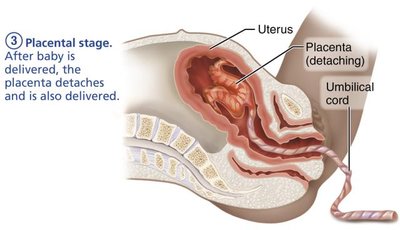
Stages of Labor
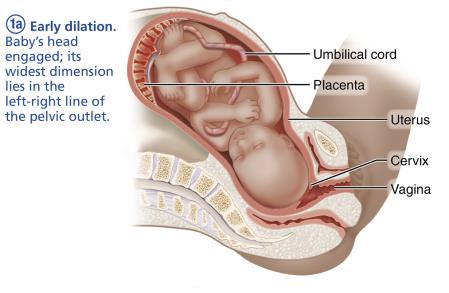
Dilation Stage: Cervix dilates, baby's head descends into the birth canal.
Expulsion Stage: Baby is delivered through the birth canal.
Placental Stage: Placenta detaches and is expelled after birth.
Lactation
Preparation and Initiation
High levels of estrogens, progesterone, and human placental lactogen stimulate the hypothalamus to release prolactin-releasing factors (PRFs), leading to prolactin secretion and milk production.
Colostrum, a nutrient-rich fluid, is secreted before true milk production begins.
Maintenance of Lactation
Suckling stimulates mechanoreceptors in the nipple, triggering further prolactin and oxytocin release.
Oxytocin causes the let-down reflex, ejecting milk from the mammary glands.
Lactation is maintained by continued suckling and hormonal feedback loops.
Summary Table: Key Events in Pregnancy and Development
Event | Timing | Main Features |
|---|---|---|
Fertilization | Day 0 | Sperm and oocyte chromosomes combine to form zygote |
Cleavage | Day 1-4 | Rapid mitotic divisions, formation of morula and blastocyst |
Implantation | Day 6-12 | Blastocyst adheres to and invades endometrium |
Placenta Formation | Weeks 2-12 | Development of maternal-fetal exchange organ |
Organogenesis | Weeks 3-8 | Formation of all major organ systems |
Fetal Period | Week 9-birth | Growth and maturation of organs |
Labor | ~Week 40 | Expulsion of fetus and placenta |
Lactation | Postpartum | Milk production and ejection |
Additional info: These notes integrate foundational concepts from cell biology, endocrinology, and human anatomy to provide a comprehensive overview of pregnancy and human development, suitable for ANP college students.
