 Back
BackProteins: Structure, Function, and Nutrition
Study Guide - Smart Notes
 Tailored notes based on your materials, expanded with key definitions, examples, and context.
Proteins: Structure, Function, and Nutrition
Section 6.1: Defining Protein
Proteins are essential macromolecules in the human body, responsible for a wide range of structural and functional roles. They are polymers made up of amino acid monomers, which differ from carbohydrates and lipids in their complexity and nitrogen content.
Proteins: Macromolecules composed of amino acids; make up about 20% of the human body.
Amino acids: Simple monomers containing carbon, hydrogen, oxygen, and nitrogen; building blocks of proteins.
There are over 100,000 different proteins in the human body.
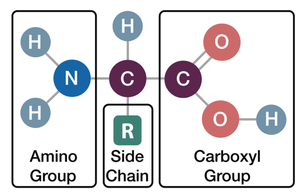
Amino acids have a central carbon atom bonded to an amino group, a carboxyl group, a hydrogen atom, and a variable side chain (R group).
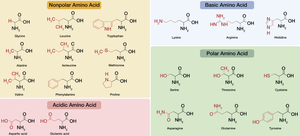
Amino acids are classified into four groups based on their side chains:
Nonpolar amino acids: Hydrophobic, with long or bulky side groups.
Polar amino acids: Hydrophilic, not charged.
Acidic amino acids: Hydrophilic, negatively charged.
Basic amino acids: Hydrophilic, positively charged.
Amino acids are also categorized by nutritional aspects:
Nonessential amino acids: Synthesized by the body.
Essential amino acids: Must be obtained from the diet.
Conditionally essential amino acids: Required from the diet only under certain conditions (e.g., growth).
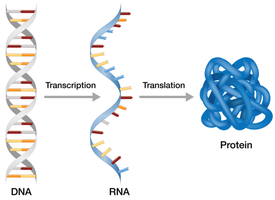
Proteins are synthesized through three main steps:
Transcription: DNA is copied into messenger RNA (mRNA).
Translation: mRNA is decoded to synthesize a protein.
Protein folding: The amino acid chain folds into its functional shape.
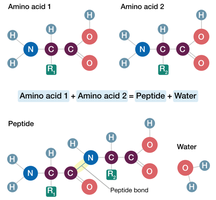
Amino acids are linked by peptide bonds to form proteins.
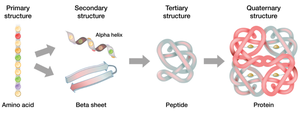
Proteins have four levels of structural organization:
Primary structure: Sequence of amino acids.
Secondary structure: Local folding (alpha helices, beta sheets).
Tertiary structure: Overall 3D shape of a single polypeptide.
Quaternary structure: Arrangement of multiple polypeptide chains.
Section 6.2: The Role of Proteins in Foods: Cooking and Denaturation
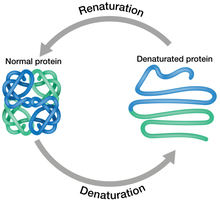
Proteins contribute to the structure and texture of foods. When exposed to external stresses, proteins can undergo denaturation, losing their functional shape.
Denaturation: Physical changes in protein structure due to heat, acid, salt, alcohol, or mechanical agitation.
Denatured proteins lose their complex structure and become long strands of amino acids.
Section 6.3: Protein Digestion and Absorption
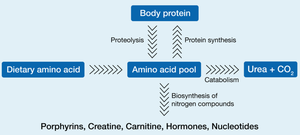
Protein digestion begins in the mouth and continues in the stomach and small intestine, involving both mechanical and chemical processes.
In the stomach, gastric juices (hydrochloric acid and pepsin) initiate protein breakdown.
In the small intestine, pancreatic enzymes (trypsin, chymotrypsin) and intestinal enzymes further digest proteins into amino acids.
Amino acids are absorbed into the bloodstream for use by the body.

The body continually recycles amino acids through protein turnover, breaking down and rebuilding proteins daily.
Section 6.4: Protein’s Functions in the Body
Proteins perform a wide variety of functions essential for life, due to their diverse structures and properties.
Structure and motion: Collagen provides strength and flexibility to bones, tendons, ligaments, cartilage, skin, and muscle.
Enzymes: Catalyze biochemical reactions, lowering activation energy and increasing reaction rates.
Hormones: Many hormones are proteins that regulate physiological processes.
Fluid and acid-base balance: Proteins like albumin maintain fluid distribution and pH balance in the body.
Transport: Transport proteins move molecules across cell membranes and in the blood.
Protection: Antibodies and enzymes defend against pathogens.
Wound healing and tissue regeneration: Proteins are required for cell growth and repair.
Energy production: Some amino acids can be used for energy, especially during fasting or intense exercise.
Section 6.5: Diseases Involving Proteins
Both protein deficiency and excess can have significant health consequences.
Protein deficiency can lead to:
Kwashiorkor: Severe protein and micronutrient deficiency, causing swelling, poor skin health, growth retardation, and liver malfunction.
Marasmus: Severe protein and energy deficiency, resulting in emaciation and growth retardation.
Excess protein intake (over 30% of calories from protein) may increase the risk of cardiovascular disease, diabetes, and organ stress, and can lead to nutrient imbalances.
Section 6.6: Proteins, Diet, and Personal Choices
Protein requirements depend on age, activity level, and health status. The Recommended Dietary Allowance (RDA) for adults is 0.8 grams per kilogram of body weight per day.
Nitrogen balance: Achieved when protein intake equals protein use and excretion.
Equation for daily protein requirement:
Dietary sources of protein include meat, seafood, poultry, eggs, soy, beans, peas, and seeds.
Complete proteins: Contain all essential amino acids (e.g., animal proteins, soy).
Incomplete proteins: Lack one or more essential amino acids (e.g., most plant proteins).
Complementary foods: Combining different plant proteins to obtain all essential amino acids.
Protein Digestibility Corrected Amino Acid Score (PDCAAS): Measures protein quality based on amino acid content and digestibility.
Vegetarians and vegans can meet protein needs with careful planning and inclusion of fortified foods.
Sarcopenia: Age-related muscle loss; adequate protein intake may help prevent it.
Protein and amino acid supplements are generally unnecessary for most people and do not enhance exercise performance more than food protein.
Key Takeaways: Adequate protein intake is essential for health, but both deficiency and excess can be harmful. Most adults can meet their protein needs through a balanced diet without supplements.
