 Back
BackRenal Anatomy and Physiology: Structure and Function of the Urinary System
Study Guide - Smart Notes
 Tailored notes based on your materials, expanded with key definitions, examples, and context.
The Urinary System: Renal Function
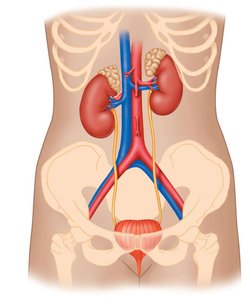
Anatomy of the Urinary System
The urinary system is responsible for filtering blood, removing waste products, and regulating fluid and electrolyte balance. Its main components include the kidneys, ureters, bladder, and urethra.
Kidneys: Bean-shaped organs located on either side of the spine, responsible for filtering blood and producing urine.
Ureters: Tubes that transport urine from the kidneys to the bladder.
Bladder: Muscular sac that stores urine until excretion.
Urethra: Channel through which urine exits the body.
Renal artery and vein: Blood vessels that supply and drain the kidneys.
Adrenal gland: Located above each kidney, part of the endocrine system.
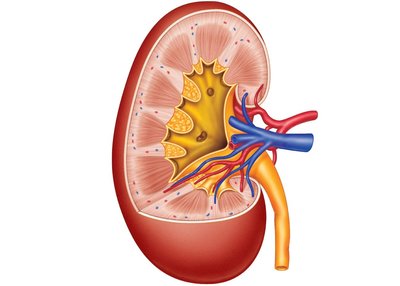
Gross Structure of the Kidney
The kidney is divided into distinct regions, each with specialized functions in urine formation and blood filtration.
Renal cortex: The outer region where filtration occurs.
Renal medulla: The inner region containing renal pyramids.
Renal pelvis: Funnel-shaped structure that collects urine and channels it to the ureter.
Renal artery and vein: Enter and exit at the renal hilus.
Renal pyramids: Cone-shaped structures in the medulla.
Minor and major calyces: Collect urine from the pyramids and funnel it to the renal pelvis.
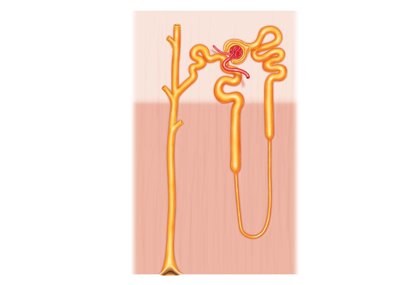
Microscopic Structure: The Nephron
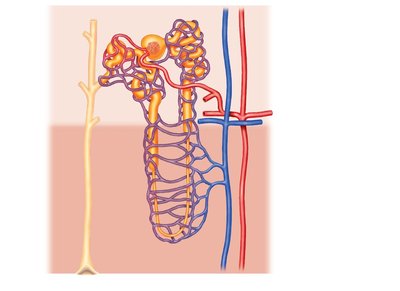
The nephron is the functional unit of the kidney, responsible for filtering blood and forming urine. Each kidney contains about one million nephrons.
Renal corpuscle: Composed of the glomerulus and Bowman’s capsule, where filtration begins.
Proximal tubule: Reabsorbs nutrients, ions, and water.
Loop of Henle: Establishes concentration gradients for water reabsorption.
Distal convoluted tubule: Further modifies filtrate.
Collecting duct: Final site for water and ion regulation.
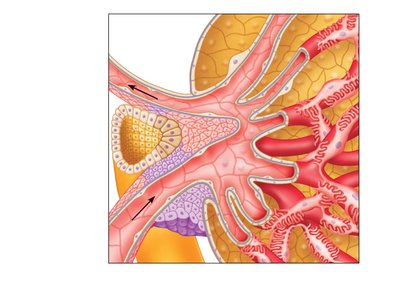
Renal Corpuscle and Filtration
The renal corpuscle consists of the glomerulus (a capillary network) and Bowman’s capsule. Filtration occurs as blood pressure forces plasma through the glomerular membrane into Bowman’s capsule.
Afferent arteriole: Brings blood to the glomerulus.
Efferent arteriole: Carries blood away from the glomerulus.
Macula densa: Specialized cells that regulate filtration rate.
Juxtaglomerular cells: Secrete renin to regulate blood pressure.
Renal Blood Supply
The kidneys receive a rich blood supply to facilitate filtration and reabsorption. Blood flows through a series of vessels before and after entering the nephron.
Interlobular arteries and veins: Branches supplying the cortex.
Arcuate arteries and veins: Run along the boundary between cortex and medulla.
Peritubular capillaries: Surround the tubules for reabsorption and secretion.
Vasa recta: Capillaries associated with the loop of Henle, important for maintaining osmotic gradients.
Processes of Urine Formation
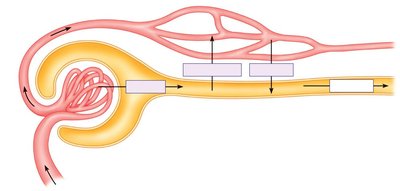
Urine formation involves four main processes: filtration, reabsorption, secretion, and excretion. These processes ensure waste removal and homeostasis.
Filtration: Movement of water and solutes from blood into Bowman’s capsule.
Reabsorption: Return of essential substances from filtrate to blood.
Secretion: Addition of waste products from blood to filtrate.
Excretion: Removal of urine from the body.
Glomerular Filtration Pressure
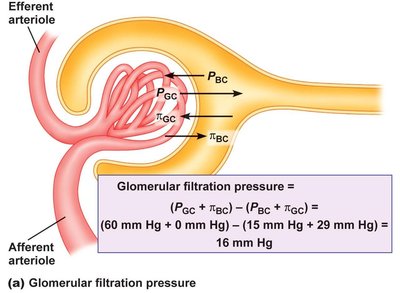
Glomerular filtration is driven by pressure differences across the glomerular membrane. The net filtration pressure determines the rate of plasma movement into Bowman’s capsule.
Hydrostatic pressure in glomerular capillaries (PGC): Promotes filtration.
Hydrostatic pressure in Bowman’s capsule (PBC): Opposes filtration.
Oncotic pressure in glomerular capillaries (πGC): Opposes filtration.
Oncotic pressure in Bowman’s capsule (πBC): Promotes filtration (usually negligible).
Equation:
Example calculation:
Summary Table: Key Structures and Functions in Renal Physiology
Structure | Main Function |
|---|---|
Kidney | Filtration of blood, urine formation |
Nephron | Functional unit, filtration and reabsorption |
Renal corpuscle | Initial filtration of blood |
Proximal tubule | Reabsorption of nutrients and water |
Loop of Henle | Concentration of urine |
Distal tubule | Further modification of filtrate |
Collecting duct | Final regulation of water and ions |
Peritubular capillaries | Reabsorption and secretion |
Vasa recta | Maintains osmotic gradient |
Additional info: The notes above expand on the provided diagrams and labels, offering academic context and explanations suitable for college-level study of renal physiology.
