 Back
BackStudy Guide: The Endocrine System (Chapter 16, Human Anatomy & Physiology)
Study Guide - Smart Notes
 Tailored notes based on your materials, expanded with key definitions, examples, and context.
The Endocrine System: Overview
Introduction to the Endocrine System
The endocrine system is a major regulatory system of the body, responsible for producing hormones that control various physiological processes. It works alongside the nervous system to maintain homeostasis, growth, metabolism, and reproduction.
Endocrine glands secrete hormones directly into the bloodstream.
Hormones are chemical messengers that affect target cells throughout the body.
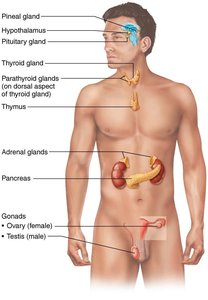
Major endocrine organs include the pituitary, thyroid, parathyroid, adrenal glands, pancreas, gonads, pineal gland, and thymus.
Hormone Mechanisms and Types
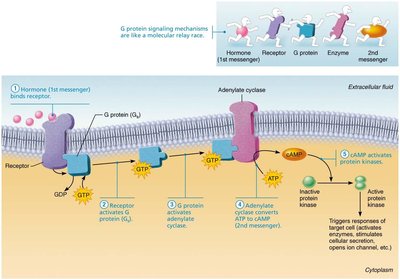
Cyclic AMP Second-Messenger Mechanism (Water-Soluble Hormones)
Water-soluble hormones (such as most amino acid-based hormones) use second-messenger systems to exert their effects on target cells. The cyclic AMP (cAMP) pathway is a primary example.
Step 1: Hormone binds to receptor on plasma membrane.
Step 2: Receptor activates G protein.
Step 3: G protein activates adenylate cyclase.
Step 4: Adenylate cyclase converts ATP to cAMP (second messenger).
Step 5: cAMP activates protein kinases, which trigger cellular responses.
Direct Gene Activation Mechanism (Lipid-Soluble Hormones)
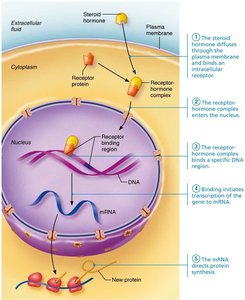
Lipid-soluble hormones (such as steroid hormones and thyroid hormone) act through direct gene activation. They diffuse through the plasma membrane and bind to intracellular receptors.
Step 1: Hormone diffuses through plasma membrane.
Step 2: Hormone binds to intracellular receptor, forming a receptor-hormone complex.
Step 3: Complex enters nucleus and binds to specific DNA regions.
Step 4: Binding initiates transcription of the gene to mRNA.
Step 5: mRNA directs protein synthesis.
Comparison of Lipid- and Water-Soluble Hormones
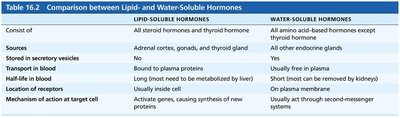
Lipid-soluble and water-soluble hormones differ in their structure, transport, and mechanism of action.
Lipid-Soluble Hormones | Water-Soluble Hormones | |
|---|---|---|
Consist of | All steroid hormones and thyroid hormone | All amino acid-based hormones except thyroid hormone |
Sources | Adrenal cortex, gonads, thyroid gland | Other endocrine glands |
Stored in secretory vesicles | No | Yes |
Transport in blood | Bound to plasma proteins | Usually free in plasma |
Half-life in blood | Long (most need to be metabolized by liver) | Short (most can be removed by kidneys) |
Location of receptors | Usually inside cell | On plasma membrane |
Mechanism of action at target cell | Activate genes, causing synthesis of new proteins | Usually act through second-messenger systems |
Endocrine Gland Stimuli
Three Types of Endocrine Gland Stimuli
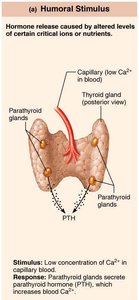
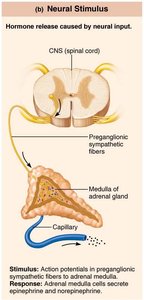
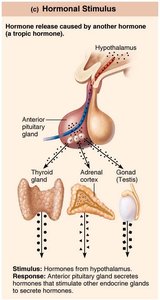
Hormone release from endocrine glands is triggered by three main types of stimuli:
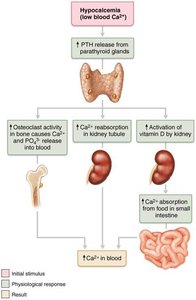
Humoral Stimulus: Caused by altered levels of certain ions or nutrients in the blood. Example: Low blood calcium stimulates parathyroid hormone (PTH) release.
Neural Stimulus: Caused by neural input. Example: Action potentials in sympathetic fibers stimulate adrenal medulla to release epinephrine and norepinephrine.
Hormonal Stimulus: Caused by another hormone (tropic hormone). Example: Hypothalamic hormones stimulate anterior pituitary, which releases hormones that stimulate other endocrine glands.
Hypothalamus and Pituitary Gland
Hypothalamic Control of Pituitary Hormones
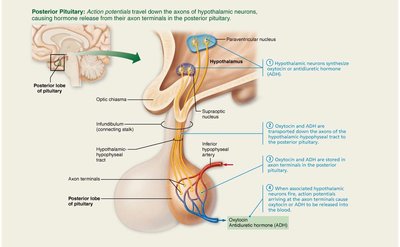
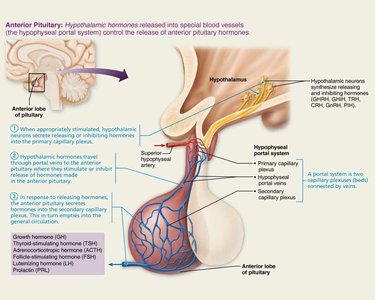
The hypothalamus is a key regulator of the pituitary gland, which is often called the "master gland" because it controls many other endocrine glands.
Posterior pituitary: Releases hormones (oxytocin and antidiuretic hormone, ADH) produced by hypothalamic neurons.
Anterior pituitary: Controlled by hypothalamic releasing and inhibiting hormones via the hypophyseal portal system.
Pituitary Hormones: Summary of Regulation and Effects
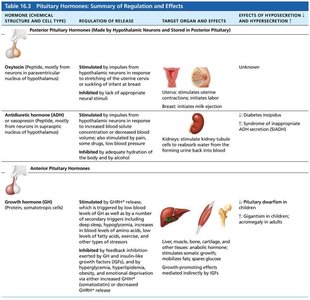
The pituitary gland produces several hormones, each with specific target organs and effects. Disorders can result from hypo- or hypersecretion.
Hormone | Regulation of Release | Target Organ and Effects | Effects of Hypo/Hypersecretion |
|---|---|---|---|
Oxytocin | Stimulated by impulses from hypothalamic neurons | Uterus: stimulates contractions; Breast: initiates milk ejection | Unknown |
Antidiuretic hormone (ADH) | Stimulated by impulses from hypothalamic neurons in response to increased blood solute concentration or decreased blood volume | Kidneys: stimulate kidney tubule cells to reabsorb water | Hypo: diabetes insipidus; Hyper: syndrome of inappropriate ADH secretion (SIADH) |
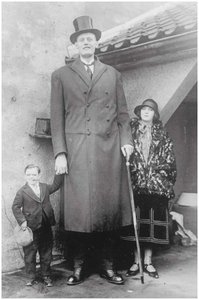
Growth hormone (GH) | Stimulated by GHRH release; inhibited by GHIH | Liver, muscle, bone, cartilage: stimulates growth and metabolism | Hypo: pituitary dwarfism; Hyper: gigantism, acromegaly |
The Thyroid Gland
Anatomy and Histology of the Thyroid Gland
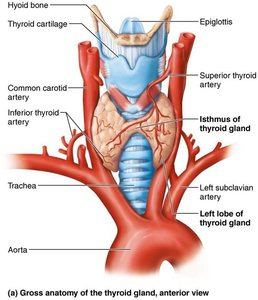
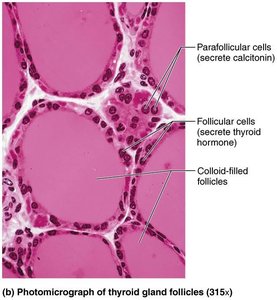
The thyroid gland is located in the anterior neck and produces thyroid hormones (T3 and T4) and calcitonin. It consists of follicles filled with colloid and parafollicular cells.
Follicular cells: Secrete thyroid hormone.
Parafollicular cells: Secrete calcitonin.
Regulation of Thyroid Hormone Secretion
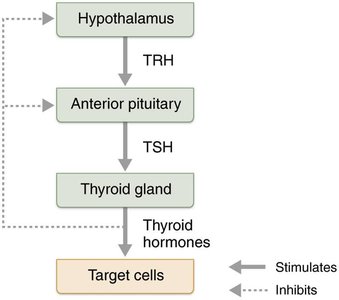
Thyroid hormone secretion is regulated by a negative feedback loop involving the hypothalamus, anterior pituitary, and thyroid gland.
TRH (thyrotropin-releasing hormone): From hypothalamus stimulates TSH release.
TSH (thyroid-stimulating hormone): From anterior pituitary stimulates thyroid hormone release.
Thyroid hormones: Inhibit TRH and TSH release when levels are sufficient.
Thyroid Disorders
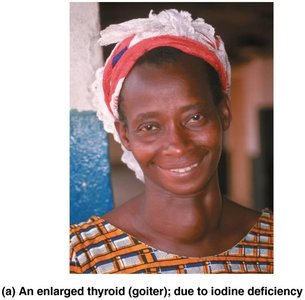
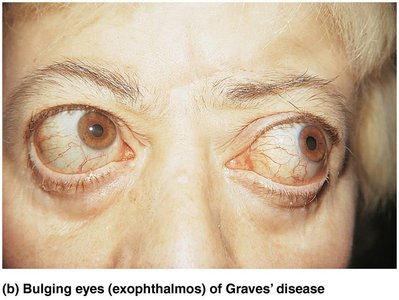
Common thyroid disorders include goiter (enlarged thyroid due to iodine deficiency), hypothyroidism, and hyperthyroidism.
Goiter: Enlargement of the thyroid gland, often due to iodine deficiency.
Hypothyroidism: Underproduction of thyroid hormone; symptoms include fatigue, weight gain, and cold intolerance.
Hyperthyroidism: Overproduction of thyroid hormone; symptoms include weight loss, heat intolerance, and nervousness.
The Parathyroid Glands
Anatomy and Function of Parathyroid Glands
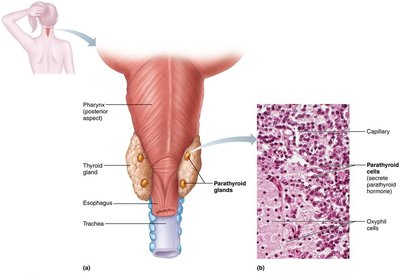
The parathyroid glands are small glands located on the posterior aspect of the thyroid gland. They secrete parathyroid hormone (PTH), which regulates blood calcium levels.
PTH: Increases blood calcium by stimulating osteoclasts, increasing calcium reabsorption in kidneys, and activating vitamin D.
The Adrenal Glands
Microscopic Structure and Hormones of the Adrenal Gland
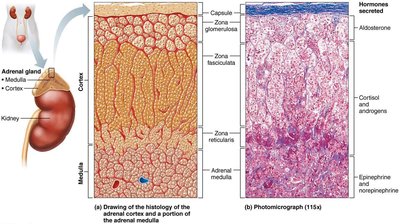
The adrenal glands are located atop the kidneys and consist of two regions: cortex and medulla. Each region produces distinct hormones.
Adrenal cortex: Produces corticosteroids (mineralocorticoids, glucocorticoids, and gonadocorticoids).
Adrenal medulla: Produces catecholamines (epinephrine and norepinephrine).
Regulation of Aldosterone Release
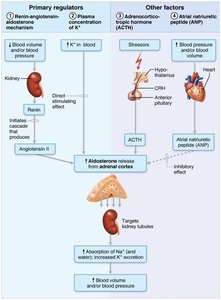
Aldosterone, a mineralocorticoid, regulates sodium and potassium balance and blood pressure. Its release is controlled by several mechanisms.
Renin-angiotensin-aldosterone mechanism: Activated by low blood volume or pressure.
Plasma concentration of K+: High potassium stimulates aldosterone release.
ACTH: Can stimulate aldosterone during stress.
Atrial natriuretic peptide (ANP): Inhibits aldosterone release.
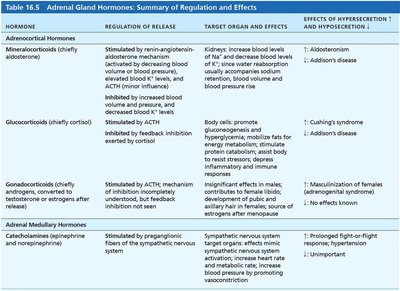
Adrenal Gland Hormones: Summary of Regulation and Effects
Adrenal hormones have diverse effects on metabolism, stress response, and electrolyte balance.
Hormone | Regulation of Release | Target Organ and Effects | Effects of Hyper/Hyposecretion |
|---|---|---|---|
Mineralocorticoids (aldosterone) | Stimulated by renin-angiotensin mechanism, increased K+, ACTH | Kidneys: increase Na+ reabsorption, increase blood volume/pressure | Hyper: aldosteronism; Hypo: Addison's disease |
Glucocorticoids (cortisol) | Stimulated by ACTH; inhibited by feedback | Body cells: promote metabolism, resist stress | Hyper: Cushing's syndrome; Hypo: Addison's disease |
Gonadocorticoids | Stimulated by ACTH | Sex organs: contribute to puberty, sex drive | Hyper: masculinization; Hypo: no effect |
Catecholamines | Stimulated by sympathetic nervous system | Sympathetic effects: fight-or-flight response | Hyper: prolonged fight-or-flight; Hypo: unimportant |
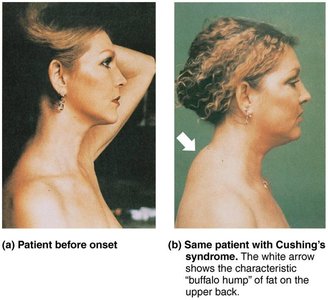
Effects of Excess Glucocorticoid (Cushing's Syndrome)
Excess glucocorticoids, such as cortisol, can lead to Cushing's syndrome, characterized by fat redistribution, muscle weakness, and immune suppression.
Symptoms: "Buffalo hump" of fat on upper back, moon face, high blood glucose, hypertension.
Other Endocrine Organs and Hormones
Additional Endocrine Tissues
Several other tissues and organs have endocrine functions, releasing hormones that regulate appetite, metabolism, blood pressure, and immunity.
Adipose tissue: Leptin (appetite control), resistin (insulin antagonist), adiponectin (enhances insulin sensitivity).
Gastrointestinal tract: Gastrin, ghrelin, secretin, cholecystokinin (CCK), incretins.
Heart: Atrial natriuretic peptide (ANP) decreases blood pressure.
Kidneys: Erythropoietin (stimulates red blood cell production), renin (initiates renin-angiotensin mechanism).
Skeleton: Osteocalcin (regulates insulin secretion and fat storage).
Skin: Cholecalciferol (vitamin D precursor), calcitriol (active vitamin D).
Thymus: Thymulin, thymopoietins, thymosins (involved in T lymphocyte development).
Key Terms and Definitions
Neuro-: Relating to nerves or the nervous system.
Epi-: Upon, above, or below.
Audio-: Hearing.
-crine: To secrete.
-cide: To kill.
Summary Table: Types of Sensory Receptors
Receptor Type | Stimulus Detected |
|---|---|
Mechanoreceptors | Mechanical forces (touch, pressure, vibration) |
Thermoreceptors | Temperature changes |
Photoreceptors | Light |
Chemoreceptors | Chemicals (taste, smell, blood chemistry) |
Nociceptors | Pain (damaging stimuli) |
Relevant Equations
cAMP Second Messenger:
Negative Feedback Regulation:
