 Back
BackThe Cell: Structure, Function, and Membrane Transport
Study Guide - Smart Notes
 Tailored notes based on your materials, expanded with key definitions, examples, and context.
The Cell
Cell Diversity
Human cells exhibit remarkable diversity in size, shape, and function, with over 200 different types identified. This diversity allows for specialization and efficient functioning of tissues and organs.
Erythrocytes: Cells that transport gases (e.g., oxygen and carbon dioxide).
Fibroblasts: Cells that produce fibers and ground substance for connective tissue.
Epithelial cells: Cells that form linings and coverings of organs.
Skeletal and Smooth Muscle Cells: Cells responsible for movement of body parts and organs.
Nerve Cells: Cells that gather information and control body functions.
Macrophages: Cells that fight disease by engulfing pathogens.
Fat Cells: Cells that store nutrients.
Sperm: Cells of reproduction.
Basic Processes of Cells:
Cell metabolism: Sum of all chemical reactions in the cell.
Transport: Movement of substances produced or ingested by the cell.
Communication: Chemical and electrical signaling within and between cells.
Cell reproduction: Division for growth, development, and replacement of cells.
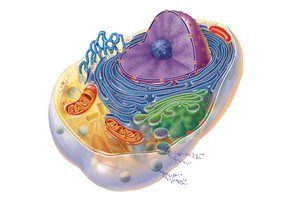
Cell Structure
Plasma Membrane
The plasma membrane surrounds each cell, isolating internal structures from the external environment. It provides structural support, communication, and cell identification. The membrane contains intracellular fluid (ICF) and separates it from extracellular fluid (ECF).
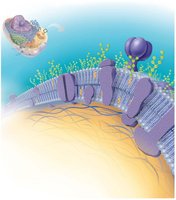
Fluid Mosaic Model
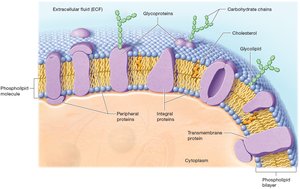
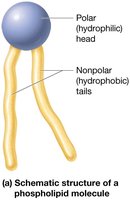
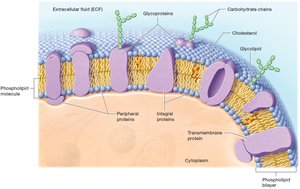
The plasma membrane is described by the fluid mosaic model, consisting of a phospholipid bilayer with embedded proteins, cholesterol, glycolipids, and glycoproteins.
Integral proteins: Span the entire membrane (transmembrane proteins).
Peripheral proteins: Located on one side of the membrane.
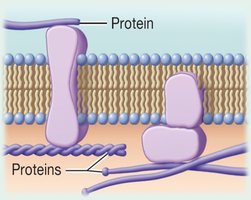
Functions of Membrane Proteins
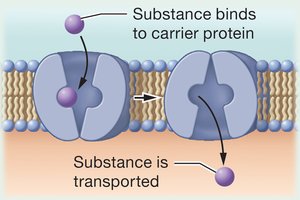
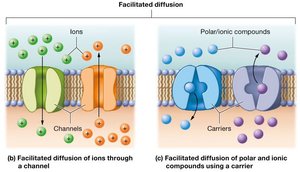
Carrier proteins: Bind and transport substances across the membrane.
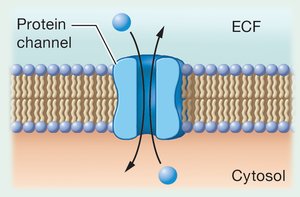
Channels: Allow specific substances to cross the membrane.
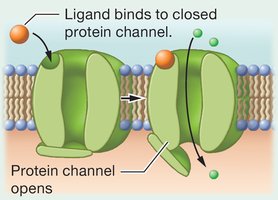
Receptors: Bind ligands and trigger cellular responses.
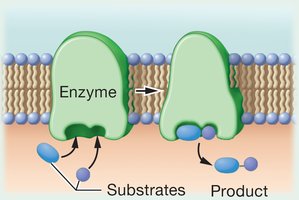
Enzymes: Catalyze chemical reactions.
Structural support: Maintain cell shape and integrity.
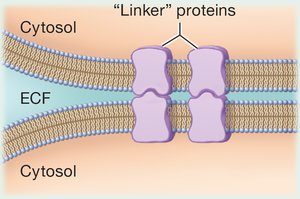
Linker proteins: Anchor cells and facilitate communication.
Other Membrane Components
Cholesterol: Stabilizes membrane fluidity during temperature changes.
Glycolipids and glycoproteins: Involved in cell recognition and immune response.
Transport Across the Plasma Membrane
Selective Permeability
The plasma membrane is selectively permeable, allowing certain molecules to cross while restricting others. Transport occurs via passive or active mechanisms.
Passive Transport
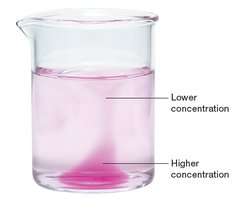
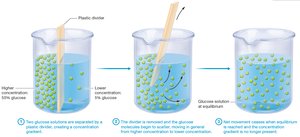
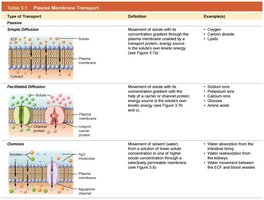
Diffusion: Movement of solute from high to low concentration until equilibrium is reached.
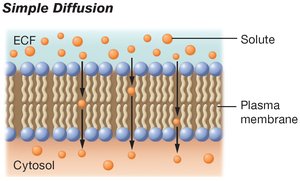
Simple diffusion: Direct movement through the lipid bilayer (e.g., O2, CO2).
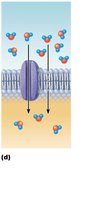
Facilitated diffusion: Movement of charged or polar solutes via membrane proteins (channels or carriers).
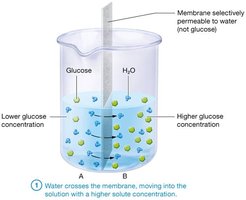
Osmosis: Diffusion of water across a selectively permeable membrane.
Tonicity and Red Blood Cells
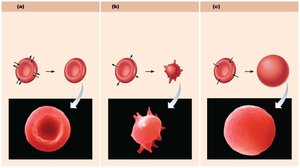
The effect of solution tonicity on cells:
Isotonic: No net water movement; cell shape maintained.
Hypertonic: Water leaves cell; cell shrinks (crenation).
Hypotonic: Water enters cell; cell swells and may burst (lysis).
Active Transport
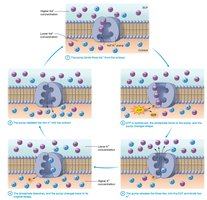
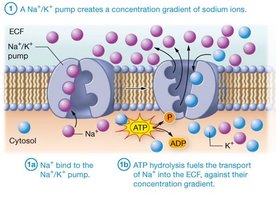
Active transport requires energy (ATP) to move substances against their concentration gradients.
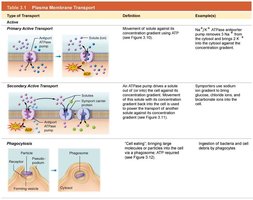
Primary active transport: Direct use of ATP (e.g., Na+/K+ pump).
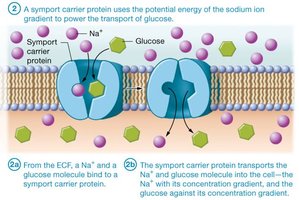
Secondary active transport: Uses energy from the movement of another substance down its gradient.
Membrane Potential
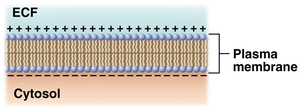
Cells maintain a membrane potential, an electrical gradient across the plasma membrane, essential for processes such as nerve impulse transmission.
Vesicular Transport
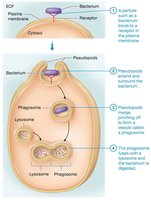
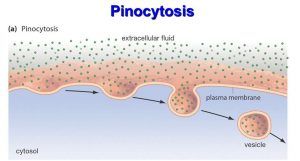
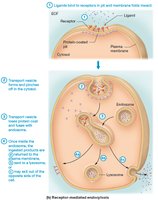
Endocytosis: Uptake of materials via vesicles (includes phagocytosis, pinocytosis, and receptor-mediated endocytosis).
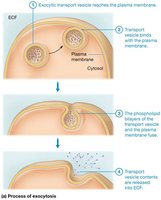
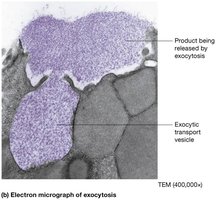
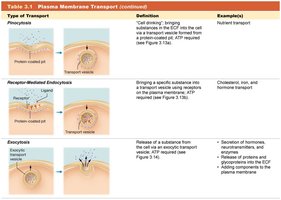
Exocytosis: Release of substances from the cell via vesicles.
Transcytosis: Transport of substances across the cell via vesicles.
Summary Tables: Plasma Membrane Transport
Type of Transport | Definition | Examples |
|---|---|---|
Simple Diffusion | Movement of solute with its concentration gradient through the plasma membrane unaided by a transport protein. | Oxygen, Carbon dioxide |
Facilitated Diffusion | Movement of solute with its concentration gradient using a membrane protein (channel or carrier). | Sodium ions, Glucose |
Osmosis | Movement of solvent (water) across a membrane from lower to higher solute concentration. | Water absorption in kidneys |
Primary Active Transport | Movement of solute against its gradient using ATP. | Na+/K+ ATPase pump |
Secondary Active Transport | Uses energy from another solute's gradient to move substances. | Symport of sodium and glucose |
Phagocytosis | "Cell eating"; ingestion of large particles. | Uptake of bacteria by macrophages |
Pinocytosis | "Cell drinking"; uptake of extracellular fluid. | Nutrient transport |
Receptor-Mediated Endocytosis | Uptake of specific molecules via receptors. | Cholesterol, iron |
Exocytosis | Release of substances from cell via vesicles. | Secretion of hormones, neurotransmitters |
Cytoplasmic Organelles
Membranous and Non-membranous Organelles
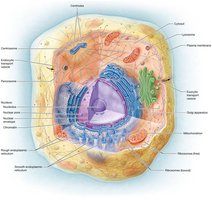
Membranous: Mitochondria, Endoplasmic reticulum, Golgi apparatus, Peroxisomes, Lysosomes
Non-membranous: Ribosomes, Cytoskeleton, Centrioles
Mitochondria
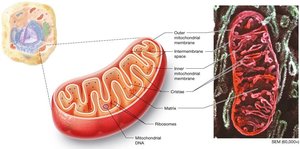
Known as the "power plant" of the cell, mitochondria produce the majority of ATP. They have a double membrane, their own DNA, and ribosomes.
Peroxisomes
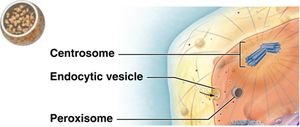
Organelles that use oxygen to oxidize organic molecules, producing hydrogen peroxide (H2O2). They detoxify substances and break down fatty acids.
Ribosomes
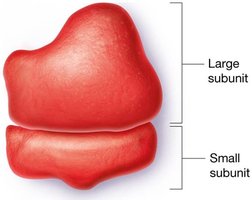
Sites of protein synthesis, composed of large and small subunits made of rRNA and proteins. Free ribosomes synthesize proteins for the cell; bound ribosomes produce proteins for export.
Endoplasmic Reticulum (ER)
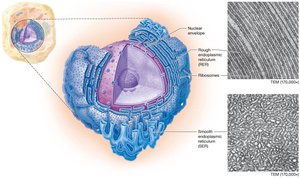
Rough ER: Studded with ribosomes; synthesizes and packages proteins for export.
Smooth ER: Lacks ribosomes; involved in lipid synthesis, detoxification, and calcium storage.
Golgi Apparatus
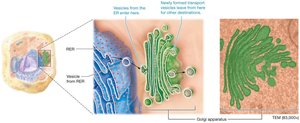
Modifies, sorts, and packages proteins and lipids for export or delivery to other organelles.
Additional info: Lysosomes, cytoskeleton, and nucleus are also covered in the full notes but not shown in the selected images above.
