 Back
The Cellular Level of Organization: Structure and Function of Cells
Study Guide - Smart Notes
 Tailored notes based on your materials, expanded with key definitions, examples, and context.
Chapter 3: The Cellular Level of Organization
Introduction to Cells
Cells are the fundamental units of life, forming the basis for all physiological processes in the human body. Understanding cell structure and function is essential for the study of anatomy and physiology.
Cell Theory: All living organisms are composed of cells; cells arise from pre-existing cells; cells are the smallest units that perform physiological functions; each cell maintains homeostasis; tissue, organ, and organism homeostasis depend on coordinated cellular activity.
Cytology: The study of cells.
Types of Cells: Sex cells (gametes: sperm and oocytes) and somatic cells (all other body cells).
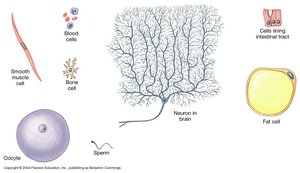
General Structure of a Composite Cell
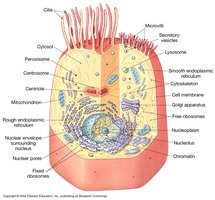
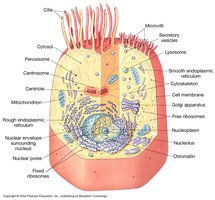
A typical cell consists of three main parts: the cell membrane, cytoplasm (containing organelles and cytosol), and the nucleus.
Extracellular Fluid (ECF): The watery medium surrounding the cell.
Cell Membrane: Separates cytoplasm from ECF, regulates exchange, senses environmental changes, and provides structural support.
Cytoplasm: Includes cytosol (liquid) and organelles (intracellular structures).
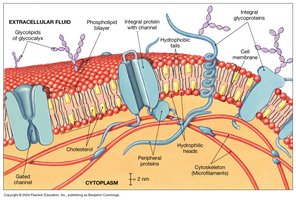
Cell Membrane Structure and Function
The cell membrane, or plasma membrane, is a selectively permeable barrier composed primarily of a phospholipid bilayer with embedded proteins and carbohydrates.
Phospholipid Bilayer: Hydrophilic heads face outward, hydrophobic tails face inward, creating a barrier to water and solutes.
Membrane Proteins: Integral (span the membrane) and peripheral (attached to surfaces). Functions include anchoring, recognition, enzymatic activity, receptor binding, carrier transport, and channel formation.
Membrane Carbohydrates: Form the glycocalyx, which protects the cell, aids in recognition, and helps bind cells together.
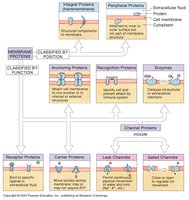
Major Organelles and Their Functions
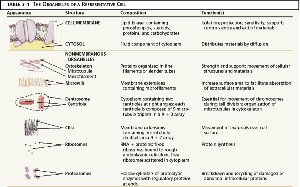
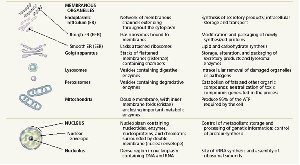
Organelles are specialized structures within the cell that perform distinct processes. They are classified as non-membranous or membranous.
Non-membranous Organelles: Cytoskeleton, microvilli, centrioles, cilia, ribosomes, proteasomes.
Membranous Organelles: Endoplasmic reticulum (ER), Golgi apparatus, lysosomes, peroxisomes, mitochondria, nucleus.
Cytoskeleton
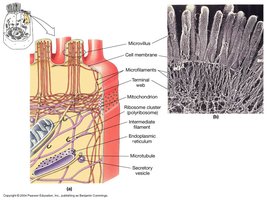
Microfilaments: Actin-based, provide support and movement.
Intermediate Filaments: Provide strength and stabilize organelles.
Microtubules: Tubulin-based, form the main structural component and are important in cell division.
Thick Filaments: Found in muscle cells, enable contraction.
Surface Structures
Microvilli: Increase surface area for absorption and secretion.
Cilia: Move fluids across the cell surface.
Flagella: Propel cells (e.g., sperm).
Centrioles and Cilia
Centrioles: Organize microtubules during cell division.
Cilia: 9+2 arrangement of microtubules, move substances over cell surfaces.
Ribosomes and Proteasomes
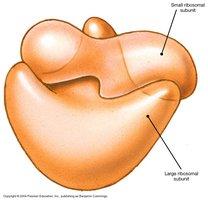
Ribosomes: Sites of protein synthesis, composed of rRNA and proteins; can be free or fixed.
Proteasomes: Degrade damaged or misfolded proteins tagged with ubiquitin.
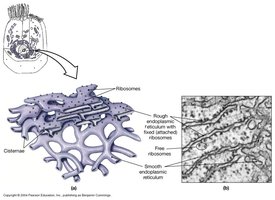
Endoplasmic Reticulum (ER)
Rough ER: Studded with ribosomes, synthesizes and folds proteins.
Smooth ER: Lacks ribosomes, synthesizes lipids and steroids, detoxifies chemicals.
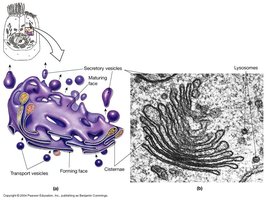
Golgi Apparatus
Modifies, sorts, and packages proteins and lipids for secretion or delivery to other organelles.
Forms secretory vesicles and lysosomes.
Lysosomes and Peroxisomes
Lysosomes: Contain digestive enzymes for breaking down macromolecules and cellular debris.
Peroxisomes: Contain enzymes for oxidation and detoxification, including breakdown of hydrogen peroxide.
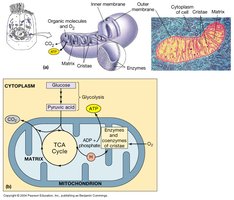
Mitochondria
Site of aerobic ATP production via the TCA (Krebs) cycle.
Contains inner folds called cristae and a fluid matrix.
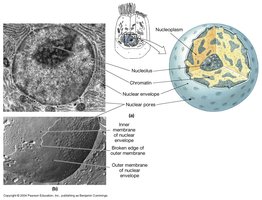
Nucleus
Largest organelle, control center of the cell.
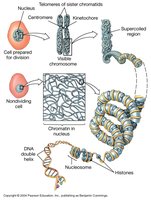
Contains DNA organized as chromatin (loose) or chromosomes (condensed for division).
Surrounded by a double membrane nuclear envelope with pores for molecular exchange.
Membrane Transport Mechanisms
Cells regulate the movement of substances across their membranes using passive and active transport mechanisms.
Passive Transport: Does not require energy (e.g., diffusion, osmosis, facilitated diffusion).
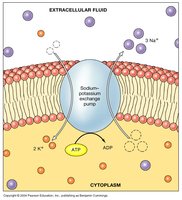
Active Transport: Requires energy (ATP) to move substances against their concentration gradients (e.g., sodium-potassium pump).
Vesicular Transport: Bulk movement of materials via vesicles (endocytosis, exocytosis).
Diffusion and Osmosis
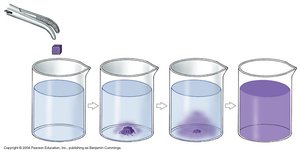
Diffusion: Movement of molecules from high to low concentration.
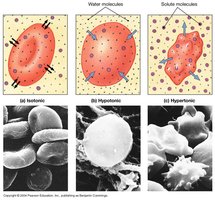
Osmosis: Diffusion of water across a selectively permeable membrane toward higher solute concentration.
Tonicity: Describes the effect of extracellular solutions on cell volume (isotonic, hypotonic, hypertonic).
Carrier-Mediated Transport
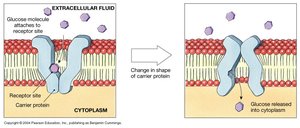
Facilitated Diffusion: Passive movement of molecules via carrier proteins (e.g., glucose transport).
Active Transport: Movement of ions against gradients using ATP (e.g., Na+/K+ ATPase pump).
Vesicular Transport
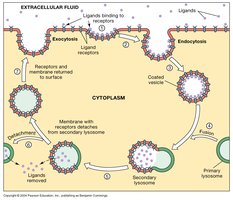
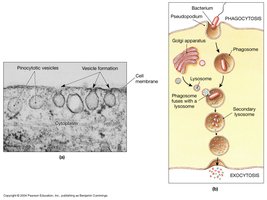
Endocytosis: Uptake of materials via vesicles (includes pinocytosis and phagocytosis).
Exocytosis: Release of materials from the cell via vesicles.
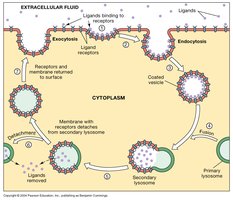
Gene Expression: Transcription and Translation
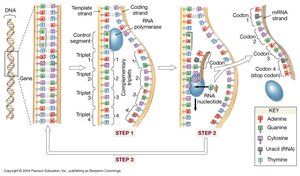
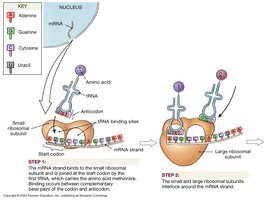
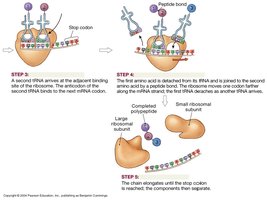
Cells synthesize proteins by transcribing DNA into mRNA and translating mRNA into polypeptides.
Transcription: DNA is used as a template to synthesize mRNA in the nucleus.
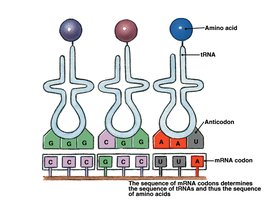
Translation: mRNA is decoded by ribosomes in the cytoplasm to assemble amino acids into proteins.
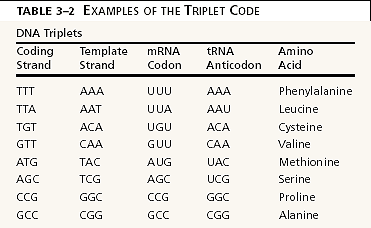
Genetic Code Table
DNA Triplet (Coding) | Template Strand | mRNA Codon | tRNA Anticodon | Amino Acid |
|---|---|---|---|---|
TTT | AAA | UUU | AAA | Phenylalanine |
TTA | AAT | UUA | AAU | Leucine |
TGT | ACA | UGU | ACA | Cysteine |
GTT | CAA | GUU | CAA | Valine |
ATG | TAC | AUG | UAC | Methionine |
AGC | TCG | AGC | UCG | Serine |
CCG | GGC | CCG | GGC | Proline |
GCC | CGG | GCC | CGG | Alanine |
Cell Division: Mitosis and the Cell Cycle
Cell division is essential for growth, repair, and maintenance. Somatic cells divide by mitosis, while sex cells divide by meiosis.
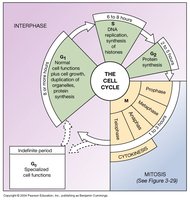
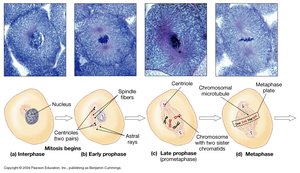
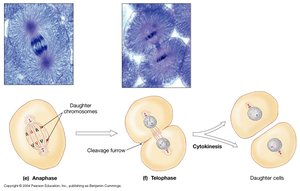
Cell Cycle: Includes interphase (G0, G1, S, G2) and mitosis (prophase, metaphase, anaphase, telophase).
Mitosis: Division of the nucleus, followed by cytokinesis (division of the cytoplasm).
Apoptosis: Programmed cell death.
Key Terms and Definitions
Cytoplasm: Material within the cell membrane, excluding the nucleus.
Cytosol: Fluid portion of cytoplasm.
Organelle: Specialized structure within a cell.
Phospholipid Bilayer: Double layer of phospholipids forming the cell membrane.
Integral/Peripheral Proteins: Proteins embedded in or attached to the membrane.
Diffusion/Osmosis: Passive movement of molecules/water.
Tonicity: Effect of extracellular solution on cell volume.
Endocytosis/Exocytosis: Bulk transport into/out of the cell.
Transcription/Translation: Steps in protein synthesis.
Mitosis/Meiosis: Types of cell division.
