 Back
BackThe Chemical Level of Organization: Study Notes for Anatomy & Physiology
Study Guide - Smart Notes
 Tailored notes based on your materials, expanded with key definitions, examples, and context.
The Chemical Level of Organization
An Introduction to Chemistry in Anatomy & Physiology
Chemistry forms the foundation for understanding the structure and function of living organisms. Atoms, molecules, and compounds are the basic building blocks that determine physiological processes at the molecular and cellular levels.
Atoms and Atomic Structure
Subatomic Particles and Atomic Structure
Atoms are the smallest units of matter, composed of subatomic particles:
Protons: Positively charged, 1 mass unit
Neutrons: Neutral, 1 mass unit
Electrons: Negatively charged, very low mass
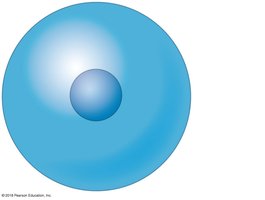
The atomic number is the number of protons in the nucleus, which determines the element's chemical properties. The nucleus contains protons and neutrons, while electrons occupy the electron cloud surrounding the nucleus.
Isotopes and Elements
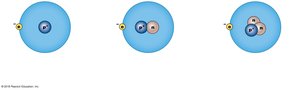
An element is a pure substance composed of atoms of one kind. Isotopes are variants of elements with different numbers of neutrons, affecting their mass number (protons + neutrons).
Principal Elements in the Human Body
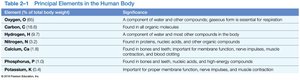
The human body is composed of several principal elements, each with specific physiological roles:
Element (% of body weight) | Significance |
|---|---|
Oxygen (O, 65.0) | Component of water and other compounds; essential for respiration |
Carbon (C, 18.6) | Found in all organic molecules |
Hydrogen (H, 9.7) | Component of water and other compounds |
Nitrogen (N, 3.2) | Found in proteins, nucleic acids, and other organic compounds |
Calcium (Ca, 1.8) | Found in bones and teeth; important for membrane function, nerve impulses, muscle contraction, and blood clotting |
Phosphorus (P, 1.0) | Found in bones and teeth, nucleic acids, and high-energy compounds |
Potassium (K, 0.4) | Important for proper membrane function, nerve impulses, and muscle contraction |
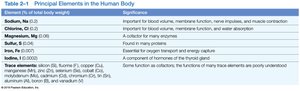
Element (% of body weight) | Significance |
|---|---|
Sodium (Na, 0.2) | Important for blood volume, membrane function, nerve impulses, and muscle contraction |
Chlorine (Cl, 0.2) | Important for blood volume, membrane function, and water absorption |
Magnesium (Mg, 0.06) | Found in many enzymes |
Sulfur (S, 0.05) | Component of proteins |
Iron (Fe, 0.007) | Essential for oxygen transport and energy capture |
Iodine (I, 0.0002) | Component of hormones of the thyroid gland |
Molecules and Compounds
Chemical Bonds
Chemical bonds form molecules and compounds by sharing, gaining, or losing electrons. The three major types of chemical bonds are:
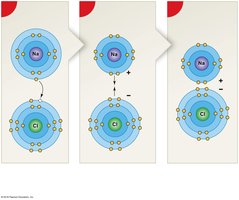
Ionic bonds: Attraction between cations (positive ions) and anions (negative ions)
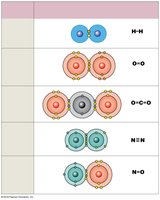
Covalent bonds: Strong bonds formed by sharing electrons
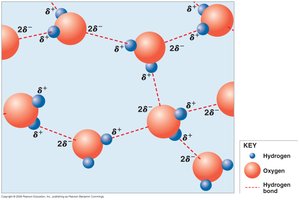
Hydrogen bonds: Weak polar bonds between adjacent molecules
Ionic Bonds
An ion is an atom with an electric charge. Ionic bonds form when one atom donates electrons (becoming a cation) and another atom accepts electrons (becoming an anion). The attraction between these oppositely charged ions forms ionic compounds.
Covalent Bonds
Covalent bonds involve the sharing of electrons between atoms. Types include:
Single covalent bond: Sharing one pair of electrons
Double covalent bond: Sharing two pairs of electrons
Triple covalent bond: Sharing three pairs of electrons
Polar and Nonpolar Covalent Bonds
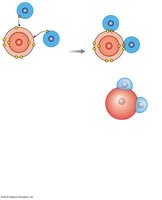
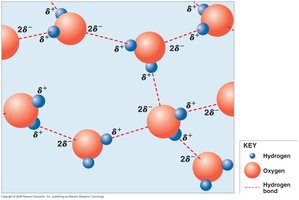
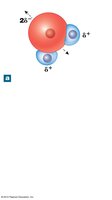
Nonpolar covalent bonds involve equal sharing of electrons, while polar covalent bonds involve unequal sharing, resulting in partial charges. Water is a classic example of a polar molecule.
Hydrogen Bonds
Hydrogen bonds are weak attractions between a slight positive charge (usually hydrogen) and a slight negative charge (often oxygen or nitrogen) in adjacent molecules. In water, hydrogen bonds cause surface tension and help shape molecules in cells.
Chemical Reactions
Types of Chemical Reactions
Chemical reactions involve the formation or breaking of bonds. Types include:
Decomposition (catabolism): AB → A + B
Synthesis (anabolism): A + B → AB
Exchange: AB + CD → AD + CB
Reversible: A + B ↔ AB
Reversible reactions seek equilibrium, balancing opposing reaction rates. Example:
Enzymes
Role of Enzymes in Biochemical Reactions
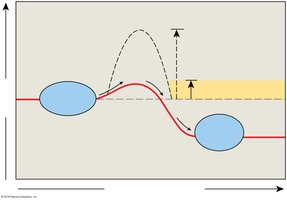
Enzymes are protein catalysts that lower the activation energy required for reactions, allowing them to occur rapidly in cells. They are not consumed in the reaction and exhibit specificity, saturation limits, and regulation by cellular chemicals.
Inorganic and Organic Compounds
Classification of Compounds
Compounds in the body are classified as:
Inorganic compounds: Do not contain carbon-hydrogen bonds (e.g., water, oxygen, salts)
Organic compounds: Contain carbon and hydrogen (e.g., carbohydrates, proteins, lipids, nucleic acids)
Properties of Water
Water as a Solvent
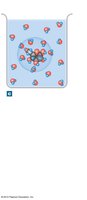
Water is a polar molecule and serves as the universal solvent in the body. It dissolves many substances, facilitates chemical reactions, and provides lubrication and high heat capacity.
Solubility and Hydration Spheres
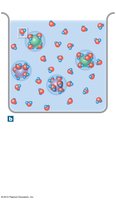
Water dissolves polar and ionic compounds by forming hydration spheres around ions and molecules, keeping them in solution.
Electrolytes
Electrolytes are inorganic ions that conduct electricity in solution. Electrolyte balance is vital for normal body function.
pH and Homeostasis
pH Scale and Body Fluids
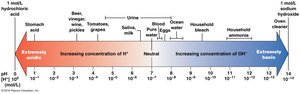
The pH scale measures hydrogen ion concentration. Neutral pH is 7.0; values below 7.0 are acidic, and above 7.0 are basic (alkaline). Human blood pH ranges from 7.35 to 7.45.
Acids, Bases, and Salts
Definitions and Buffer Systems
Acids donate hydrogen ions; bases accept hydrogen ions. Salts dissociate into ions other than H+ and OH-. Buffers stabilize pH by neutralizing strong acids or bases. The carbonic acid–bicarbonate buffer system is crucial for maintaining pH in humans.
Carbohydrates
Structure and Function
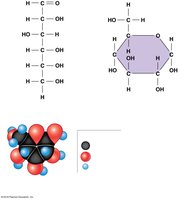
Carbohydrates are organic molecules with a 1:2:1 ratio of carbon, hydrogen, and oxygen. They provide short-term energy and structural support. Types include:
Monosaccharides: Simple sugars (glucose, fructose, galactose)
Disaccharides: Two monosaccharides joined by dehydration synthesis (sucrose, maltose)
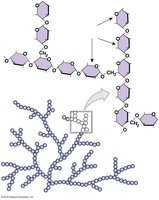
Polysaccharides: Polymers of many sugars (glycogen, starch, cellulose)
Lipids
Types and Functions
Lipids are hydrophobic molecules including fats, oils, and waxes. Major types:
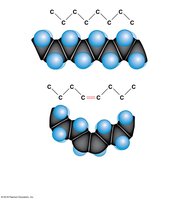
Fatty acids: Saturated (no double bonds) or unsaturated (one or more double bonds)
Eicosanoids: Signaling molecules derived from arachidonic acid
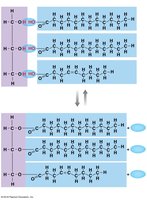
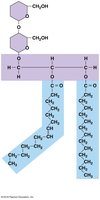
Glycerides: Fatty acids attached to glycerol (mono-, di-, triglycerides)
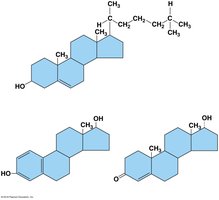
Steroids: Four-ringed structures (cholesterol, hormones)
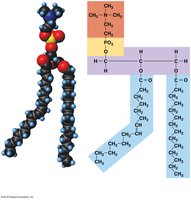
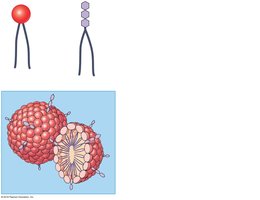
Phospholipids and glycolipids: Structural lipids in cell membranes
Proteins
Structure and Functions
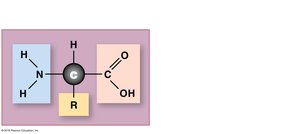
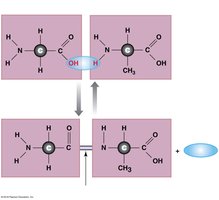
Proteins are the most abundant organic molecules, composed of 20 amino acids. Functions include support, movement, transport, buffering, metabolic regulation, coordination, and defense.
Protein Structure Levels
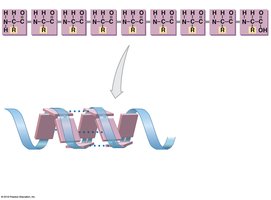
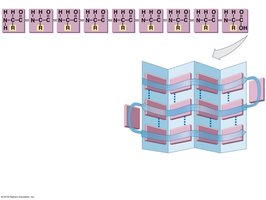
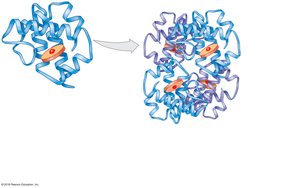
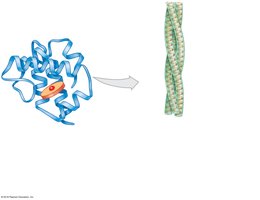
Protein structure is organized into four levels:
Primary: Sequence of amino acids
Secondary: Hydrogen bonds form spirals (alpha helix) or pleats (beta sheet)
Tertiary: Coiling and folding into three-dimensional shape
Quaternary: Interaction of multiple polypeptide chains
Enzyme Structure and Function
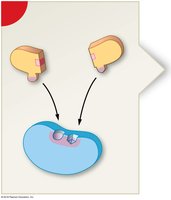
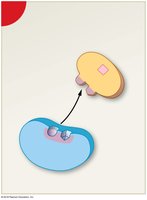
Enzymes bind substrates at their active site, facilitate reactions, and release products. Factors affecting enzyme activity include concentration, temperature (denaturation), and pH.
Nucleic Acids
Structure and Function
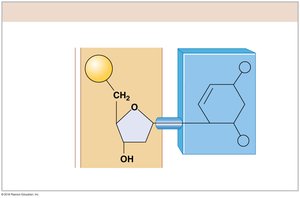
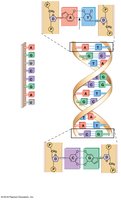
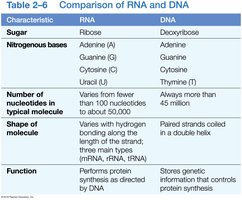
Nucleic acids (DNA and RNA) store and process genetic information. They are composed of nucleotides, each containing a pentose sugar, phosphate group, and nitrogenous base.
Comparison of RNA and DNA
Characteristic | RNA | DNA |
|---|---|---|
Sugar | Ribose | Deoxyribose |
Nitrogenous bases | A, G, C, U | A, G, C, T |
Number of nucleotides | Fewer than 100 to about 50,000 | Always more than 45 million |
Shape of molecule | Single strand | Double helix |
Function | Protein synthesis | Genetic information storage |
High-Energy Compounds
ATP and Energy Storage
High-energy compounds, such as ATP, are derived from nucleotides. Phosphorylation adds a phosphate group, creating high-energy bonds. ATP is the primary energy carrier in cells, converted to ADP by ATPase.
